Lost Luggage

We were sitting in the back of the plane. “Make sure your father is on the plane,” Ami said to Tito.

Aba had died a few days earlier in London where he was being treated for a rare illness. Mimo, Tito, and I flew to London as soon as we got the news, to accompany Ami back to Pakistan with our father’s body. His body was placed in a coffin which had a square piece of glass over his head so that we could see his face, which seemed to be turning bluer with every passing day. “Why do they have a piece of glass there?” I asked Mimo when we went to view his body at the mortuary. “Probably because he died here and the family will want to view the body when we get back to Pakistan,” she responded.

Tito went to the front of the plane to speak with the airline staff to make sure Aba’s coffin was in the cargo section.

“They can’t find him,” he said when he returned.

“Oh good God,” Ami said. “We’ve lost your father.” For some reason this seemed funny to us and we all started giggling.

The coffin was located several minutes later. “He’s still up to his tricks,” Ami said about Aba as if, even in death, he was still playing pranks by making his own coffin disappear.

When we landed in Islamabad we were met at the airport by Puchi, Muna and Baba and my father’s brothers and sisters who took us to our family home in Abbottabad for the funeral services. Hundreds of family and friends gathered at our house to mourn the loss of our father. The men and women were segregated with the men sitting outside and the women, many of them on the floor, sitting around the coffin. Some of them held prayer beads as they wailed in grief.

“Who are all these people?” I asked my sisters. I didn’t know most of the people who had gathered, so I went up to my old bedroom. Puchi and Mimo joined me a few minutes later and we sat there sneaking cigarettes. Occasionally one of our young nephews would burst into the room.

“Where’s Dada?” Ali, the three-year old asked about Aba, calling him the Urdu term for grandfather.

We sisters looked at each other, not knowing how to respond. How do you tell a three-year old that his grandfather is dead?

“Where do you think he is?” we asked, thinking the question might buy us some time as we figured out how to tell him the truth.

Distracted by his older brother, Asif, the two boys went running from the room, continuing to play their games. They probably thought we were having a party, not realizing it was a funeral.

A few minutes later, they came back in the room. “We know where Dada is!” they said excitedly.

“You do?” we asked. “Where is he?”

“He’s in that box in the room with all the old biddies! We saw him! Through the glass.” And sure enough, that was the truth.

Aba with his first grandchild, Asif, about seven years before he died.

Escape to Wisconsin

I wasn’t keen on going back to Tulane after a short spring break at home in Connecticut. “I’m going to Beloit to visit Sly for a few days before I go back to school,” I told Mimo and Puchi who were managing the Connecticut house while my parents were in Pakistan.

I had only planned to stay in Wisconsin to visit my high school friend for a few days. But then I extended the visit one day at a time without really notifying anyone.

I called my roommate at school and told her I would be back soon. “In the meantime, if anyone calls for me, like my sisters, just tell them I’m in the library.” One day turned into the next, and into another, until a month had passed.

My friend Sly and his girlfriend Ellen, had gone out to get some lunch when there was a knock on the door of their apartment where I had been staying.

I opened the door and saw a police officer. “Are you Surina Khan?” he asked.

How did a police officer in Beloit know my name?
“Why do you want to know?” I responded.

“How old are you?” he said, asking for my identification.

I had recently turned eighteen. “Eighteen,” I responded nervously as I handed him my license.

“The New Orleans Police Department has an APB out on you,” he said looking over my driver’s license and confirming my date of birth. “Who do you think is looking for you? Your parents?” he asked, returning the license to me. I didn’t know what an APB was, but it did not sound good. I later learned it stands for an All Points Bulletin.

“No,” I said. “I don’t think it’s my parents. They’re out of the country. Maybe my sisters?”

“Can you give them a call?” he asked. “They’re probably worried about you. And since you’re eighteen, there’s nothing I can do.”

When I called Mimo and Puchi, they were not happy. “Where the hell are you?” Mimo berated me.

“I’m still in Wisconsin,” I said sheepishly.

“What are you still doing in Wisconsin? We thought you went back to school weeks ago.”

“I don’t know,” I said.

“Well the school is looking for you. They called us asking where you were and we said you were back at school. Your roommate said you were in the library every time we called. Your professors thought you were dead in a gutter somewhere when you didn’t show up to your classes,” Mimo continued.

“I’m sorry,” I offered.

“Ami and Aba are going to be really upset,” she said.

“Maybe we don’t need to tell them,” I said. “No need to worry them,” I suggested.

Mimo did not agree. “They need to know what you’ve done,” she said. “And you should be the one to tell them. If you don’t, I will.”

“Okay,” I groaned. ‘You’re right.”

When I got back to school, I had to go see the Dean. “Do you have any idea what is going to happen to you?” he said.

“Actually, I was hoping you could tell me,” I replied.

“If you’re lucky you’ll get incompletes, but you’re likely to fail all your classes and will have to make-up your coursework in summer school.”

The thought of staying in New Orleans over the summer was unbearable. The heat and humidity in the spring was bad enough. It was ten days before final exams, but I decided to try and make-up the work.

I went to each of my professors and explained my situation. “I don’t feel comfortable talking to you about where I was or the reasons for my absence,” I said. “It’s personal. But before you make a decision about what to do with me, let me make-up the work and take the final, and then decide if you want to give me an incomplete, fail me or give me a grade,” I suggested. They each decided this was a fair request. And then I really did spend every waking hour in the library doing my best to make-up the work I had missed. In the end I did well, getting mostly A’s and B’s. My professors all decided to give me grades, and I successfully avoided summer school.

When my mother called I told her I needed to tell her something. “I went to visit Sly in Wisconsin and stayed longer than I planned,” I explained. “I missed almost a month of school, but I’ve made up the work and my grades are good. I’m not sure why I stayed away so long, but I think I was just trying to work some things out,” I said.

“Well good for you,” my mother responded.

“Good for me?” I asked. “What do you mean?”

“You recognized you needed to take some time for yourself and you had the courage to do it. Good for you.”

My mother never ceased to surprise me. I called Mimo and Puchi. “Ami thinks I did the right thing by taking some time for myself,” I said feeling vindicated. “She wasn’t upset at all,” I added.

“Time for yourself?” Mimo said. “That’s really rich. I’m sure she doesn’t know the half of it.”

Anger Management

I needed more Valium. “Three boxes of Valium, please,” I said to the clerk behind the counter.

“5 or 10 milligrams?” he asked.

“10 please,” I responded.

After my back injury, the doctor said I should take Valium “as needed.” In Pakistan you didn’t need a prescription for most drugs so I purchased the Valium over the counter at the local drug store. More than anything, it was a muscle relaxer which helped with the back pain I was experiencing after my cast came off. The three vertebrae I had fractured had healed well, but the doctor said I might experience muscle spasms which the Valium would help with. I noticed the Valium was also good for my mood. Things just didn’t seem to bother me as much. I was calm, and generally content.

My mother, on the other hand seemed to be easily agitated. “Why don’t they listen?” she said upset with the house servants. “I told the bloody fools to set the table for the food on that end of the garden,” she hissed. Muna was hosting an afternoon luncheon and fashion show at the Islamabad house for the high school students from the school where she was teaching.

The house servant walked onto the veranda where we were sitting and offered my mother the fresh lime and water she had asked for. She took one sip and slammed it back down on the silver tray, spitting it out. “Saccharin, not sugar.”

“I’ll fix it,” I said, taking the tray and the fresh lime and water into the kitchen. I’m not sure whose idea it was, maybe Puchi and I thought about it at the same time.

“Let’s put half a Valium in her fresh lime,” one of us said. The label inside the box noted that Valium can also be used for the “treatment of anxiety, panic attacks, and states of agitation.”

“She seems really agitated,” I said. “Maybe this will help her relax,” I said, crushing half the blue pill along with the saccharin tablet and putting it into the fresh lime and water.

I walked back out to the veranda with the new fresh lime and water on a clean tray. “Here we are,” I said to my mother. “Just the way you like it.”

She sipped it slowly. By the time the party started, she was calm and relaxed.

The following week, when we noticed the rage coming on again, I asked my mother, “Can I get you a fresh lime and water?”

Wake and Bake

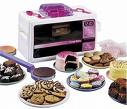
I needed to make some money. “I’m going to have a bake sale,” I declared to my mother. I felt I had the experience, having practiced baking quite a lot on my Betty Crocker Easy Bake Mini Oven which I got when I was about six. By the age of seven I had moved on to making a range of microwave recipes and had even used the real oven for the occasional cakes, cookies and brownies.

I went about planning my menu. An assortment of desserts. A chocolate cake. A no bake cheesecake. Brownies. Chocolate chip cookies. And a graham cracker chocolate specialty I had recently discovered.

I woke up early on a Saturday morning and went about my baking, preparing everything carefully. I cooled each batch of cookies on a rack. I carefully frosted the chocolate cake. I sliced all the dessert items in single serving pieces and made placards detailing their individual sale price. “Slice of chocolate cake: 75 cents,” or “Cheesecake Slice: 85 cents.” The cookies and brownies were each 25 cents. According to my business plan, if I sold all the items I would make approximately $20.

By 10 am, around the time my brothers and sisters began to open their eyes and contemplate getting out of bed, I had all my wares carefully displayed on the kitchen table, each one with its sale price. And a bigger sign with the words “Bake Sale.”

I pulled up a chair and awaited my customers.

“What’s all this?” Mimo said as she came into the kitchen, picking up a brownie and popping it into her mouth.

“I’m having a bake sale,” I said. “That will be 25 cents.”

“I’m not paying for that,” she said, as she picked up a cookie and took a bite.

“But I’m having a bake sale,” I said again. “These are for sale. I made them.”

“Did you buy all the ingredients?” she asked.

“No,” I said. “We already had all the ingredients in the house.”

“Then you can’t sell them,” she said. “All of this belongs to all of us. You can’t charge us for ingredients that belong to all of us,” she said, now sampling a slice of cheesecake.

“But I baked them,” I said, starting to sound a little desperate and possibly whiny. “They’re mine. I can sell them.”

“No you can’t,” she said picking up the entire chocolate cake and walking away. “But good job,” she said as she turned around looking back. “It all tastes great. You may have a future as a baker.”

Christmas Condolences

My mother called me from Pakistan to wish me a happy Thanksgiving. “Hello Foosie,” she said when I picked up the phone. “Happy Thanksgiving. We’re all here about to eat our turkey and we’re thinking of you.”

“You’re having Thanksgiving dinner in Islamabad?” I asked, a bit surprised that they would be celebrating Thanksgiving in Pakistan. “Do they even have turkeys there?”

“Well not exactly, but you know Mimo. She’s arranged the whole thing.” Mimo had moved back to Pakistan in the mid 1990s. “She found us a wild turkey and had it plucked and prepared to go in the oven. She’s even made stuffing and mashed potatoes and gravy and cranberry sauce!” my mother said happily. I couldn’t see her, but I could tell she was smiling.

My sister Mimo is trained in hotel and restaurant management. She loves cooking, planning, and all things entertaining. She will throw a party for just about any reason. In college she had monthly full moon parties. It was probably her enthusiasm that made my family embrace Thanksgiving as our favorite American holiday.

Mimo knows how to throw a good party.

When my mother died several years later in December of 1999, I immediately made arrangements to fly back to Islamabad from Boston where I was living. Ami had been sick for a while with another recurrence of cancer, so her death was not a surprise to any of us, even though she was a young sixty-four years old.

When she died, Mimo was in the middle of planning a Christmas celebration at her house. She put the planning on hold and we attended all the funeral services, which like Pakistani weddings, last several days. Men and women were segregated in different parts of the house. Women, dressed in white, were clutching prayer beads as they prayed and wailed in grief. I didn’t know who many of them were and took the greatest comfort when we would go back to Mimo’s house with some of our cousins and sit around the kitchen table, ordering in Chinese food and remembering the joyful times in our mother’s life. We had many good laughs in those moments, tender and poignant. We were not filled with grief, but rather the memories of our mother and how fully she embraced life.

After the services were over, Mimo went back to planning Christmas. Although we celebrated many American holidays, Christmas was not one of them. We were Muslim after all.

“I’m having a tree cut down and we’ll trim it with ornaments and lights,” Mimo was explaining.

The guest list included us four sisters, our brother Tito who was also in town for Ami’s funeral, our close friends and their children as well as Puchi’s boys. Our oldest brother, Baba, was not included since by now the relationship between the rest of us and him was deeply strained.

Mimo had arranged toys for all the kids, but before they could open their Christmas gifts they distributed flour, lentils, and sugar to communities living in deep poverty on the outskirts of the city. “That way they’ll learn the value of giving and receiving gifts,” Mimo said.

Her living room was going to be rearranged to accommodate a long table for the Christmas dinner and she was going to put a bar in the corner for the Christmas cocktails. It all sounded great to me, especially since I had left behind a series of holiday parties in Boston.

Meanwhile family and friends continued to call on us daily to condole the loss of our mother.

“Don’t you think it’s inappropriate to be having a Christmas party?” I asked.

“No, why?” Mimo said.

Did I really need to enumerate the reasons? “For starters, Ami just died and people are coming to your house every day to condole. And we’re Muslim. We’re not supposed to be celebrating Christmas,” I explained looking at her like I couldn’t believe she had not already thought of these things. “What if someone drops by on Christmas day to condole with us and they’ll see a Christmas tree with us celebrating Christmas, drinking cocktails and wine and otherwise being merry when we should be grieving the loss of our mother? I don’t think that will look good.”

“Good point,” she said. “We’ll have to move the party to Mona’s house. No one will come there to condole with us.”

Where’s the Beef?

When my father was home we usually ate dinner in the dining room. Puchi and I would set the table, with a table cloth, linen napkins, china and silverware.

My parents were not deeply religious, but we observed general Muslim practices. No pork products were allowed in the house, though liquor was admissible for guests, and occasionally my parents might have one drink or, in my mother’s case, one glass of wine.

When my father was not around, the dinner hour was more casual. Sometimes we’d eat at the kitchen table, laying out the food on the counters, buffet style, and grazing as we chatted with our mother about this or that.

Sometimes we ordered pizza. “What do you want on your pizza?” my mother would ask.

“Pepperoni,” I replied.

“We can’t have pepperoni,” my mother said. “It’s made with pork.”

“No it isn’t,” I lied. “They make it with beef.”

“Oh is that right? Well go ahead and order it then,” she said trusting me.

We ordered the pepperoni pizza and a mushroom pizza and maybe some other kind of pizza. Enough to feed all the people who were invariably around for the dinner hour– my sisters and brothers and any number of our friends. I don’t think my mother ever questioned my deceitful declaration that pepperoni was made with beef.

 I like pepperoni pizza.

I never really understood the no pork or alcohol rule. Or the no shellfish rule for that matter. Many of the Pakistani Muslims I encountered drank alcohol. I thought it was hypocritical. Alcohol was permissible but pork was not. So, I quietly started consuming pork products as a child, mostly pepperoni and sometimes bacon. As I got older I introduced alcohol to my diet as well. Many people would say I am not a good Muslim. And I would agree with them. In addition to the pork, shellfish, and alcohol consumption there’s the issue of my lesbianism which is also frowned upon in Islam.

When I’m not lying about how pepperoni is made, I keep my pork consumption on the down low. I make bolognese with mild Italian sausage, or I might order a side of bacon or chorizo with my eggs from time to time, but I don’t make a big deal about it.

My friend Jim introduced me to grilled figs wrapped in prosciutto. Jenny and I made them for a dinner party once, and knowing that one of our guests was a devout Muslim, we made sure to grill some figs without the prosciutto. I made the mistake of putting both on the same plate, which I should have known is also frowned upon in Muslim circles. You don’t want pork products touching non-pork products.

“What are these?” our Muslim guest asked.

“They’re figs wrapped in prosciutto,” I said. “You can’t eat them. They’re pork, but this side of the plate is not pork,” I explained.

She must not have heard me clearly because she promptly popped a prosciutto wrapped fig in her mouth and declared, “These are delicious!” And then she ate another and another.

I quickly ran to Jenny and said, “If anyone asks about the prosciutto wrapped figs, tell them it’s beef prosciutto.”

“But there’s no such things as beef prosciutto,” she said.

“Doesn’t matter,” I said. “Just make sure to say it’s beef prosciutto, they’ll never know there isn’t any such thing.”  Just like my mother didn’t know there wasn’t any such thing as beef pepperoni.

I did recently discover Halal pepperoni pizza. Halal is a term used to designate food seen as permissible according to Islamic law. Who knew? There is beef pepperoni after all.

How I Spent My Summer Vacation

I was outlining all the reasons I needed to live in Paris. “I’ve been taking French since elementary school and I’ve hit an impasse,” I explained to my mother. “My reading and writing skills are good, but I really think I need to live in Paris to master the art of conversation.” It was 1984 and I was completing my junior year in high school trying to make summer plans.

“Call the travel agent and make your arrangements,” my mother said. That was a lot easier than I anticipated. My mother loved to travel and she encouraged us to travel as well.

“Where will I live?” I asked her, hoping I could be set-up in a hotel. I love hotels.

My mother knew the Pakistani Ambassador to France and said she would be in touch with his secretary to get me set up with a French family. This probably made more sense if I was serious about learning French.

“And I’m sure you’ll want to look into French classes, if you’re serious about learning French,” my mother instructed me. I made arrangements to attend the Alliance Francaise in Paris which involved taking an entry exam so they could determine which class I would be best suited for.

A week or so before my exam, Puchi called from London, where she was spending part of the summer with our mother and oldest sister, Muna.

“I’m coming to Paris,” she said. When she arrived the next day, I picked her up at the train station and we went to my French family’s home in Meudon, just outside of Paris. The house was a beautiful stone country home, walking distance from the train in a sleepy little town. I don’t think this was exactly what Puchi had in mind for her Parisian getaway and we spent the rest of her time in Paris in hotels and bars, drinking too much wine. Often I would forget to call my French family and let them know I would not be returning home for dinner, or even the night.

The day before my exam, Puchi, who was planning to leave Paris for Italy to visit Mimo who was on an archeological dig with a group from her college, said, “Come to Italy with me.”

“I can’t. I have to take my French exam,” I responded dutifully.

“Come to Italy with me.” It didn’t really take much persuading. I was getting sick of Paris. The newness of it all had worn off, and I wasn’t really learning French since so many French people leave Paris in the summer and most everyone speaks English. The next thing I knew my bags were packed and we were on a train to Italy.

“Where are we going exactly?” I asked Puchi.

“Um, I’m not exactly sure,” she said taking a piece of crumpled paper out of her pocket. “I’ve got the directions right here.” She was not inspiring confidence in me.

“Will Mimo pick us up at the train station?” I asked.

“She doesn’t really know we’re coming to visit this week,” Puchi said.

“Oh great. We don’t really know where we’re going and no one is expecting us,” I said expressing my disapproval.  “This should be fun,” I added sarcastically.

We took several trains, sometimes without assigned seats and would have to stand for hours at a time in the heat. I looked longingly at the first class passengers, seated in the air-conditioned compartments. On one of the trains, Puchi was able to secure one seat in an air-conditioned compartment. Probably tired of my whining, she gave it to me and told me to go sit down, which I willingly did, not even thinking to offer it to her instead.

It took us about 30 hours to get to Lucera, a small town on the heel of Italy. By this time I was no fun to travel with, complaining about the heat, the food on the train, my Walkman not working, and Puchi not knowing where we were going. She was mostly patient with my bratty behavior.

“So now what are you going to do?” I said to her when we got off the bus in Lucera’s town square. “You don’t even know where we’re going.”

Puchi glared at me, annoyed with my constant negative comments. And then she looked across the piazza, and there was Mimo’s face in the window of a bar.

“See,” said Puchi. “I told you I knew where I was going. I knew we’d find her in a bar,” she said laughing and waving to Mimo.

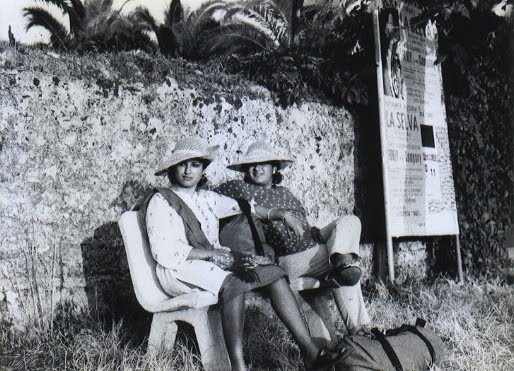
Mimo and Puchi in Italy, the summer of 1984.

Mini Me

I look a lot like my mother. When I was younger my parent’s friends as well as our extended family members called me “Chotie Sunny” which means “Little Sunny” in Urdu.

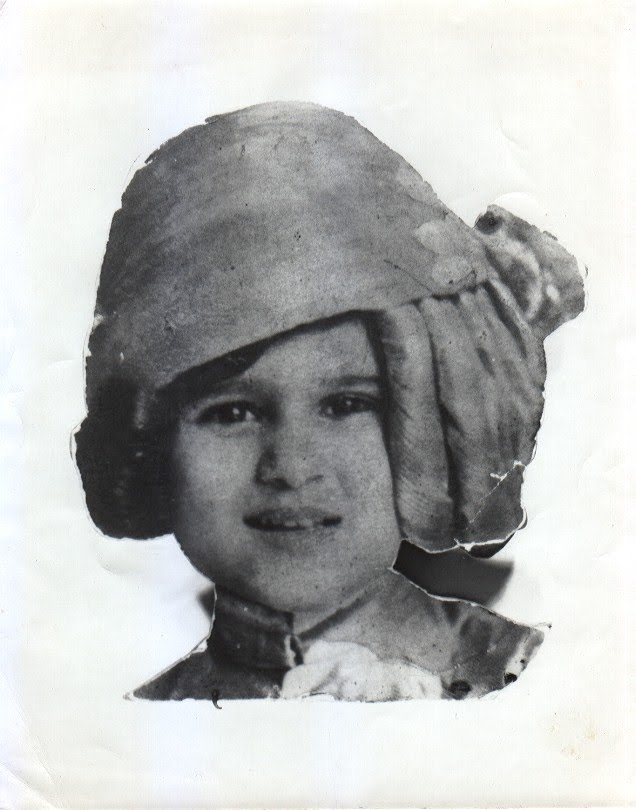
My mother as a young girl, though people often mistake this as a photo of me as a young girl.

Most of us kids resemble our mother, but in my case the resemblance is rather strong. My sister Puchi is the only one among us who looks like my father. My mother’s genes must have been stronger when it came to us kids.

Sometime around 1986 Puchi and I were commenting that she was the only one who looked like our father’s side of the family. Then we began to wonder if my parents were still having sex. “Do you think Ami and Aba still have sex?” I asked my sister.

“I don’t know,” she said. “What do you think?”

Later that evening we were in the living room with our mother and Puchi said, “Foo has something she wants to ask you.”

“I do not!” I said blushing. But I really did want to know, so I said, “You ask her,” to Puchi.

“What do you want to ask me?” my mother said, intrigued by our cryptic exchange.

“Foo wants to know if you and Aba still have sex,” Puchi said.

“Puchi wants to know too,” I said, trying to minimize the embarrassment I was feeling.

“You think people lose their sex drive when they get older?” my mother asked. My parents were only in their fifties and sixties.

“Sort of,” I said.

“Well, we don’t,” she clarified. “We have a very active sex life,” she added. Okay, this was more information than I needed.

“We don’t need details,” I said.

With that mystery solved, we moved onto other topics. “Why do you think most of us look like you?” I asked Ami.

Before she could answer, Puchi said to me, “Well, I know who my father is. Do you?”