Don’t Ask

This gays in the military thing has been going on for a long time. Earlier this week, a defense bill that would repeal the military’s “don’t ask, don’t tell” policy got blocked in the Senate by a Republican-led filibuster. Back in the early 90s I was co-publishing a gay magazine called Metroline with my friend and colleague Bill Mann. Anytime something gay would hit the mainstream news, they would call us for a comment.

“It’s the Gayle King Show,” Bill said, the phone pressed to his ear. “They want one of us to go on the show this afternoon to talk about gays in the military.” Gayle King, also known as Oprah’s BFF, was a prominent African-American news anchor who had her own show in Connecticut.

Bill didn’t want to do the show. “I didn’t shave today,” he said. “And look at what I’m wearing. I can’t go on television like this. You do it,” he said to me.

“Me?” I responded. “I don’t think I know enough about gays in the military to go on television.” I was in my early twenties and was not an expert on much, let alone the military. But Gayle King was Oprah’s best friend, and going on her show would be good visibility for our rinky dink publication.

We had editorialized about the issue in the magazine, calling for lifting the ban. Though we were careful not to liken it to the ban on African-Americans in the late 1940s and early 50s when the military balked at integrating African-Americans into the armed forces, a comparison made by many gay and lesbian leaders.

White soldiers will not shower or sleep in the same barracks as African-Americans. Mixing African-American troops with whites will weaken a unit’s cohesion. “These are arguments that opponents of integration were making 50 years ago,” gay leaders would say. “Substitute ‘gay’ and ‘lesbian’ and it’s the same arguments being heard today. The common denominator is prejudice.” That may be true, but these were leaders who had done little, if anything at all, to build alliances with African-American communities. Not to mention that there are many differences and nuances. African-Americans have a history of slavery in this country, after all. Bill and I understood that discrimination against African-Americans was not the same as discrimination against gays and lesbians, so we were careful not to make this comparison.

When I got to the set in downtown Hartford. I took the elevator to the basement where the show was filmed. On a commercial break, before the gays in the military segment began, Gayle motioned for me to come over and put me at ease. Without mentioning that she was preparing me for the show, she casually asked me questions about the issues.

And then the real thing started. Live. “Joining us today is Surina Khan, co-publisher of Metroline, a local gay and lesbian newspaper,” Gayle said as the cameras panned over to me. I was trying not to look like a nervous wreck.

Gayle was gentle. “Tell us why you think the ban on gays in the military should be lifted,” she said.

I went on and on about equal rights this and equal rights that. “We deserve the same rights as everyone else,” I said.

As the interview progressed I got more nervous. Gayle was calmly talking about how there were many people who opposed lifting the ban.

“What do you say to people who are concerned about unit cohesion?” She asked. I was sure I did not have any idea what she was talking about.

“Units will be cohesive,” I responded as if I knew what I was saying.

“Well,” Gayle said, looking slightly puzzled. “There are soldiers who do not want to serve with gay service members and military officials are concerned that they would not perform properly if forced to do so.” I think she was trying to explain unit cohesion to me.

I had no idea how to respond. And then things really began to devolve. “Well what about the Blacks, Gayle? What about the Blacks?” I couldn’t even pull myself together to clearly articulate the comparison, which I knew I should not be making, to the integration of African-Americans into the military. I kept repeating, “What about the Blacks?” as Gayle’s head tilted to one side and she looked at me quizzically. Gayle cut to a commercial, and I sat there, thinking I cannot believe I just said that, on live television. To a Black woman.

When I got back to the office, Bill asked how the show went.

“Don’t Ask,” I said as I considered crawling into a filing cabinet.
Haunted House

My father refused to sell the Stoner house, even though there was an interested buyer. “I wont sell to that man,” Aba said about Gary Blonder, a high-profile, flamboyant Hartford business man who made his fortune in used auto parts. “He’s a creep,” Mimo would say. And sure enough, Blonder was later convicted for tax evasion, fraud, and lying to federal authorities, the last of which was in 2005 for trying to conceal a $100,000 bond investment from federal bank regulators. He was sentenced to 28 months in prison for that crime.

Blonder was a shady character, but he had money and we needed to sell the house. “No,” was all my father would say when we broached the subject. His stubbornness caused the house to go into foreclosure (See Walk of Shame posted May 31, 2010).

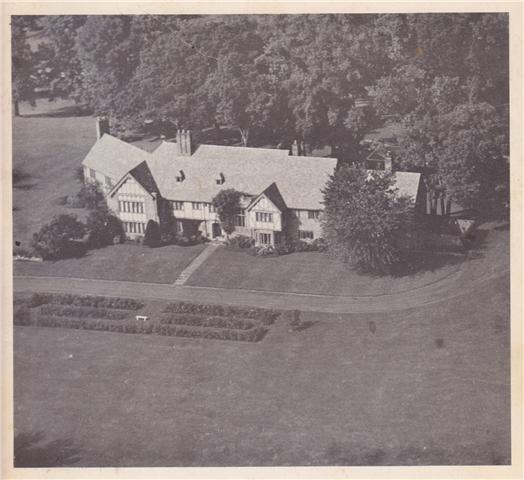
The Stoner Mansion was a former estate of the Stoner Family. It was completed in 1928 for Louis Stoner, a manufacturer who became wealthy from the Jacobs Chuck company, which produces holding devices for stationary equipment and portable power tools. The property was sold off into single lots starting in the 1950s after Louis Stoner committed suicide and his widow, Clara Stoner, faced financial hardship. (See 112 Stoner Drive, posted January 26, 2010).

Before the land was sold, the estate encompassed the entire street and contained a small 9-hole golf course as well as a stable and a rose garden. The mansion remains at the top of the hill overlooking what used to be the golf course. My parents purchased the house in 1974 for a mere $180,000. I’m sure they must have refinanced or taken a second mortgage on the house in later years and were not able to keep up with the payments, especially after my father’s head injury in 1987, which among other things, led to financial troubles.

On the day of the public auction, we got the house ready and prepared ourselves for the indignity. Mr. and Mrs. Large, our close family friends came with a cashier’s check for $50,000 in hand, the amount required to bid on the house. They didn’t want the house, but thought that bidding on it would help drive the sale price up so that at least my father would be able to pay what he owed his multiple creditors.

An hour or so before the auction was set to start, we were all looking glum. “I can’t believe this is happening,” I said to Mimo. “Why wont he agree to sell it and spare us the embarrassment of a foreclosure?”

In the final hour, my father changed his mind. “Tell the bank I’ll agree to sell to Blonder,” he said quietly, keeping the house from going into foreclosure. The public auction was called off and the sale negotiations began in earnest. He sold the house to Blonder for $1.1 million, and even that didn’t cover all his debts.

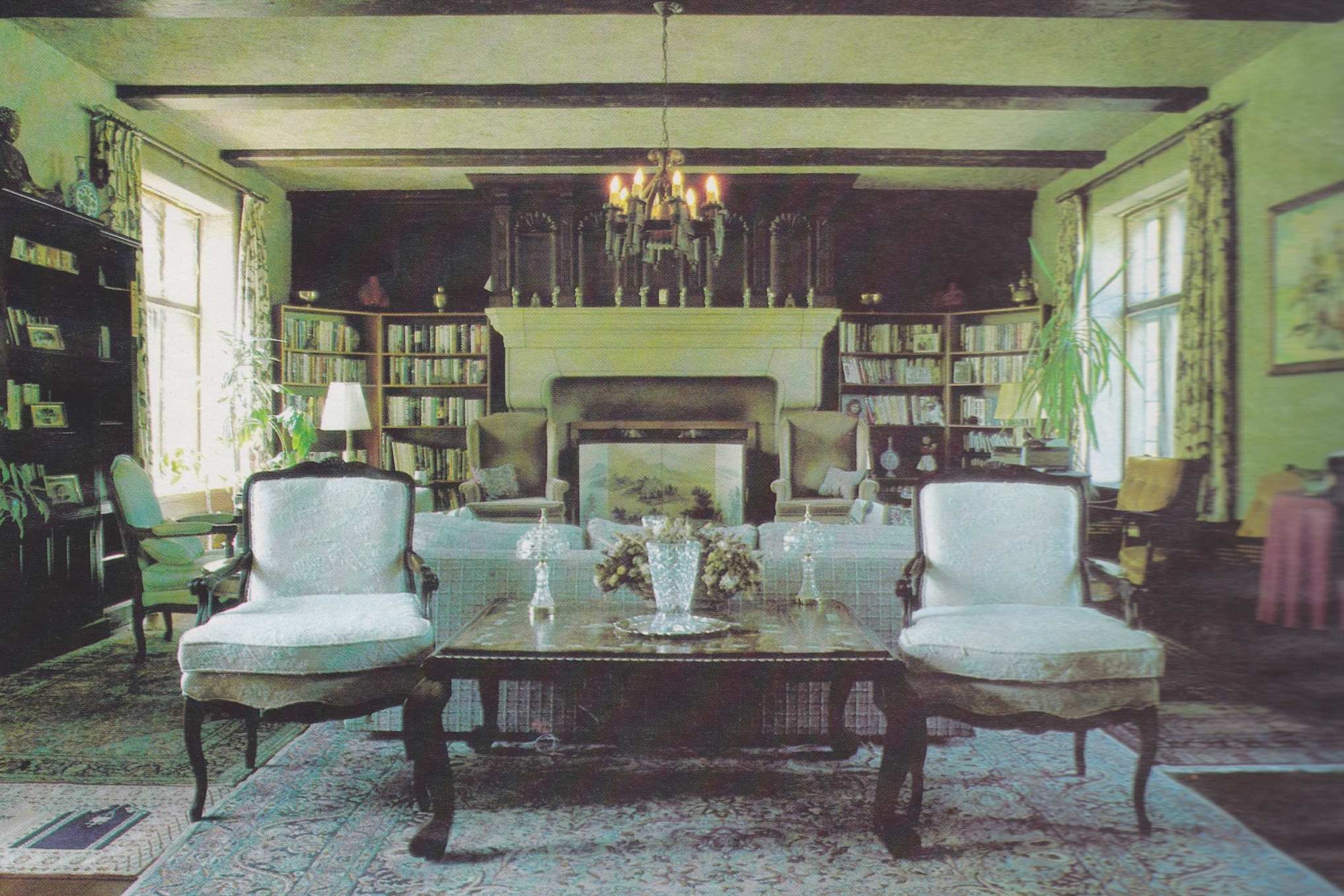
As we we packed up the house over the following weeks before the closing, my father would sit in the same chair in the Billiard Room, which we called the Big Room since we didn’t have a billiard table. There was plenty to pack up, fifteen years of memories tucked away in drawers and cabinets. A full attic and basement and piles and piles of stuff. We sold what we could and moved the rest into a friend’s storage facility. The Big Room was the last room to be packed, but eventually we had to pack it. And my father just sat there as we packed up around him. Boxes of his books and other artifacts. Until all that was left was the chair he sat on. We moved the chair after Aba walked out of the house for the last time.

My father hated leaving that house, and he hated that he had to sell it to Gary Blonder. Blonder didn’t last long in the house, which has had a series of owners after we moved out, most of whom I don’t think have really inhabited it for long.

When we lived in the house, I felt the presence of Clara Stoner’s ghost at various times. I think she mostly liked us and the hustle and bustle we brought to the house, but maybe she didn’t like Blonder and the other owners that resided in the house after him. Or maybe my father’s ghost lives there now too. He and Clara must have pretty high standards, because the house is for sale again.

The Big Room

Walk of Shame

When I saw the foreclosure sign, I panicked. The sign at the bottom of the driveway, for everyone to see, had big black letters painted on it that read, “Notice of Public Auction.” As I kept reading in stunned silence I saw the warning, “Do not remove: violation subject to punishment by court.”

I continued driving up to the house, engulfed in shame and embarrassment that my family’s financial troubles were so public, with what seemed like a slightly smaller version of a billboard. I had just returned from my shift at the Keg restaurant, where I was waiting tables. The money I earned from tips contributed to the household bills. My sister Mimo paid for most of the bills out of her own salary as the Manager of the Edelweiss Restaurant, a small popular German restaurant in West Hartford Center. I was responsible for the weekly groceries and for paying for the classes I was taking at the University of Connecticut, trying to finish my college education.

As soon as I got inside the house, I called Mimo who was working at the Edelweiss. “There’s a foreclosure sign at the end of the driveway,” I said. “Anyone who drives by can see it. All the neighbors.”

When Mimo got home, I suggested we take the sign down. “We have to get rid of it.” We drove down to the end of the driveway so we could make a quick exit once we got the sign out of the ground, avoiding a walk of shame up the driveway. Pulling the sign out was not easy. “How far did they push these stakes in?” we both grumbled, hoping no one would drive by to see us removing the foreclosure sign. The sign was bad enough, but to be caught removing it would have been in its own category of shame.

Our determination was strength enough to pull it out, and when we finally got it out of the ground, we threw it in the back of Mimo’s red Chevrolet Cavalier and drove it up the driveway.

“Now what are we supposed to do with it?” we both wondered.

“We have to hide it,” I said. “It’s illegal to pull it out of the ground.”

“Where should we put it?” Mimo pondered. “Maybe in the attic?” The house was plenty big enough. A full basement and attic the entire length of the house which had twenty-three rooms. Known as the Stoner Mansion, this had been our home in Connecticut for the last fifteen years, since 1974.

“That’s the first place someone would look,” I said. “We need a better hiding place.”

The Stoner Mansion circa 1973 when my parents purchased it.

When we first moved into the house, it was bustling, home to us six kids, my parents, and any number of guests who were welcome to stay as long as they liked. By the mid eighties my father’s chicken business was not doing well, and after he got sick in 1987 things went from bad to worse. But my father refused to sell the Stoner house, even though it was a shell of its former self. There were just three of us living there in 1988, the year the foreclosure sign went up– Mimo, me, and Aba when he was not in Pakistan trying to revive the chick business. Amin, our cook, was also with us. Mimo put him to work at the Edelweiss so he could earn money to send home to his family in Pakistan. And he continued to cook and clean for us, though with only three of us in the house there wasn’t much to do. Ami, Baba, Muna and Puchi had moved back to Pakistan, one by one. Tito was an officer in the US Marine Corps, living in San Diego with his wife and son, and Mimo and I stayed in Connecticut and kept the house running.

Aba would sit in the same chair in the Big Room at one end of the house, reading or watching television most of the day. Mimo and I generally hung out near the kitchen, usually late at night after our restaurant shifts. The rooms were mostly uninhabited and dark. The pool hadn’t been used in years.

“Let’s put it in the swimming pool,” I suggested. “No one will look there.”

“Good idea,” Mimo said. “Let’s go. You pick up that end of the sign.” We walked around to the back of the house and threw it in the deep end.

When the bank called inquiring about the missing sign, we responded with proud condescension, “What sign? I’m sure we haven’t any idea what you’re referring to.”

Identity Theft

Mimo was mad at me. “I can’t believe you stole my driver’s license!” she blurted when she found it amongst my things. She thought she had misplaced it which meant she had to go through the hassle of standing in line at DMV to replace her license.

“Sorry,” I offered. “I should have asked you.”

My own license had been suspended after some high school friends and I were shopping for alcohol. “Let’s try that liquor store,” one of my friends said as we were driving down Route 44 from Salisbury to West Hartford. One of us had a fake ID and we sent him in to make the purchase for our party weekend at my parent’s house while they were in Pakistan. He got a case of the nerves inside the store and returned with only a fifth of vodka. “That’s all you got?” the rest of us said in unison. “There’s six of us. That won’t even be enough for one drink a piece.”

So we stopped at the next liquor store and sent him back in with another friend for support. This time they came out with a case of beer and a large bottle of vodka. We put the unopened booze in the trunk of the car and continued on our way. We were on the road for less than a minute when we heard the sirens and noticed the flashing lights of the police car behind us.

I handed the officer my recently acquired license and registration. He asked to look in the trunk where he found our party supplies. We had to go to the police station where they detained our friends who had purchased the liquor, and allowed the rest of us to go.

I got a ticket for driving underage with alcohol in the car, albeit unopened and in the trunk where it was supposed to be. But I was sixteen and had no business driving with booze in the car.

Shortly after that I got a notice to appear in court. Puchi offered to come with me for moral support, and we agreed to keep this news from Ami and Aba who were still in Pakistan. The morning of the court date Puchi and I woke up and I said, “I’m scared. I don’t want to go to court.”

I had visions of a judge in a black robe. Admonishing me and judging me for my bad behavior. So we blew it off. Next came the notice that my license had been suspended for missing my court date and I was instructed to send it to DMV. “Driving in Connecticut is a privilege granted by the Connecticut Department of Motor Vehicles. And, like all privileges, it can be taken away―temporarily or permanently―if you prove yourself unable to follow the rules under which it was granted. Once your license is suspended or revoked, you can face serious criminal penalties if you continue to drive,” the notice said.

Mimo and I look a lot alike, so I thought I could use her license until my suspension was over. And since she was six years older than me, her license also had the added benefit of functioning as a fake ID should I ever want to purchase alcohol again. When she discovered I had stolen it from her she demanded it back.

“But you have another license,” I said. “You don’t need two. I’ll just use it until I get my license back.”

“No way,” Mimo said, not even considering it for a moment.

Mimo

When we went to Mimo’s graduation from Ithaca College a few months later, Mimo and Puchi wanted to stay on in Ithaca for the graduation parties, and asked me to drive Ami back to Connecticut. Ami hated driving.

“But I don’t have a license,” I said looking at Mimo. “I wouldn’t want to risk getting stopped without a license,” I added, giving her a bitchy smile. So there, I thought to myself.

“Give Foo your license,” my mother suggested to Mimo, not knowing that I had stolen it a few months earlier and had recently returned it to Mimo.

“You know she can use it for other things than driving,” Mimo said. This from the sister who took me to a bar on my sixteenth birthday. The hypocrisy was confusing me.

“If she wanted to do those other things, she wouldn’t need your license,” Ami said. “She looks old enough.”

Mimo reluctantly handed me her license. This time I got to keep it, thanks to Ami.

Wake and Bake

I needed to make some money. “I’m going to have a bake sale,” I declared to my mother. I felt I had the experience, having practiced baking quite a lot on my Betty Crocker Easy Bake Mini Oven which I got when I was about six. By the age of seven I had moved on to making a range of microwave recipes and had even used the real oven for the occasional cakes, cookies and brownies.

I went about planning my menu. An assortment of desserts. A chocolate cake. A no bake cheesecake. Brownies. Chocolate chip cookies. And a graham cracker chocolate specialty I had recently discovered.

I woke up early on a Saturday morning and went about my baking, preparing everything carefully. I cooled each batch of cookies on a rack. I carefully frosted the chocolate cake. I sliced all the dessert items in single serving pieces and made placards detailing their individual sale price. “Slice of chocolate cake: 75 cents,” or “Cheesecake Slice: 85 cents.” The cookies and brownies were each 25 cents. According to my business plan, if I sold all the items I would make approximately $20.

By 10 am, around the time my brothers and sisters began to open their eyes and contemplate getting out of bed, I had all my wares carefully displayed on the kitchen table, each one with its sale price. And a bigger sign with the words “Bake Sale.”

I pulled up a chair and awaited my customers.

“What’s all this?” Mimo said as she came into the kitchen, picking up a brownie and popping it into her mouth.

“I’m having a bake sale,” I said. “That will be 25 cents.”

“I’m not paying for that,” she said, as she picked up a cookie and took a bite.

“But I’m having a bake sale,” I said again. “These are for sale. I made them.”

“Did you buy all the ingredients?” she asked.

“No,” I said. “We already had all the ingredients in the house.”

“Then you can’t sell them,” she said. “All of this belongs to all of us. You can’t charge us for ingredients that belong to all of us,” she said, now sampling a slice of cheesecake.

“But I baked them,” I said, starting to sound a little desperate and possibly whiny. “They’re mine. I can sell them.”

“No you can’t,” she said picking up the entire chocolate cake and walking away. “But good job,” she said as she turned around looking back. “It all tastes great. You may have a future as a baker.”

Conference Khanfessions

I’m just back from Connecting California 2010. The conference was fabulous and inspiring and moving. This despite the fact that it took place during the worst storm California has seen in a while. Flights were canceled, roads were closed because of mudslides. One plane carrying participants was diverted to Las Vegas from LA and another was hit by lightening. Our keynote was evacuated from her home in an area of LA that was experiencing mudslides so she did not make it. But most everyone else pressed on and managed to get to Santa Cruz.

The conference was full of all kinds of good sessions, and the participants were tweeting about this that and the other thing the whole two days. Even Judy, my techno-shy boss, tweeted a few times.  Judy only recently started watching television so this new tweeting thing of hers is kind of  a big deal.

Beth Kanter, the social media guru led a workshop on what else?  Social media. She let us know that #CalConnect, our twitter label or whatever you call it, was in the top five tweet slidedeck. I have no idea what this means but doesn’t it sound great?

When the conference ended on Friday, we went right into a board meeting. Really? A board meeting? After a big conference? Yep, that was my idea.

Anyway, so the board meeting went well too, but by then my brain cells were a bit diminished. At one point when Judy was going over the financials, I was checking my Facebook page. Beth Kanter says this is the way of the future, you have to keep up with social media, like practically all the time. Some people Facebook and twitter at the same time. So I thought, you know, nothing wrong with checking in on Facebook. You never know, someone might have posted a status update about the conference. And then wouldn’t I have looked good saying, “Hey look, so and so says the Women’s Foundation of California puts on the best conference.”

Then Judy said something like, “is that right, Surina, $200,000?” I really had no idea what she was talking about so I said, “I really don’t know, but I think so.” I mean, after all it was in the financial statements. I’m sure whatever she was referring to was accurate.

But I guess she was on to me because then she said, “Are you Facebooking over there?” Busted. This took me by surprise so I sheepishly said, “Umm, no.”

What I wish I had said was, “No, I’m live blogging the board meeting.”

Blogettiquette

Well, this is embarassing. You know that bcc field in the email option? It exists for a good reason. I should have used it last night when I sent an announcement to all my contacts that I started a blog. I was trying to pretend this had not happened. But this morning when we were having our coffee, Jenny said,” You sent me an email last night and it keeps crashing my iPhone.” Ouch.

I like to think of myself as a savvy user of technology. I’ve used that bcc field many times. It’s good because then when you get a mass email you don’t have to scroll down through endless amounts of names to get to the content of the email. And you don’t share peoples email addresses. But, no. I was moving too fast, and before I knew it, I hit that send button, and everyone’s name was in the to field, not the bcc field.

What’s worse is that I have quite a robust contact list. I’m not sure how to get the exact number of people in my contacts, but I think it numbers more than 1,000. Many of these are professional contacts like funders and otherwise important people with whom I work. Not to mention all the listservs I am on. Oh, and did I mention I sent this email from my work account and not my personal account? I’m pretty sure that is inappropriate since this blog is not work-related (note to self: blog about something work-related to cover up inappropriate blog promotion). And, I’m sure my contacts did not appreciate getting a mass email and having to scroll down more than a thousand email addresses to get to my shameless effort at self promotion. Sigh.

To be fair, I am new at this. And the helpful hints on the blogger site do suggest you email all your contacts with the blog link. But they should consider including some advice about using the bcc field.

The good news is that I got some nice responses. And I increased my followers 200 percent  from 2 people to 4 people, or is that 100 percent? Anyway, I’m a bit embarrassed. I will not be publicizing this post, and I think I might have to spend the day lounging on the couch watching Brady Bunch reruns.