Sunny & Afzal Go to Washington

My mother and I were in my parent’s bedroom surveying her closet. She was selecting a sari to wear to Ronald Reagan’s inauguration in 1981.

“Will you take one of those tours of the White House?” I asked.

“I’ll only go to the White House if I’m invited,” she replied. “I’m not going on any public tours,” she said haughtily, her nose up in the air.

She selected a red and gold brocade sari, a pair of black evening shoes, and a matching hand bag. “Fold the sari nicely and put it in the suitcase with the other things,” she directed me.

My parents voted for Ronald Reagan in the 1980 election, the first US presidential election in which they could vote. They had been naturalized as US citizens the year before in 1979, the same year as the Iranian Revolution which deposed the Shah. Later that same year, 53 Americans were taken hostage for 444 days, from November 4, 1979 to January 20, 1981, symbolically released the same day Reagan was inaugurated into office.

When the hostages were taken, Puchi and I were living in Pakistan, attending the International School of Islamabad. The superintendent of our school, a man by the name of William Keough, had previously been the superintendent of the American School in Tehran. After the Iranian Revolution, he was posted to the International School in Islamabad. That November, Mr. Keough returned to Tehran to finish up business and pack the last of his things, and was taken hostage with the other Americans on November 4.

Anti-Americanism was spreading through Central and South Asia, and the American embassy in Islamabad was also attacked later that November, the same day that Puchi and I were to fly to Karachi on our way to Connecticut for the Thanksgiving holiday. The previous month, in October, we received a telex, to my great joy, “You are cordially invited to 112 Stoner Drive for Thanksgiving Dinner.” I thought my parents were responding to the misery I often expressed about having to live in Pakistan during my junior high school years, but in actuality, our names had come up for US citizenship and we returned to Connecticut for the Naturalization Oath Ceremony just as the Americans were being evacuated from Pakistan.

Before Reagan won the Republican presidential primary, my mother was keen on George H. W. Bush. She supported the elder Bush in the primaries and even hosted a fundraiser for him at our home in Connecticut. She was active in the West Hartford Republican Women’s Club.

I wasn’t home the day George Bush came over for the fundraiser, but I remember a photo of Mimo, dressed in a blue shalwar kameez, shaking his hand.

My mother never received a formal invitation to the White House, but I know she enjoyed the inauguration.
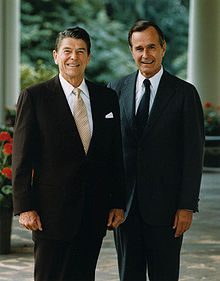
Eight years later in 1988, I cast my ballot for George H. W. Bush in the first presidential election in which I could vote. My family was Republican and I was comfortably following in their foot steps. I was towing the party line. As I became more politicized in later years, I changed my party affiliation, but I always like to tell people that I voted for Bush in 1988. It just goes to show you, a person really can change.
Wedding Blues

My mother was in a bad mood. “What do you mean it’s too long?” she said when I told her I didn’t think my Gharara fit.  I wanted to know why it was so long and billowing. And what was it anyway, pants or a skirt? Why were they so wide legged? Were they coulots? And the Kurta, or shirt, seemed too short. We were in Karachi for Baba’s wedding, which was quite a production. Pakistani weddings are generally a big deal. Especially in my extended family.

“Put on the Gharara and go find a pair of high heels if it’s too long.” She said about to raise her voice. I was twelve and feeling uncomfortable in the fancy wedding outfits which seemed foreign to me. And I thought I was too young to be wearing high heels, but given her worsening mood, I decided to keep this to myself.

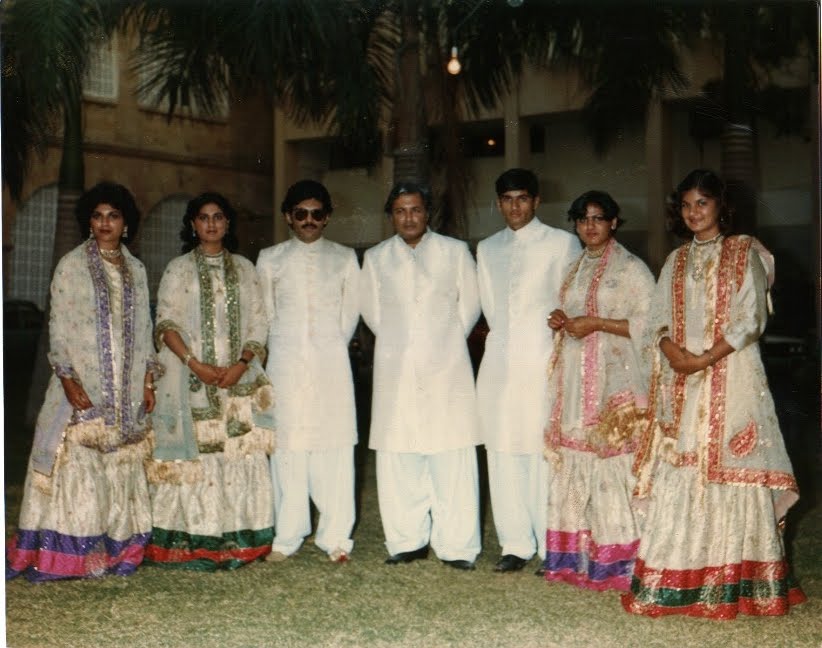
 The six of us at Baba’s wedding photographed with our father. 
From the left: Puchi, Muna, Baba, Aba, Tito, Mimo, and me. 
My sisters and I are wearing Ghararas. At twelve, I am almost as tall as Tito, thanks to the three inch heels I was wearing.

Typically there are seven days and nights of functions involving custom-made ornate outfits, hair and make-up, jewelry, and a myriad of other details including outdoor tents, catering  and seating for hundreds of guests as well as several gifts for the new bride including multiple sets of jewels. There’s the Mehndi, which takes place the day before the actual wedding, a ceremony of mostly women who apply Mehndi, or Henna as it is known in the West, to the bride’s hands and feet, and then all the ladies sing, dance, and bless the bride as they hop around her.

There’s also usually a musical evening, and for Baba’s wedding this included a private concert by the Sabri Brothers, a well-known musical group trained  in Qawwali and North Indian classical music. There’s the Nikah, a small private ceremony for the bride and groom to sign their marriage contract. And then the actual wedding celebration which is typically hosted by the bride’s family. On the final night of festivities is the Walima, or reception for the bride and groom as their first full public event together.

 
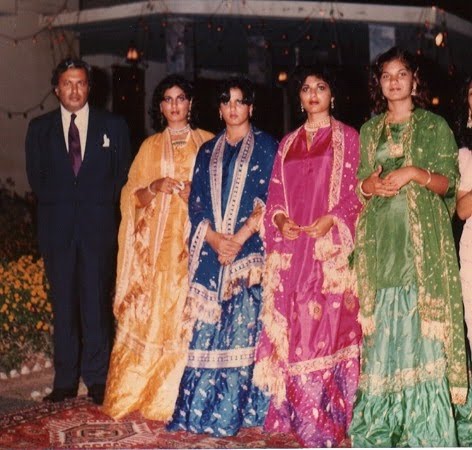
Another function, another Gharara. The Khan sisters with our father on the night of the musical evening.
From the left: Aba, Muna, Mimo, Puchi, and me.

At the time, the Pakistani wedding custom was new to me. For the several years prior to the wedding, we had been mostly living in Connecticut. I was becoming increasingly Americanized and I thought these Pakistani wedding traditions were too elaborate. I think my parents may have thought so too. Towards the end of the week of festivities they did not look very festive.

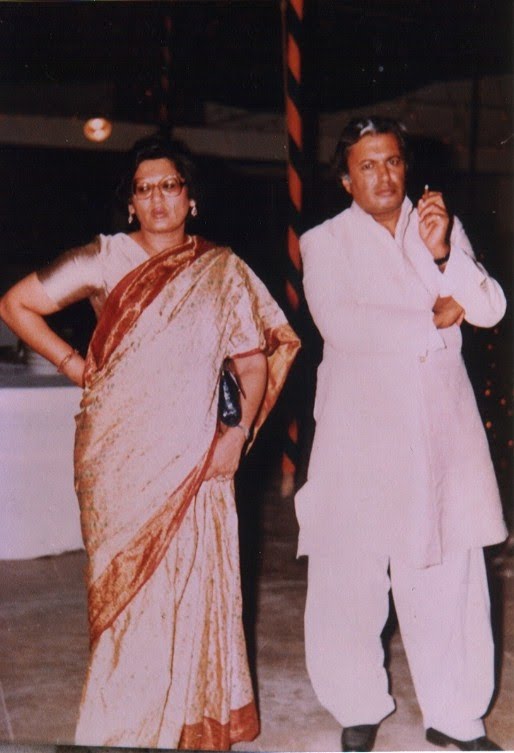
This picture is among my favorite photos of my parents. They are both scowling in a way that is so authentic and unfiltered. It wasn’t the first time I had seen these expressions on their faces, nor was it the last. It’s clearly a look that got passed down to their children. Here I am trying it out early.

Piddles and Bits

Have I mentioned that I sometimes work from home? Generally this works out well, except when the dog barks in the middle of a conference call. Then I just say, “Pay no attention to the barking dog.” Fortunately this does not happen that often.

We’ve had Rosie for about six months. Jenny had been angling for a dog for sometime and I was warm to the idea too.

About a year ago, I was getting ready to go on a work trip, and Jenny said, “When you get back, there’s something I want to tell you.”

“When I get back? No way. Tell me now.”

“I’ve decided,” Jenny started to say, “That I’m getting a dog.”

You’re getting a dog?” I asked. “What about we’re getting a dog?” I mean, we do live in the same house.

I liked the idea of  getting a dog. We had already ruled out children, deciding that we are selfish and have too many bad habits. And we both wanted to keep it that way. But a dog is a different story. It’s possible to be selfish and have bad habits with a dog. My main issue with getting a dog was that both Jenny and I are so busy, I wondered if we’d be able to care for a dog.

“Do we really have time to take care of a dog?” I asked. Jenny reminded me that she was on sabbatical from her job at the University and it might be the perfect time to get a dog. And, with my travel schedule being what it is, Jenny would have some companionship when I am away.

But still, I was not convinced. I did not want Jenny to get distracted by the dog since she was supposed to be writing a book during  her sabbatical. So I decided to take a page from the Obama’s.

“When you finish your book, you can get a dog.” I said matter-of-factly. This was good motivation for writing, even Jenny thought so. But then, my situation changed slightly, and I started working from home more. Plus we almost got broken into, and both Jenny and I liked the idea of  a dog for extra security.

Jenny found Rosie on the internet, and we met her at a local shelter, fell in love, and brought her home. She looked to be a cross between a Border Collie and a Basenji. A sweet six-month old, red-headed, short-haired, medium-sized puppy named Rosie. She had been spayed earlier in the day and was groggy from the drugs and had a belly full of stitches when we brought her home. The next night, Jenny got on a plane to Korea for a week to attend a conference.

I was left alone with the new dog. We had various dogs in my family when I was growing up, but I have never had to care for one, so I was a little nervous. 

I asked some friends if they were available during the time that Jenny was away. “Why? Do you need a dog sitter?” One friend asked.

“No,” I said, “I’m the one who needs a sitter.” I wasn’t sure I really knew how to take care of a dog.

 
Rosie

Various friends came over and kept us company during the week Jenny was away, and I got a lot of good advice. For instance, I did not know that it is customary to name the function of urinating and pooping. Most people might call this pee pee or  poopie or potty, but I didn’t think that was going to work for us. So I considered, “Out.” I tried this for a day or two but it sounded strange.

“Go out, go out,” I would say when we were already outside. Plus my experienced dog-loving friends made a  good point. What if she came to recognize “out” as a command for pee and we happened to be sitting around watching TV and one of us said, “Let’s go out for dinner.” Would Rosie, hearing the word “out,” squat and do her business right there on the carpet? Not happening. I needed a new word.

I considered business. “Go do your business, Rosie,” I would direct. Or I might ask, “Did you do all your business, Rosie?” I thought this was going to work well, but then I remembered how often I work from home, mostly on the phone using all kinds of words, including business.  I might say, “We really need a new business model.” Or “I don’t really think it’s our business to worry about that.” This could get problematic, me sitting at my desk saying “business” a lot would just confuse Rosie or make her do her business on the carpet, since I tend not to be outside when I am conducting my business from home.

I needed another word. I gave this more thought and decided on Piddles and Bits. Piddles for Number 1 and Bits for Number 2.

What I really liked about this new combination is that Piddles and Bits, besides the obvious reference to Kibbles ‘n Bits, had the added benefit of a little jingle.

“Piddle in the Middle, Poop Poop-a-Diddle.”

I often sing this little ditty for Rosie when she needs to go outside and do her business. Jenny gets a good laugh, and I even catch Rosie smiling sometimes.

 
Rosie, basking in the glow and doing what she does best, lounging.

Curry in a Hurry

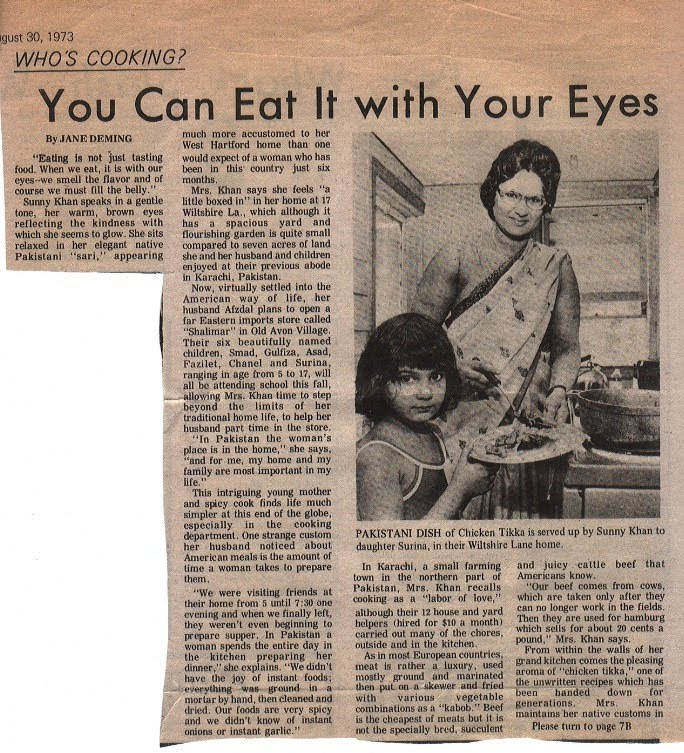
I was playing outside under the sprinklers on a hot day in the summer of 1973 when my mother asked me to come inside and pose for a photo. A West Hartford News reporter was interviewing her, most likely for being a recent “exotic” immigrant to West Hartford. The reporter writes of my mother, “she sits relaxed in her native, elegant Pakistani ‘sari,’ appearing much more accustomed to her West Hartford home than one would expect of a woman who has been in the country just six months.”

It’s hard to read the text of this article, but in it, my mother holds all things instant in high regard. “This intriguing young mother and spicy cook finds life much simpler at this end of the globe, especially in the cooking department.”

“In Pakistan, a woman’s place is in the home,” my mother was telling the news reporter. I heard her talking about how in Pakistan a woman would spend all day in the kitchen preparing the dinner. Grinding spices by hand in a mortar and pestle, cleaning and chopping vegetables. This may be objectively true for many women in Pakistan, but I was fairly certain, even at the tender age of five, that my mother had not spent days in the kitchen preparing our food, either in Pakistan or Connecticut. She had household help to prepare our meals.

She didn’t even know how to cook when she and my father were first married. I think he taught her the first few dishes she ever made. Though she always took an interest in food, and eventually became quite a good cook, she was even better at delegating the meal preparation to the household cooks or to us, her children.

When we moved to Connecticut, she discovered the “joy of instant foods.” Instant garlic, and frozen chopped onions replaced the fresh garlic and onions in masalas and curries. And a little too often for my liking, we were served food out of a can or a box.

“I’m hungry,” I would say.

“Make yourself a Cup-a-Soup!” My mother would respond with a little too much enthusiasm, handing me a box of the dried soup mix that we would pour hot water over. I would look with amazement as dried pieces of chicken and vegetables turned into tender chunks before my eyes, in less than a minute. This was cooking? Chef Boyardee, Hamburger Helper, and Shake ‘N Bake became frequent meals too.

“One strange custom her husband noticed about American meals,” notes the article about my father, “is the amount of time a woman takes to prepare them.”

My mother elaborates, “We were visiting friends at their home from 5 until 7:30 one evening, and when we finally left, they weren’t even beginning to prepare supper.”

I don’t think my parents had discovered take-out and delivery yet.

War Bride

Puchi was telling me a story about our family history. “Our great grandmother was a war bride,” she said casually.

“That sounds so barbaric,” I said. “What’s a war bride?”

“That’s when they kill all the men and take the women.” That does sound barbaric.

Puchi learned about our great grandmother in her second grade history class. She came home one day from the Burnhall School in Abbottabad and told my mother about a disturbing history lesson from earlier in the day. The teacher told them a story about Sardar Samad Khan from the Afridi tribe. He was the General for Kashmir under Maharaja Ranjit Singh, the first Maharaja of the Sikh empire from 1801 when he was crowned at the age of twenty-one until his death in 1839. The Maharaja had captured many principalities including some of the northern areas of regions that are now part of  Pakistan.

Ten years after the death of Maharajah Ranjit Singh in 1839, the British appointed Maharaja Gulab Singh. The principalities in the northern areas were not paying attention to the new Maharaja, so General Sardar Samad Khan hosted a lunch in Gilgit, a mountainous region in the foothills of the Karakorum mountain range. The General invited the twelve heads of state who were giving the Maharaja trouble, to the lunch in Gilgit.  Eleven of them showed up. The twelfth head of state, who did not attend, was from an area called Yasin, a high mountain valley in the Karakorum mountains.

After lunch, Sardar Samad Khan took each one of the Kings out for a walk around the grounds to discuss affairs of state. And after they left the compound he had each of their heads chopped off. He then went to Yasin to find the King of the principality who had not shown up for the lunch. After arriving in Yasin, Sardar Samad Khan and his army killed all the men and Sardar Samad Khan took the King’s wife as his seventh war bride. I’m not sure I would call her a “bride.” This seems like the definition of forced “marriage” to me.

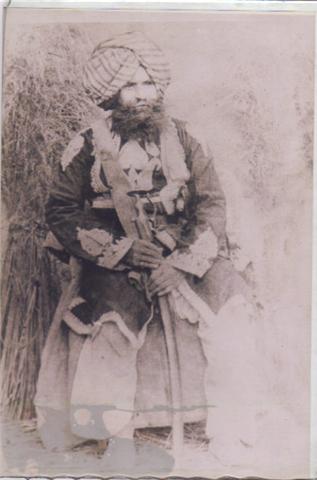
Ami, hearing Puchi tell this story said, “Oh, yes, that story.” And she took out a photo and said, “This is the man you learned about in your history lesson. He’s your great grandfather.”

 
Sardar Samad Khan, our great grandfather pictured with his sword.

Our great grandfathers’ seventh war bride from Yasin, was our great grandmother. Ami used to say that there was a connection between our family and the Wali (or King) of Swat, a Valley in the Northwest Frontier Province of Pakistan. Apparently there were two sisters from the royal family of Swat. One was married to the King of Yasin and the other to the King of Chitral, another mountainous valley in the Karakorum mountain range. So it could be that our great grandmother was also descended from the royal family of Swat. This is all getting really confusing, or should I say Khanfusing? My head is spinning with all this family history.  

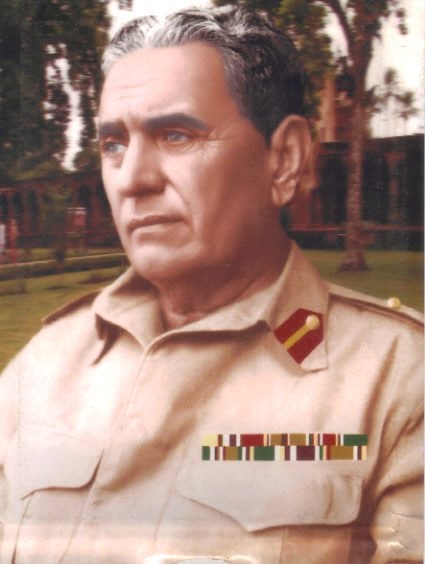
My mother heard these and other family stories from our grandfather, her father-in-law,  Brigadier Rematullah Khan, my father’s father. There’s another story about our grandfather being held as a Prisoner of War in Srinagar, Kashmir for a year, but that’s another story that I’ll need Puchi to tell me in greater detail.

 
Our grandfather, Brigadier Rematullah Khan pictured in his Indian Army uniform, under Colonial rule. This photo was probably taken in the early 1940s. It’s a black and white photo which has been colored in by hand.
For as long as I can remember, we used to say that our uncle, one of my father’s older brothers, Brigadier Aslam Khan, liberated the northern areas of Pakistan. I used to state this fact as if I knew what it meant. But as I got older I relaized I really had no idea what it meant. What does it mean to liberate the northern areas, and how did he actually go about doing this?
And now I’m beginning to piece it together. Because our great grandfather was the General for Kashmir under Maharaja Ranjit Singh, his family settled there. My father and his siblings were all born in Kashmir and they knew the rugged terrain of the northern areas well. Before partition, as Puchi told me, our uncle, Aslam Khan, covered up all the paths to Gilgit, Hunza, Yasin, and Chitral, so that the Indians would not be able to traverse them and claim the territories for India, and that’s how they became part of Pakistan in the Partition. There’s also a story about how Aslam Khan fought the Indians off in Baramulla and other regions in Kashmir, but I don’t know the details of that story.

 
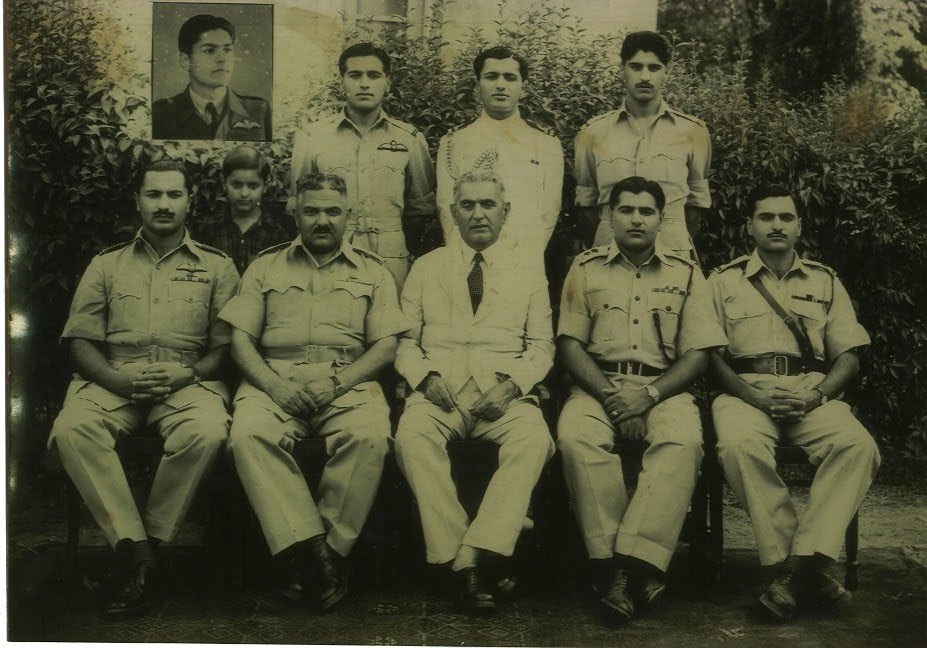
Two generations of military men. Our grandfather, is seated in the middle and Brigadier Aslam Khan is seated next to him on the right. My father is standing directly behind his father in the naval uniform.  

Over time, most of the family dropped the name Afridi, but Puchi says that if you look up old school records for my father, his name was listed as Mohammed Afzal Khan Afridi. Ami used to say that the Afridis were one of the lost tribes of Israel. Puchi says some of the Afridis in Lucknow are being DNA tested to determine whether this is in fact true. So depending on how that turns out, we could also be part Jewish. Maybe that’s why there’s such a similarity between the spellings of Khan, the Muslim name, and Kahn, the Jewish name?

 
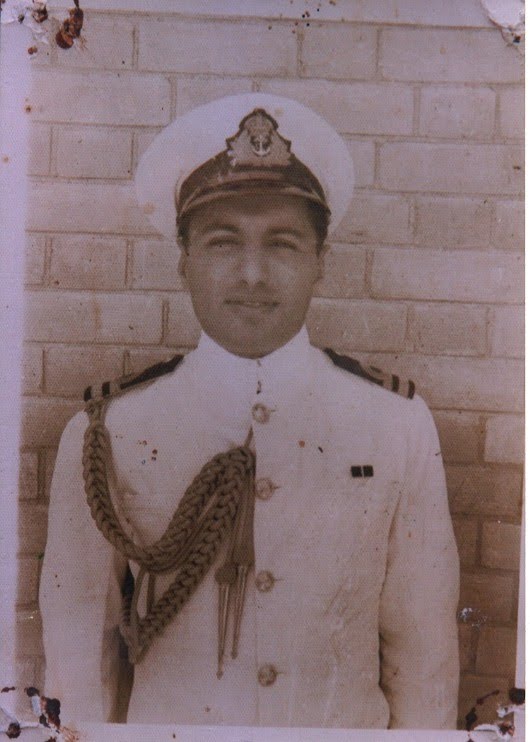
Our father as a young naval officer, the third generation of military men in his family.

Puchi Calling

This blog is bringing  Puchi and me closer together. She calls me all the time now, and she’s finally active on Facebook, too. She also often comments on my blog postings. Sometimes, for her own good, I reject her comments. I don’t think she understands that this is a public space. Like when I posted the Family Feud blog about when we almost got in a fight, she posted one word in the blog comments section: “Ugh.” I thought she was mad at me again, so I emailed her with the subject line, “Ugh?” and asked, “Did I piss you off again? I promise I am not trying to, just having a little fun. Did you not think Family Feud was funny? I’ll lay off you on the blog if it is upsetting. Remember Rodge and Podge.”

She emailed right back and said that the “Ugh” was for putting her foot in her mouth. She was referring to her snippy comment on my Facebook page about Repeat After Me, a blog I wrote about her son Akber’s first words. And then she emailed me again. “And the Ugh is also for stupidly thinking the comments I posted were like an instant message chat rather than a world wide post….being new to facebook and all.” She was also anxious about the Patsy and Eddy stories that I was getting ready to write about her and Mimo’s partying youth. In a third email, she wrote, “The Ugh is also for the trepidation of the Patsy and Eddy stories.” I decided to reject the “Ugh” comment because it lacked these nuances. Since she wasn’t mad at me, I didn’t want other readers to get the wrong idea.

Now she calls me practically every day. She calls on Skype, on my cell phone, on the home phone. Early in the morning, late at night. She lives in the Philippines so we’re never in the same time zone. She’ll be polishing off a bottle of wine just as I’m having my first cup of coffee, or vice versa.

Anyway, I’m glad she called early yesterday morning because I had a lot of questions about the Maharani Baroda who came to live with us in Connecticut in the early 1980s. It wasn’t unusual for us to have guests that stayed with us for several months, or even a few years at a time. My mother liked having a lot of people around. So if you weren’t getting along with your parents, you could come live with us. Or if you were getting divorced from your abusive husband, you could bring your small children and you’d get a suite of rooms for as long as you needed. The Maharani Baroda lived with us for the better part of a year.

 
The Maharani Baroda in the kitchen of the Stoner house.

“How did the Maharani Baroda come to live with us?” I asked Puchi when she called yesterday.

Puchi told me that after we got our US citizenship in 1979, it became easier to get visas to travel to India. Both my parents’ families left their homes for the new nation of Pakistan during Partition in 1947. My father’s family moved from Jammu, Kashmir to Abbottabad, and my mother’s family moved from Bombay to Karachi.

My parents had fond memories of growing up in India and were happy when they were finally able to visit again. They went back with some regularity in the 80s.

 
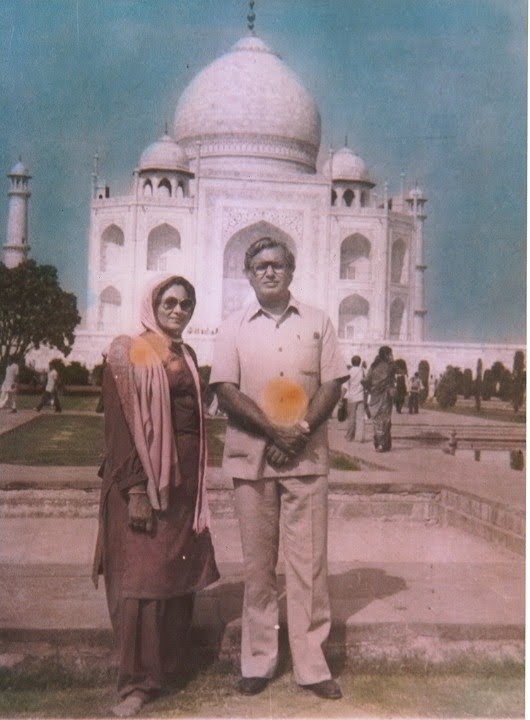
My parents at the Taj Mahal, on one of their trips back to India.

On one of these trips, my father looked up some of his old childhood school friends. When he was a young boy, he went to boarding school in Kashmir with some of the members of the royal family of Baroda. One of his friends grew up to be the Maharaja of Baroda, a city in the state of Gujarat. On the eve of independence in 1947, India contained more than 600 princely states, each with its own ruler.  All of these princely states, joined the new nation of India after independence in 1947.

My father’s friend, the Maharaja of Baroda, married the only daughter of the Maharaja and Maharani of Jodhpur, a city in Rajastan.  Their wedding took place at the Royal Palace in Jodhpur. Apparently, as the Maharani Baroda told the story to Puchi, on her wedding night she brought a menagerie of animals, numbering something like 32, to their wedding suite. The Maharaja was appalled by this wedding night behavior. That was the only night they spent together in their 39 years of marriage.

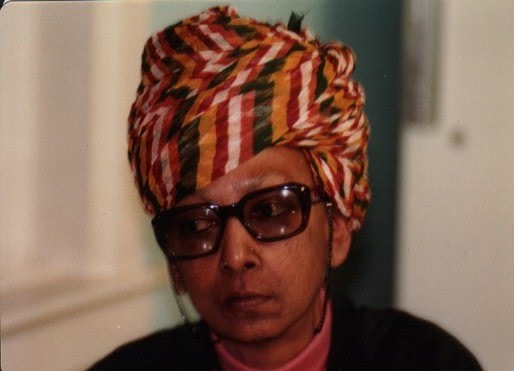
In her youth, the Maharani was a bit of a tomboy. She showed us a photo that she had taken, dressed as an army guard, when she was in her teens. Maybe she was a cross-dresser, who knew? I thought she looked a bit butch when she stayed with us in Connecticut.

 
The Maharani Baroda looking butch, outside of our house in Connecticut.
 
When my parents were able to go back to India they paid a visit to the Maharaja of Baroda and inquired about the Maharani. The Maharaja’s secretary said that the Maharaja and Maharani had not been together for the past 39 years of their marriage, and that the Maharani was living in Boston, being treated for cancer.

When my parents got back to Connecticut, my mother, who was also diagnosed with cancer, went to Boston to find the Maharani. She found her living in a studio apartment. My mother, horrified by these living conditions, invited her to come stay with us, but the Maharani was too proud to leave her modest apartment. I think she actually liked the apartment, not much caring for the pomp and circumstance that had accompanied her everywhere in her life as a Maharani.

My mother insisted. “I have cancer too,” she said, “and my children don’t know how to deal with it, so having you stay with us will be a big help to my children.”

And that’s how the Maharani of Baroda came to live with us. When she arrived at the Stoner house, we didn’t know how to address her, after all, she was a Maharani. “Should we call you Maharani Baroda?” we asked.

“You can call me Aunty Susan,” she said. Susan? Her name could not possibly be Susan. So we said, “Your name can’t be Susan.” She told us that when she was little, she had an English Nanny who used to call her Susan. “So you see, my name is Susan.” Still, it seemed strange to call her Aunty Susan, so I just called her “Aunty.” And Puchi came to call her “Aunty Khamagani.”

“Why did you call her Aunty Khamagani?” I asked Puchi.

Khamagani is a term in Rajastani that means welcome, or best wishes. Whenever the Maharani was introduced to anyone, or greeted anyone, she would say “Khamagani.” Puchi loved how this word sounded and she came to affectionately call the Maharani of Baroda, “Aunty Khamagani.”

I hope Puchi calls again tomorrow because I have some more questions. I can’t remember when Aunty Khamagani died.

Stay on Schedule

My father was handing each of us an itinerary. “Be down in the hotel lobby at 0600 hours tomorrow.”

We were in Athens taking a family “vacation” on our way to Pakistan at the end of 1978. Just my parents and us girls. My brothers didn’t come with us. Whenever we took vacations involving my father, it didn’t feel much like a vacation. He would schedule every hour of our time, in military time. At 0600 hours we’d start our day in the hotel restaurant for breakfast. At 0700 hours we’d have to be in the car. At 0800 hours we’d arrive at the Acropolis and so on. It was grueling.

 
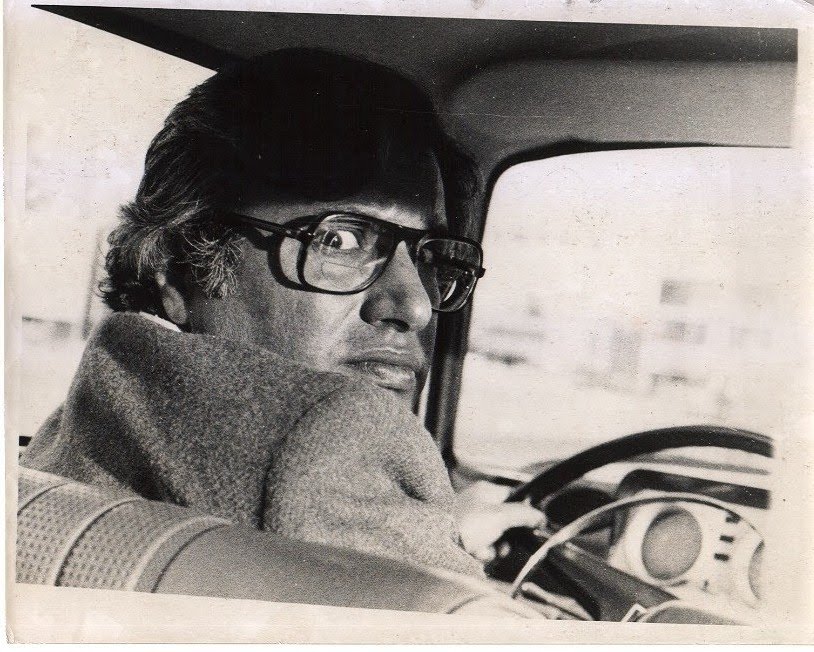
If we weren’t in the car by 0700 hours, we might get a look like this.

We saw more of Greece in a week than I thought was possible. Athens, Deplhi, Olympia, the islands. It was a blur.

 
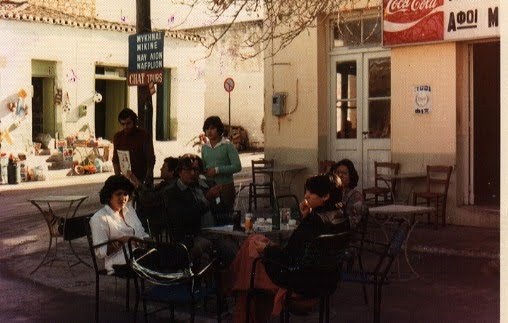
A scheduled stop for lunch at 1300 hours.

My favorite part of this trip was when we got lost in the countryside and had to go off the itinerary. We were hungry and had no idea where we were. We stumbled upon a tiny family-owned restaurant where we had the best food of our trip. Lamb chops, feta cheese, olives, yogurt and eggplant. It was so enjoyable to be spontaneous for a change.

Later the next year we went to India for the first time as a family. My parents were eager to show us their birthplaces. We went to Kashmir where my father was born and lived for the first years of his life. In the summer of 1979, Kashmir was  a peaceful, bucolic place. We stayed at the Palace Hotel in Srinagar. It was a beautiful luxury hotel overlooking Dal Lake. Not that we got to enjoy the hotel much since we were up at 0600 hours every morning to take a day trip to Jammu, or other historic sites like Shalimar Bagh or Pari Mahal. We also visited the boarding school my father attended as a boy.

 
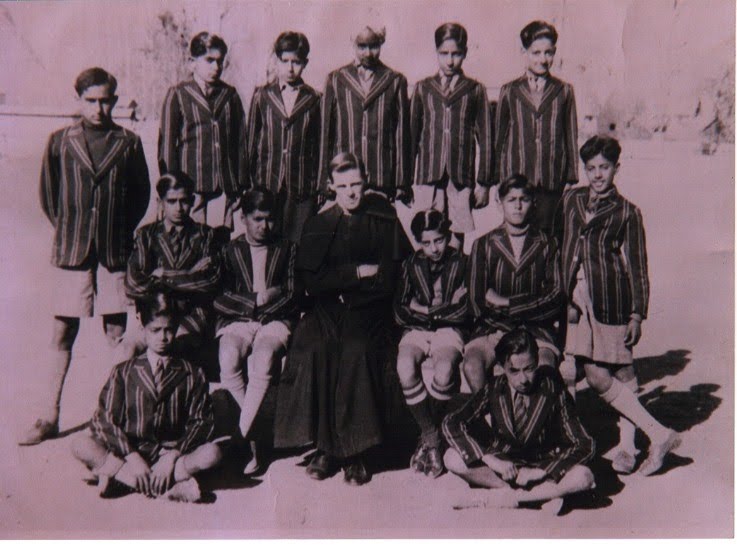
My father with his class at boarding school in Kashmir.
He’s seated just to the left of the priest.

We stayed in Kashmir for seven fully packed days and then went on to Bombay, now Mumbai, to visit my mother’s city of birth. Both my parents still had extended family who stayed in India during the time of Partition in 1947, so we had many lunches, dinners and teas to attend. In Bombay we stayed with relatives. It was August 1979 and if you know anything about Bombay in August, you know it’s Monsoon season. The rain came pouring down in sheets. It was hot and humid. Flies buzzed around everywhere. Rats floated down the rain-flooded streets.  I couldn’t wait to leave.

Our itinerary in Bombay wasn’t quite as full, but the rains made it an unpleasant visit. When our week came to an end, we all felt like we needed a vacation. So we asked my parents if we could go back to Srinagar, on one condition: no itineraries. “We just want some peace and quiet,” we declared.

We wanted to lounge around the grounds of the Palace Hotel and go for a leisurely swim in the pool. Reading books all day. Ordering fresh lime and sodas. And room service. Visiting the lake.

 
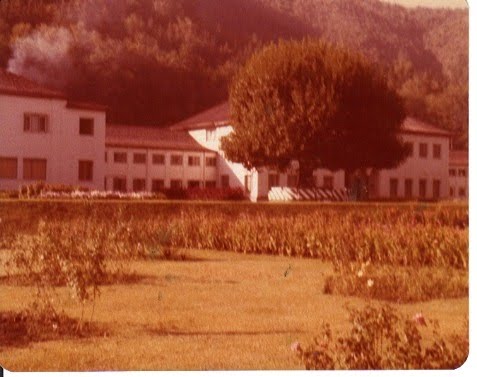
The grounds of the Palace Hotel, 1979.

My father was secretly pleased that we seemed to like Kashmir more than Bombay, and he agreed to our demands. Finally, we got a peaceful and relaxing vacation. No schedules, no planned excursions, no early mornings. Just pure relaxation. I think even my father enjoyed himself.

My Name is Khan

My mother named me. When she was pregnant with me, she read an article about twin princesses born in Malaysia who were named Soraya and Surina, named after stars in the sky. She liked the name Surina, and chose it for me.

 
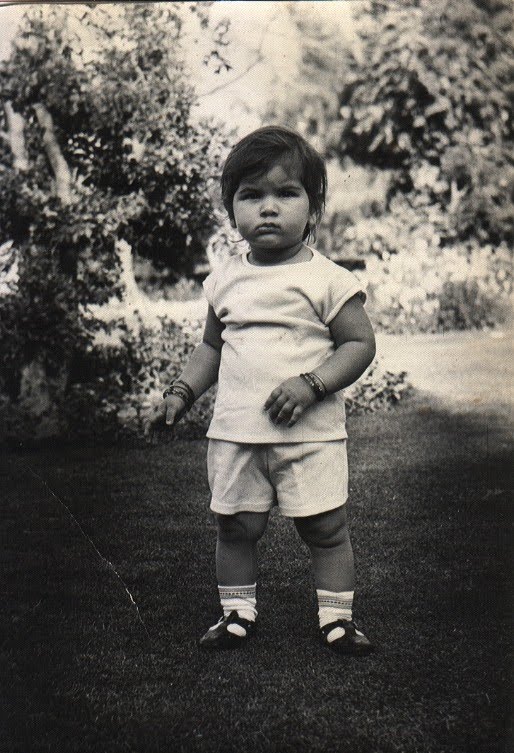
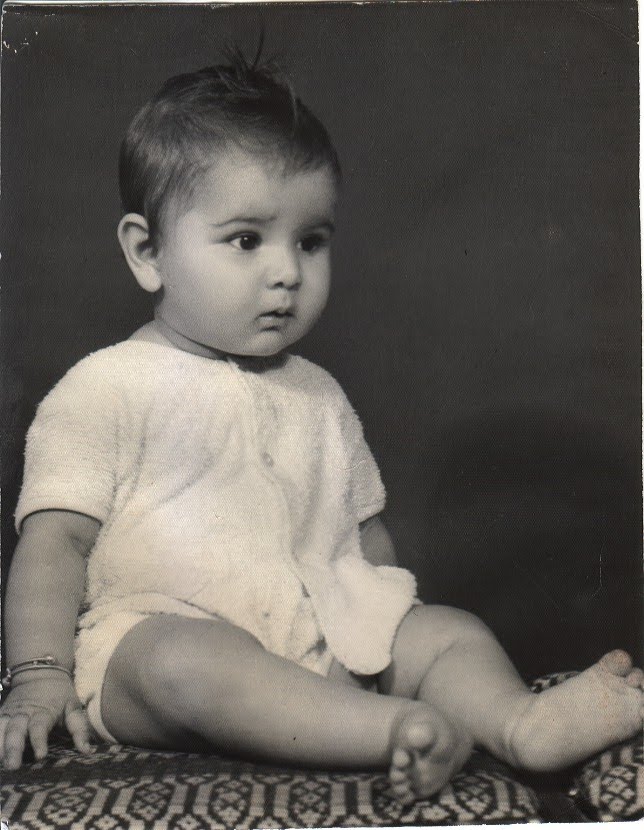
A star is born.

I had other names too. When we moved to Connecticut, my mother, a fan of the nickname, asked me, “Do you want to be called  Betsy or Cindy?” I’m not sure why she only offered me those two choices, or why I didn’t ask for additional choices. Maybe because I liked the names Betsy and Cindy. At first I had a difficult time choosing between the two until I remembered how much I liked watching The Brady Bunch, one of my favorite shows, so I chose Cindy, who was the youngest of six siblings in the Brady family. For years my mother would affectionately call me Cindy or Cindy Lou.

When I was growing up, I never knew anyone named Surina, only Serena the mischievous cousin of  Samantha on the television show Bewitched. These days, the name Surina is increasing in popularity. Made even more popular by the character Serena on Gossip Girl. And how could I forget Serena Williams the tennis star? Surina even shows up on the website Babynamer.com. According to which, my name is used in Hindi and the source of it is Sura, a Sanskrit name meaning “Goddess.” Tom Cruise and Katie Holmes shortened my name to Suri for their daughter. It’s possible that my name may become a favorite of the Scientologists next.

Serena the witch was so popular when I was younger that people were forever misspelling my name, Serena, or sometimes Sarina. I still have to spell it. “It’s Surina, spelled S-u-r-i-n-a,” I say when people ask me my name. And then I spell my last name, “Khan, spelled K-h-a-n,” which, even when I spell it, gets spelled incorrectly as Kahn. So now I say, “It’s Khan, spelled K-h- pause for emphasis a-n. I have seen my name spelled in a variety of ways: Sarina Kahn, Serena Cahn, Sorina Caan. Maybe one day my name will be so popular that the spelling will be too.

Sometimes for fun, Jenny and I think about what our names and occupations would be if we had to go into the Witness Protection Program. Jenny chose Beck (from Rebecca) Laarsen, consistent with her Swedish heritage. Beck would be a valet at a boutique hotel in Montreal. I would be the concierge at the same hotel and my name would be Betsy Singh, consistent with my South Asian heritage, but mixing up the Indian/Pakistani and the Muslim/Sikh just to make a fun political statement. I like that my initials would be BS. And then Beck would make an honorable woman out of me, and I would change my name to Betsy Singh Laarsen.

 
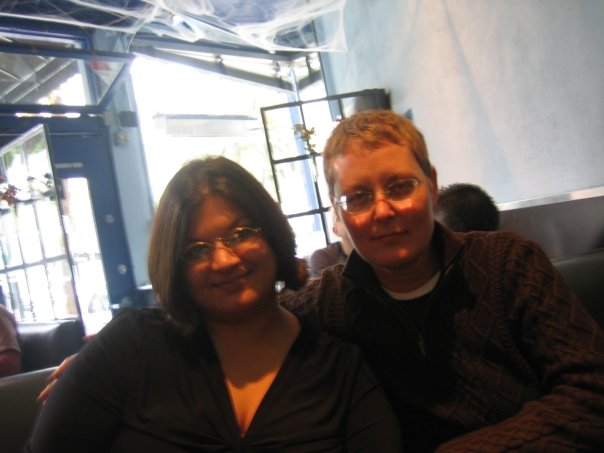
Betsy and Beck.

Put a Record On

Shortly after we moved to Connecticut, I discovered ice cream. My father loved it as much as I did. At least once a week, and often more, we would get in the car and drive to the nearby Friendly’s, an east coast restaurant chain. He would order two scoops of coffee ice cream, and I would get chocolate ice cream on a sugar cone with chocolate sprinkles. We’d often take the ice cream back to the car and eat it together in a comfortable silence.

When I got my first record player, a plastic, white and black General Electric glorified toy, my father, who was starting to gain a few pounds with the regular ice cream excursions, made me an attractive offer. “You can get one record album a week if we give up Friendly’s.”

One record album a week. Tempting. But giving up ice cream so shortly after I had discovered it was unthinkable. After a minute of careful consideration, I said, “I’ll keep the ice cream trips to Friendly’s.” I was gambling on the fact that I might get an occasional record album too. My first record was Elton John’s “Don’t Shoot Me I’m Only the Piano Player.”

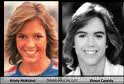
And then my musical taste began to go down hill. I became infatuated with Shaun Cassidy. When we moved to the Stoner Drive house, I had my own bedroom, where I placed a life size poster of Shaun Cassidy on my wall. I would climb up on a chair every night and give him a good night kiss on the cheek. And if I was feeling randy, I would give him a peck on the lips, when no one was looking.

Now that I look back on this, I’m thinking these might have been the first indications of my future as a lesbian. Shaun Cassidy did look an awful lot like a lesbian in his youth. You can hardly tell him and Kristy McNichol apart in this photo.


Party Time

In 1985, my first year of college, Mimo and Puchi sent me two birthday cards, both post-marked December 7. One had a picture of Lucy from the comic strip Peanuts saying “Happy Birthday to someone who’s cute, sensitive, intelligent, talented and wonderful! I could go on and on!” And on the inside, “But your starting to get on my nerves!”

Both are written in Mimo’s handwriting and the return address is “M & P, 112 Stoner Drive, West Hartford, CT.”

The second one has a picture of Dick and Jane with their dog, Spot. “Dick says have a nice birthday. Jane says have a nice birthday. Spot says have a few belts and let the good times roll!” And on the inside, “Spot Knows you better than anyone!”

Inside, Mimo wrote, “Was going to enclose some fun in this card, but you will have to wait till I can mail it on Monday.” 

It’s no secret that the Khan sisters like a good party, and Mimo and Puchi introduced me to this preferred lifestyle early. On my 16th birthday, they woke me up “for school.” It was still dark out, but it was December and it was often dark when I woke up for school. I got up and got dressed thinking it was morning, only to find out that it was midnight. After presenting me with a cake and the Nikon camera I had been longing for, they put me in the car and took me out to a bar for a birthday drink.

I was in my Sophomore year at Walker’s and was living at home instead of at school because of Ami’s cancer. Everyone thought it would be better for Ami if the girls were at home with her. Made sense to me, but she ended her treatment early and left for Pakistan, leaving me under the care of my older sisters who immediately turned the Stoner mansion into their private party pad.

One day I came home from school to find people milling about in various rooms. I encountered Mimo and Puchi in the hallway near the Big room and Mimo said, “We’re making a liquor store run. You want anything?”

And I responded, primly, “Yes. I’d like a liter of Diet Coke and I suggest you get the same.”

Ten years or so later, I was introduced to the show Absolutely Fabulous. It was broadcast on BBC from 1992 to 1996 and 2001 to 2004. Much like the plot of AbFab, as it is known for short, I was like the disapproving Sapphy to my two carefree, pleasure-seeking older sisters. In AbFab, Sapphy, is Eddy’s adolescent daughter, who provides the persistently dour criticisms of Eddy and Patsy’s behavior. Sapphy, like me, was prim and proper, studious, responsible and a bit of a goody two shoes. 

 
Puchi and Mimo circa 1979. They know how to have a good time.

That winter the three of us took a vacation to the Dominican Republic. I was excited. Warm weather, sandy beaches, blue water. But we never went to the beach. Mimo and Puchi would keep me up all night partying and dancing into the early hours of the morning. The daylight hours would be spent inside, sleeping, though it was often hard to find the bed. Their suitcases were an explosion of clothing in the bedroom of the apartment we rented, the furniture covered with various articles of my sisters’ wardrobe.

When the morning came for us to go home, they were in a deep sleep. I packed my things neatly in my suitcase, leaving their piles of dirty, wrinkled clothing in the bedroom, and took a cab to the airport, hoping they would miss the flight. Our seats were preassigned, and of course I had the middle seat, which I dutifully sat in, even though they were no where near the airport.

Most of the passengers were seated. The plane was going to leave on schedule, and I thought, “Oh good. They’re not going to make it.” Just as they were about to close the airplane doors, I saw them. Stumbling down the aisle looking like bag ladies. Unbathed, with handkerchiefs and scarves covering their dirty hair. They sat down, one on each side of me smelling of the things they had consumed the night before.

“When we get home,” I said calmly, “I have a lot of school work to do. If you pass me in the hallway of the house, don’t speak to me. Don’t even look at me. Understand?”

I can’t remember what they said. But the drink cart rolled by a few minutes later and they each ordered a Bloody Mary.

 
They started giving me trouble early.