Wake and Bake

I needed to make some money. “I’m going to have a bake sale,” I declared to my mother. I felt I had the experience, having practiced baking quite a lot on my Betty Crocker Easy Bake Mini Oven which I got when I was about six. By the age of seven I had moved on to making a range of microwave recipes and had even used the real oven for the occasional cakes, cookies and brownies.

I went about planning my menu. An assortment of desserts. A chocolate cake. A no bake cheesecake. Brownies. Chocolate chip cookies. And a graham cracker chocolate specialty I had recently discovered.

I woke up early on a Saturday morning and went about my baking, preparing everything carefully. I cooled each batch of cookies on a rack. I carefully frosted the chocolate cake. I sliced all the dessert items in single serving pieces and made placards detailing their individual sale price. “Slice of chocolate cake: 75 cents,” or “Cheesecake Slice: 85 cents.” The cookies and brownies were each 25 cents. According to my business plan, if I sold all the items I would make approximately $20.

By 10 am, around the time my brothers and sisters began to open their eyes and contemplate getting out of bed, I had all my wares carefully displayed on the kitchen table, each one with its sale price. And a bigger sign with the words “Bake Sale.”

I pulled up a chair and awaited my customers.

“What’s all this?” Mimo said as she came into the kitchen, picking up a brownie and popping it into her mouth.

“I’m having a bake sale,” I said. “That will be 25 cents.”

“I’m not paying for that,” she said, as she picked up a cookie and took a bite.

“But I’m having a bake sale,” I said again. “These are for sale. I made them.”

“Did you buy all the ingredients?” she asked.

“No,” I said. “We already had all the ingredients in the house.”

“Then you can’t sell them,” she said. “All of this belongs to all of us. You can’t charge us for ingredients that belong to all of us,” she said, now sampling a slice of cheesecake.

“But I baked them,” I said, starting to sound a little desperate and possibly whiny. “They’re mine. I can sell them.”

“No you can’t,” she said picking up the entire chocolate cake and walking away. “But good job,” she said as she turned around looking back. “It all tastes great. You may have a future as a baker.”

Christmas Condolences

My mother called me from Pakistan to wish me a happy Thanksgiving. “Hello Foosie,” she said when I picked up the phone. “Happy Thanksgiving. We’re all here about to eat our turkey and we’re thinking of you.”

“You’re having Thanksgiving dinner in Islamabad?” I asked, a bit surprised that they would be celebrating Thanksgiving in Pakistan. “Do they even have turkeys there?”

“Well not exactly, but you know Mimo. She’s arranged the whole thing.” Mimo had moved back to Pakistan in the mid 1990s. “She found us a wild turkey and had it plucked and prepared to go in the oven. She’s even made stuffing and mashed potatoes and gravy and cranberry sauce!” my mother said happily. I couldn’t see her, but I could tell she was smiling.

My sister Mimo is trained in hotel and restaurant management. She loves cooking, planning, and all things entertaining. She will throw a party for just about any reason. In college she had monthly full moon parties. It was probably her enthusiasm that made my family embrace Thanksgiving as our favorite American holiday.

Mimo knows how to throw a good party.

When my mother died several years later in December of 1999, I immediately made arrangements to fly back to Islamabad from Boston where I was living. Ami had been sick for a while with another recurrence of cancer, so her death was not a surprise to any of us, even though she was a young sixty-four years old.

When she died, Mimo was in the middle of planning a Christmas celebration at her house. She put the planning on hold and we attended all the funeral services, which like Pakistani weddings, last several days. Men and women were segregated in different parts of the house. Women, dressed in white, were clutching prayer beads as they prayed and wailed in grief. I didn’t know who many of them were and took the greatest comfort when we would go back to Mimo’s house with some of our cousins and sit around the kitchen table, ordering in Chinese food and remembering the joyful times in our mother’s life. We had many good laughs in those moments, tender and poignant. We were not filled with grief, but rather the memories of our mother and how fully she embraced life.

After the services were over, Mimo went back to planning Christmas. Although we celebrated many American holidays, Christmas was not one of them. We were Muslim after all.

“I’m having a tree cut down and we’ll trim it with ornaments and lights,” Mimo was explaining.

The guest list included us four sisters, our brother Tito who was also in town for Ami’s funeral, our close friends and their children as well as Puchi’s boys. Our oldest brother, Baba, was not included since by now the relationship between the rest of us and him was deeply strained.

Mimo had arranged toys for all the kids, but before they could open their Christmas gifts they distributed flour, lentils, and sugar to communities living in deep poverty on the outskirts of the city. “That way they’ll learn the value of giving and receiving gifts,” Mimo said.

Her living room was going to be rearranged to accommodate a long table for the Christmas dinner and she was going to put a bar in the corner for the Christmas cocktails. It all sounded great to me, especially since I had left behind a series of holiday parties in Boston.

Meanwhile family and friends continued to call on us daily to condole the loss of our mother.

“Don’t you think it’s inappropriate to be having a Christmas party?” I asked.

“No, why?” Mimo said.

Did I really need to enumerate the reasons? “For starters, Ami just died and people are coming to your house every day to condole. And we’re Muslim. We’re not supposed to be celebrating Christmas,” I explained looking at her like I couldn’t believe she had not already thought of these things. “What if someone drops by on Christmas day to condole with us and they’ll see a Christmas tree with us celebrating Christmas, drinking cocktails and wine and otherwise being merry when we should be grieving the loss of our mother? I don’t think that will look good.”

“Good point,” she said. “We’ll have to move the party to Mona’s house. No one will come there to condole with us.”

Where’s the Beef?

When my father was home we usually ate dinner in the dining room. Puchi and I would set the table, with a table cloth, linen napkins, china and silverware.

My parents were not deeply religious, but we observed general Muslim practices. No pork products were allowed in the house, though liquor was admissible for guests, and occasionally my parents might have one drink or, in my mother’s case, one glass of wine.

When my father was not around, the dinner hour was more casual. Sometimes we’d eat at the kitchen table, laying out the food on the counters, buffet style, and grazing as we chatted with our mother about this or that.

Sometimes we ordered pizza. “What do you want on your pizza?” my mother would ask.

“Pepperoni,” I replied.

“We can’t have pepperoni,” my mother said. “It’s made with pork.”

“No it isn’t,” I lied. “They make it with beef.”

“Oh is that right? Well go ahead and order it then,” she said trusting me.

We ordered the pepperoni pizza and a mushroom pizza and maybe some other kind of pizza. Enough to feed all the people who were invariably around for the dinner hour– my sisters and brothers and any number of our friends. I don’t think my mother ever questioned my deceitful declaration that pepperoni was made with beef.

 I like pepperoni pizza.

I never really understood the no pork or alcohol rule. Or the no shellfish rule for that matter. Many of the Pakistani Muslims I encountered drank alcohol. I thought it was hypocritical. Alcohol was permissible but pork was not. So, I quietly started consuming pork products as a child, mostly pepperoni and sometimes bacon. As I got older I introduced alcohol to my diet as well. Many people would say I am not a good Muslim. And I would agree with them. In addition to the pork, shellfish, and alcohol consumption there’s the issue of my lesbianism which is also frowned upon in Islam.

When I’m not lying about how pepperoni is made, I keep my pork consumption on the down low. I make bolognese with mild Italian sausage, or I might order a side of bacon or chorizo with my eggs from time to time, but I don’t make a big deal about it.

My friend Jim introduced me to grilled figs wrapped in prosciutto. Jenny and I made them for a dinner party once, and knowing that one of our guests was a devout Muslim, we made sure to grill some figs without the prosciutto. I made the mistake of putting both on the same plate, which I should have known is also frowned upon in Muslim circles. You don’t want pork products touching non-pork products.

“What are these?” our Muslim guest asked.

“They’re figs wrapped in prosciutto,” I said. “You can’t eat them. They’re pork, but this side of the plate is not pork,” I explained.

She must not have heard me clearly because she promptly popped a prosciutto wrapped fig in her mouth and declared, “These are delicious!” And then she ate another and another.

I quickly ran to Jenny and said, “If anyone asks about the prosciutto wrapped figs, tell them it’s beef prosciutto.”

“But there’s no such things as beef prosciutto,” she said.

“Doesn’t matter,” I said. “Just make sure to say it’s beef prosciutto, they’ll never know there isn’t any such thing.”  Just like my mother didn’t know there wasn’t any such thing as beef pepperoni.

I did recently discover Halal pepperoni pizza. Halal is a term used to designate food seen as permissible according to Islamic law. Who knew? There is beef pepperoni after all.

How I Spent My Summer Vacation

I was outlining all the reasons I needed to live in Paris. “I’ve been taking French since elementary school and I’ve hit an impasse,” I explained to my mother. “My reading and writing skills are good, but I really think I need to live in Paris to master the art of conversation.” It was 1984 and I was completing my junior year in high school trying to make summer plans.

“Call the travel agent and make your arrangements,” my mother said. That was a lot easier than I anticipated. My mother loved to travel and she encouraged us to travel as well.

“Where will I live?” I asked her, hoping I could be set-up in a hotel. I love hotels.

My mother knew the Pakistani Ambassador to France and said she would be in touch with his secretary to get me set up with a French family. This probably made more sense if I was serious about learning French.

“And I’m sure you’ll want to look into French classes, if you’re serious about learning French,” my mother instructed me. I made arrangements to attend the Alliance Francaise in Paris which involved taking an entry exam so they could determine which class I would be best suited for.

A week or so before my exam, Puchi called from London, where she was spending part of the summer with our mother and oldest sister, Muna.

“I’m coming to Paris,” she said. When she arrived the next day, I picked her up at the train station and we went to my French family’s home in Meudon, just outside of Paris. The house was a beautiful stone country home, walking distance from the train in a sleepy little town. I don’t think this was exactly what Puchi had in mind for her Parisian getaway and we spent the rest of her time in Paris in hotels and bars, drinking too much wine. Often I would forget to call my French family and let them know I would not be returning home for dinner, or even the night.

The day before my exam, Puchi, who was planning to leave Paris for Italy to visit Mimo who was on an archeological dig with a group from her college, said, “Come to Italy with me.”

“I can’t. I have to take my French exam,” I responded dutifully.

“Come to Italy with me.” It didn’t really take much persuading. I was getting sick of Paris. The newness of it all had worn off, and I wasn’t really learning French since so many French people leave Paris in the summer and most everyone speaks English. The next thing I knew my bags were packed and we were on a train to Italy.

“Where are we going exactly?” I asked Puchi.

“Um, I’m not exactly sure,” she said taking a piece of crumpled paper out of her pocket. “I’ve got the directions right here.” She was not inspiring confidence in me.

“Will Mimo pick us up at the train station?” I asked.

“She doesn’t really know we’re coming to visit this week,” Puchi said.

“Oh great. We don’t really know where we’re going and no one is expecting us,” I said expressing my disapproval.  “This should be fun,” I added sarcastically.

We took several trains, sometimes without assigned seats and would have to stand for hours at a time in the heat. I looked longingly at the first class passengers, seated in the air-conditioned compartments. On one of the trains, Puchi was able to secure one seat in an air-conditioned compartment. Probably tired of my whining, she gave it to me and told me to go sit down, which I willingly did, not even thinking to offer it to her instead.

It took us about 30 hours to get to Lucera, a small town on the heel of Italy. By this time I was no fun to travel with, complaining about the heat, the food on the train, my Walkman not working, and Puchi not knowing where we were going. She was mostly patient with my bratty behavior.

“So now what are you going to do?” I said to her when we got off the bus in Lucera’s town square. “You don’t even know where we’re going.”

Puchi glared at me, annoyed with my constant negative comments. And then she looked across the piazza, and there was Mimo’s face in the window of a bar.

“See,” said Puchi. “I told you I knew where I was going. I knew we’d find her in a bar,” she said laughing and waving to Mimo.

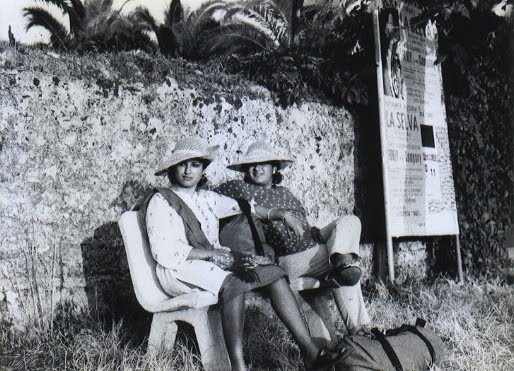
Mimo and Puchi in Italy, the summer of 1984.

Mini Me

I look a lot like my mother. When I was younger my parent’s friends as well as our extended family members called me “Chotie Sunny” which means “Little Sunny” in Urdu.

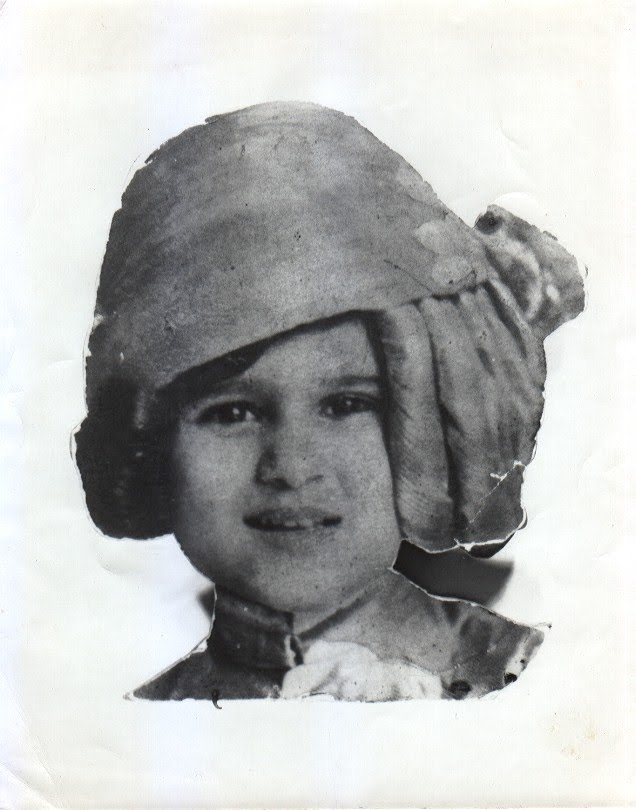
My mother as a young girl, though people often mistake this as a photo of me as a young girl.

Most of us kids resemble our mother, but in my case the resemblance is rather strong. My sister Puchi is the only one among us who looks like my father. My mother’s genes must have been stronger when it came to us kids.

Sometime around 1986 Puchi and I were commenting that she was the only one who looked like our father’s side of the family. Then we began to wonder if my parents were still having sex. “Do you think Ami and Aba still have sex?” I asked my sister.

“I don’t know,” she said. “What do you think?”

Later that evening we were in the living room with our mother and Puchi said, “Foo has something she wants to ask you.”

“I do not!” I said blushing. But I really did want to know, so I said, “You ask her,” to Puchi.

“What do you want to ask me?” my mother said, intrigued by our cryptic exchange.

“Foo wants to know if you and Aba still have sex,” Puchi said.

“Puchi wants to know too,” I said, trying to minimize the embarrassment I was feeling.

“You think people lose their sex drive when they get older?” my mother asked. My parents were only in their fifties and sixties.

“Sort of,” I said.

“Well, we don’t,” she clarified. “We have a very active sex life,” she added. Okay, this was more information than I needed.

“We don’t need details,” I said.

With that mystery solved, we moved onto other topics. “Why do you think most of us look like you?” I asked Ami.

Before she could answer, Puchi said to me, “Well, I know who my father is. Do you?”

I Need a Lesbian Lawyer

My mother wanted a new lawyer. She was on the verge of settling a lawsuit started by my father before he died, and was unhappy with her lawyers. They were advising her to settle the lawsuit because their star witness, my father, was dead.

He slipped and fell in a parking lot in 1986, hit his head on the concrete, suffered a head injury, and was in the process of suing the company that owned the parking lot when he got sick. He died before the case was settled. My mother was still grieving the loss of her husband, and her desire to not settle the lawsuit had more to do with her grief over my father’s death than the settlement that was being offered.

“If you aren’t happy with the counsel your lawyers are giving you, get a new lawyer.” I advised. My mother and I had recently reconciled after a two-year period of not speaking with each other. Our rift occurred because of  her discomfort with my choice to live openly as a lesbian. Despite this period of estrangement, I knew her well. I thought her grief process was more important than the money the settlement offered, and I wanted her to do what she needed to face the loss of the love of her life. “Get a lawyer whose advice you value,” I said.

By the look on her face, this thought had not occured to her. “Well then, find me a new lawyer,” she said.

I found her a lawyer in town that I knew from my work at the lesbian and gay magazine that I was publishing. I made an appointment for my mother and I to meet with the new lawyer to explain the lawsuit. We were in the car on the way to the lawyer’s office, when my mother said, with an air of disapproval, “I presume this woman is a lesbian?” Just when I thought she was finally coming to accept my lesbian identity she started up again with the lesbian stuff.

“Yes, she is.” I replied, thinking to myself, I cannot believe we are going to rehash all this lesbian stuff. Again.

“Well, the men aren’t helping me,” she said. “I might as well go to the dykes,” the smile on her face widening. I didn’t even know she knew the word dyke. Maybe she really was changing her attitude.

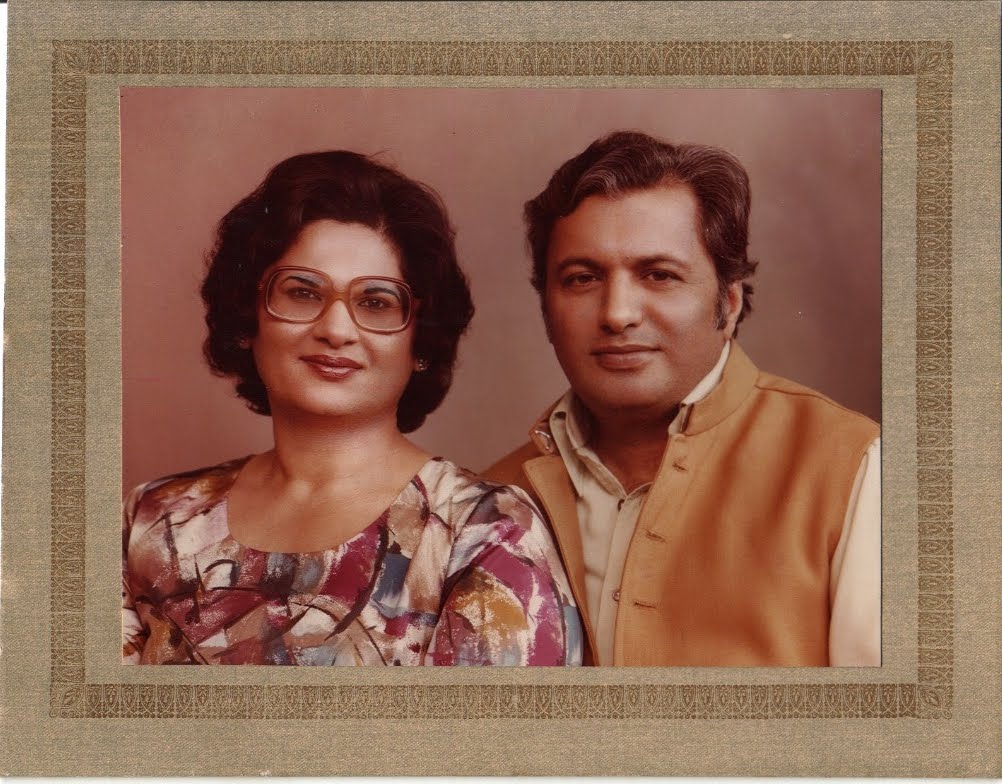
Sunny and Afzal a few years before my father died.

Podge and Rodge

My sister Mimo sent a message on Skype today. A while back I emailed Mimo asking if I could blog about her engagement to Seamus (See: Who Needs Marriage? Posted February 12, 2010). I told her I was dying to tell her engagement story, but that I wouldn’t do it without her go ahead.

“Of course you have the go ahead. I am beyond caring what people think,” she wrote. “As Podge and Rodge say, ‘If I could care less, I would.'”

“Great!” I responded, “But who are Podge and Rodge?”

Apparently Mimo and Seamus cannot get on the internet that easily from Ireland, where they live, and it took her a while to get back to me. “We still do not have internet and I have to use a dongle to get connected.” I don’t know what a dongle is, but it sounds slightly obscene. She finally got back to me today about Podge and Rodge.

“Podge and Rodge are two v. v. (read: very very)  famous Irish puppets,” wrote Mimo. “They have their own T.V. show and everything. Seamus lives by their philosophy.” Mimo said she and Seamus have books by them as well as coffee mugs and bottle openers. ” Google them and maybe you will convert also. Happy St. Pattys. They are twin brothers.”
So I googled them, and they do in fact have their own television show, The Podge and Rodge Show.

.
I can’t really say that I understand their “philosophy” yet, but Podge and Rodge have been good for my relationship with my sisters with their “If I could care less, I would,” approach. Whenever Puchi or Mimo start acting testy, I say, “Remember Podge and Rodge,” and it works wonders. Happy St. Patrick’s Day.

Mother Knows Best

My mother and I were getting out of a cab in New Orleans. “Where are we?” she asked as we arrived at the campus of Tulane University, noticing the palm trees and the tropical heat. “Are we even in America anymore?” She was not pleased with my choice of Tulane for college.  I started to cry. “I’ll go back to Connecticut if you think this is a bad idea,” I offered.

“No, you’ve made your choice, now better see it through,” she said, trying to lift my spirits. She had wanted me to stay close to home and attend Trinity College in Hartford. When I received notice from Trinity, it stated I was on the wait list, and to please respond about whether or not I wanted to remain on it.

My parents were beginning to have financial troubles and attending Trinity would have meant I could live at home which would save quite a lot of money. But I wanted the full college experience, to be “away” from home. So, without telling my mother, I responded to Trinity that I needed to stay on the wait list for personal reasons, but did not really want to attend the school. The next letter that arrived from Trinity, to my relief,  informed me that I had not been accepted. So I accepted admission to Tulane, packed my things, and my mother and I went to New Orleans.

We attended the parent student orientation activities. She helped me set up the tiny dorm room I shared with another student. And then she pulled out the phone book.

“There must be some Pakistani families in New Orleans,” she said flipping to the K’s.

“I guess so.” I said, not realizing what she was doing.

“Here we are,” she said pointing to the name Khan. She picked up the phone and started dialing the number.

“What are you doing?” I asked. “Do you even know these people?”

“Hello,” she said into the phone. “My name is Sunny Afzal Khan, and my daughter is starting school at Tulane University this month. Are you from Pakistan?” she asked. “It would be nice to have some of our people to look after her.”

I was beginning to shrink into a state of embarrassment, thinking to myself, I can’t believe she’s calling random people from the phone book.

“That sounds lovely,” she said. “One O’ Clock? Okay then. In front of the main entrance.” They invited us for lunch the next day.

“But we don’t even know these people.” I protested.

“They’re from Pakistan,” my mother responded confidently. “You’re so far from home. It will be nice for you to have some of our people to look after you.” I was audibly groaning by this point.

The next day, a very nice middle-aged couple picked us up and took us to their home for lunch. He was a doctor and she was a housewife. The lunch was perfectly pleasant, as were they, but this is not what I had in mind for college.

“It’s important for our people to stick together,” my mother said to the doctor and his wife. “You’ll look after her wont you?”

They called me often after that, respecting my mother’s wishes, and inviting me over for dinner or lunch. I never returned the calls. I was too busy with college life to visit with my “people.”

In the end, it turned out my mother was right. Tulane was a not a good choice for me, for a number of reasons, and  I only stayed there one year. 

My mother, with her people. This photo was taken in Pakistan, not in New Orleans.

Dear Diary

I sent Puchi a message on Facebook the other day. The message was titled “Memories,” and in it I wrote that I had been reading some of my old diaries. “Do you remember Johnny and Ronnie Afridi?” I asked her.

“You kept diaries?” she responded. “No wonder you remember all this stuff.” I think I made her nervous, because a few minutes later she wrote again, “I can’t believe you kept diaries all those years.”

One of my many diaries. 

The diary I was reading was written in late 1986 and early 1987 when I was back in Pakistan for an extended visit. Puchi and I used to go out to parties quite a lot back then, and I was struck by how all the same people, usually married, were carrying on affairs with each other.

At 19, I found myself hanging around a lot of middle-aged people. They would ask me what I did. “Are you a travel agent?” I gather they said this, because they considered it a respectable career for a young woman.

So I started answering, “No, I’m a writer.” And I began a novella (in my diary) titled the “The Young and the Eligible,” mostly about the dramas that were  unfolding all around me in the Islamabad social circles we were frequenting. For example, Johnny’s wife left him for Ronnie, his identical twin brother. Johnny shifted his affections to Puchi. Tina was taken by Johnny. Puchi had a thing for a man we called Beau. Beau was in love with a Sri Lankan woman.  And then there were a whole lot of Frenchmen who may have been gays.

The one story that may be in an earlier  diary that I would like to tell is when Puchi met David Bowie. I asked her, “Can I tell your David Bowie story? If so, please dilate on some details. I know you were fourteen, because I have my diaries.” But it is her story, so I feel I need permission to tell the full version.  She said she is thinking about it and will get back to me. I have not heard from her since.

Fish Freak Me Out

I have an irrational fear of fish. I like eating fish, I just don’t like swimming with them. This means I am most comfortable in a swimming pool, and most uncomfortable in any kind of water that is home to living creatures. Ponds and lakes are the worst in my opinion, followed by rivers and oceans.

I like to swim, and I like the ocean but swimming in the ocean can stress me out. For years I tried to hide this fact from most people. “Let’s go swimming!” my friends would say running into the ocean.

“I’m right behind you!” I’d yell. “I just want to get a little more sun.” This would buy me some time and if I was lucky, they’d be back before I would have to go in.  Otherwise, I would reluctantly go into the ocean, but I was always twitching and turning. “Was that a fish that just brushed up against my leg?”

With my family, I was more transparent about my fear of swimming in the ocean. We would often take our winter holidays near the beach. In early December of 1983 I wrote my father a letter from boarding school in Connecticut. He was in Pakistan. “I think we’re going to Panama for Christmas break. I’m not too keen on it, but it will be okay.”

One of our cousins was living in Panama City with her husband and children, and my mother arranged a trip for us to visit them and other parts of Panama over the winter holiday. Puchi, Mimo, and I packed our bathing suits and beachwear and left for Panama with our mother in late December. Our friends Peter and Joel joined us for parts of the trip.

Earlier that year, in August of 1983,  Manuel Noriega had assumed power of Panama,  promoting himself to General and becoming the military dictator until 1989 when the US invaded Panama, removed him from power, and tried him for drug trafficking, racketeering, and money-laundering.

While he was in power, Noriega was on the CIA payroll, and for much of the 1980s, he extended new rights to the US. Despite the canal treaties, he allowed the US government to set up listening posts in Panama which allowed the US to monitor sensitive communications in all of Central America and beyond. Noriega also aided the US-backed guerrillas in Nicaragua by acting as a conduit for US money, and according to some accounts, weapons. Noriega had been on the CIA’s payroll off and on since the 1950s, but towards the late 1980s, the US viewed him as a double agent believing that he was providing information not only to the US and its allies Taiwan and Israel, but also to communist Cuba.

The 1988 Senate Subcommittee on Terrorism, Narcotics and International Operations concluded that “the saga of Panama’s General Manuel Antonio Noriega represents one of the most serious foreign policy failures for the United States. Throughout the 1970s and the 1980s, Noriega was able to manipulate US policy toward his country, while skillfully accumulating near-absolute power in Panama. It is clear that each US government agency which had a relationship with Noriega turned a blind eye to his corruption and drug dealing, even as he was emerging as a key player on behalf of the Medellin Cartel.”

The Panama Canal, 1983 

“Didn’t you say one of your classmates lives in Panama City?” my mother said after we arrived. “Ring her up.” My mother loved meeting new people and she’d rather have a local perspective than a tourist one. I didn’t want to impose on my friend’s winter holiday, but it was impossible to say no to my mother, so I reluctantly called my friend.

As it turned out, my friend’s mother was Noriega’s personal secretary and my cousin’s husband was a branch officer for BCCI, the Bank of Credit and Commerce International, providing personal banking services for Noriega. He later became embroiled in the BCCI scandal and would later be convicted for the money-laundering services he provided for Noriega. I wasn’t aware of the nuances of these political connections back then, I just remember we had a pretty good vacation, later realizing these ties to Noriega probably were partly the reason for the decadence we experienced.

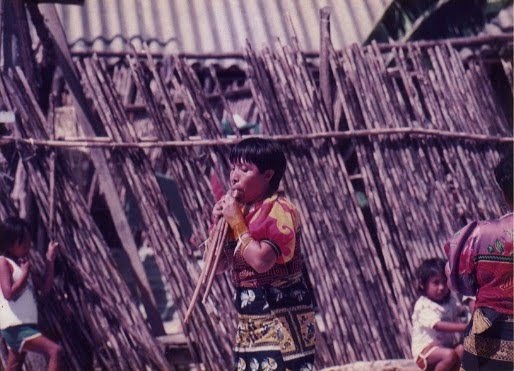
For instance, in passing, we mentioned we might like to visit the San Blas Islands, an archipelago of 365 islands off the north coast of the Isthmus, the narrow strip of land that lies between the Caribbean Sea and the Pacific Ocean linking North and South America, east of the Panama Canal. The next thing we knew, a private plane was arranged. When we got to the small airport, there were seven of us and only six seats on the plane. Within moments, a new plane that could accommodate our party of seven arrived on the tarmac.

The San Blas islands were beautiful. For lunch we ordered fish, and the restaurant staff asked us to select one to our liking, pointing to a netted part of the sea where the fish identified for the restaurant kitchen were swimming in isolation. I was glad not to be swimming with the fish, especially since I was about to eat one of them.

 
The Kuna Indians of the San Blas Islands

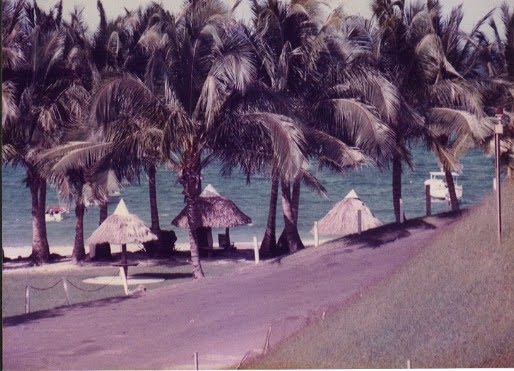
We also went to Taboga, a small beach resort, as well as the Panama Canal,  and after Joel and Peter left, the four of us went to Conta Dora. My friend’s mother said they would be visiting the same resort and invited us to lunch. We arrived at the hotel restaurant and thought we must have the wrong day or the wrong restaurant. “The restaurant is reserved for a private party,” the Maitre D’ informed us. There was one long, elaborate, U-shaped table set up in the middle of the outdoor veranda.

“We must have the days mixed up,” one of us said. “There must be some important people coming for this luncheon,” we predicted. It turned out, we were the guests of honor.  My friend’s mother had arranged the luncheon for us.

 
The view from the hotel restaurant in Conta Dora.

When we arrived at the resort a day or two earlier, I went to the room I shared with my mother, changed into my bathing suit, and announced that I was going to be spending the rest of  the day by the pool.

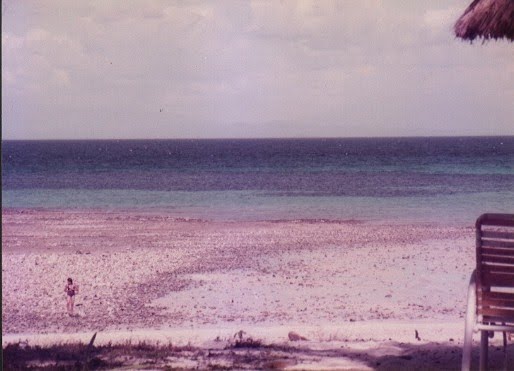
“Have you seen the water?” one of my sister’s said. “It’s beautiful. Clear and blue. Why would you want to go to the pool?”

“She doesn’t like to swim with the fish,” my mother reminded them.

 
The beautiful Sea, in which I did not swim. 


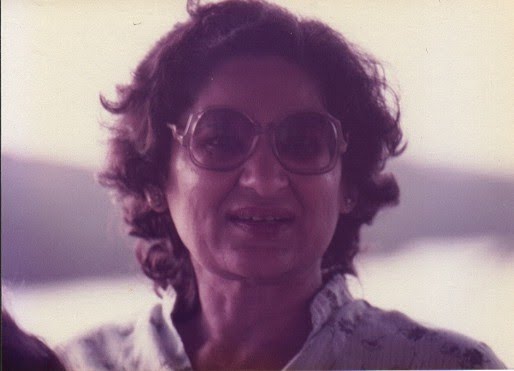
My mother looking relaxed in Taboga.