A Tribute to Jean Hardisty

Jean Hardisty hired me to be a research analyst at Political Research Associate in 1995. Getting the job at PRA was a dream come true. “If you offer me this job,” I said to Jean in my interview, “I would accept it in a heartbeat.” That seemed to work, because a day later she called to offer me the job and I moved from Connecticut, where I had been publishing an LGBT magazine, to Boston to research the Right.

On my first day, I was sitting at my desk around 6pm not wanting to leave because Jean was still at her desk and I wanted to make a good impression. We had an open office layout, like a newsroom, the idea being that it would enhance communication among us.

“Tell me again, what did you get your degree in, dear?” Jean said leaning over towards my desk. Oddly, this had not come up in my interview process.

Sh!*t! I thought to myself. I did not have a degree, which is another much longer story. The short story is that my first year of tuition at Tulane University had not been paid for family financial reasons and because of that, I could not matriculate anywhere else. Which left me with a huge debt from a private university and no degree. Meanwhile here I was at an esteemed think tank, on my first day of work, and the dreaded question of my degree had come up. So I told the truth. “I don’t actually have a degree,” I said, waiting for the other shoe to drop, expecting Jean to gasp in horror.

“Well, you’ll fit right in, dear. I’m the only one here who has a degree. Everyone else is a college drop out.”

“Even Chip?” I asked in disbelief.

“Oh, yes, he didn’t finish his BA either,” she said nonchalantly as she finished doing something at her desk. And that was the end of that, for a year or two. And then one day, she brought it up again. “I’m worried that it will hold you back, not having a degree,” Jean said. “I think we should pay your debt so that you can finish your BA.”

“It’s more than $20,000,” I said. “I don’t have that kind of money.”

“We can negotiate it down. I’ll pay the debt, if you promise me you’ll get your degree.” I was a little stunned by her generosity.

“That is very generous. I’ll think about it,” I said. But at that moment, I didn’t want to go back to school. I felt like I was just starting my career. I barely had enough money to get by, and I didn’t want to build up more debt. A day or two later, I thanked her for her offer and politely declined.

She didn’t judge, or make me feel bad. She just continued to mentor me, and teach me, with care, and calm, and her signature dry wit.
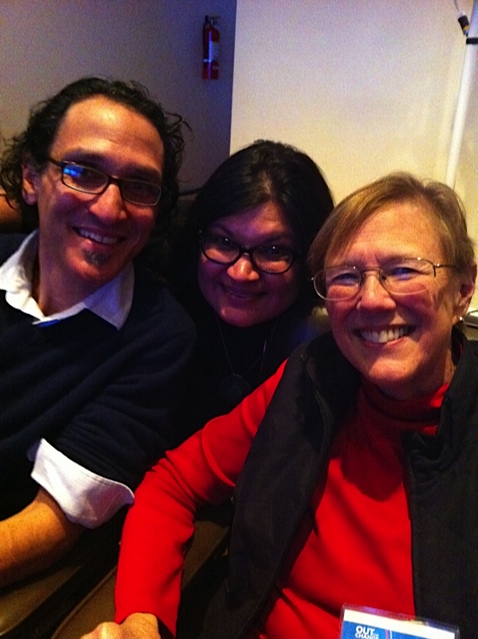
With Jean and Tarso Ramos, current Executive Director of Political Research Associates at the Ford Foundation launch of the LGBT Rights Initiative in  November of 2012.

With Jean and Tarso Ramos, current Executive Director of Political Research Associates at the Ford Foundation launch of the LGBT Rights Initiative in November of 2012.

On my second day of work, I said to Jean, “So…should I be researching anything in particular?” I was reading various articles and publications, but was not really sure if I should focus on anything specific.

“Oh, that will probably take you a year or two to figure out,” she said. “Just keep reading and it will come to you. And if you need a more quiet atmosphere you should stay home and read.” I almost fell off my chair. “I’m getting paid to read,” I said to my housemate later that evening.

I didn’t stay home much to read, though. I was too excited about coming to work.

A few weeks later, an article I wrote about sexuality in South Asia that was published in Trikone magazine elicited a nasty letter to the editor, which I was upset about. “I can’t believe they would write something so mean,” I said, wanting Jean or anyone else around me to sympathize with me.

And Jean said, very calmly, “What did you learn from your attacker, dear?” Those simple words have lived with me ever since. In times of conflict and adversity, I think about what I am learning, rather than focusing on my anger or frustration.

Another time, Jean came back to the office after giving a talk. I don’t know who might have spoken with her at the same event, but when she returned to the office she offered us some unsolicited advice: “When you are giving a talk, it’s never a good idea to start with ‘I’m not feeling well or I’m nervous,’” she said. “No one will focus on the substance of your comments, they’ll focus on your cold or on how nervous you might appear.”

When I got my first iPhone, I showed her how I could search for anything I wanted. “This changes everything,” I said. “We have access to information in a new way.” And Jean, ever the measured sage and analyst said, “We might have access to information in a new way, but who will make meaning of it?”

Whenever I needed advice over the years, I would call Jean. When I had good news to share, I would call Jean. In 2010 I was appointed by the University of California as the Regents’ Lecturer and spent a week in residence at the University of California, Santa Cruz, teaching classes, meeting with students and giving a public lecture. “Oh that’s wonderful, dear,” Jean said. ‘I don’t think we need to worry about your BA now,” she said with delight in her voice.

In 2011, I was working at the Ford Foundation where I went to launch the LGBT Rights Initiative. A year later in 2012 I was promoted to lead the entire unit, which included LGBT Rights, Women’s Rights, and HIV/AIDS. Jean sent me an email titled, “Your Promotion,” which I still have on my computer. “I’m bustin’ my buttons with pride and delight.  You go, girl! Love, xox Jean.”

One of our last email exchanges, late in 2014, when we were trying to find time to write something together for the Astraea Foundation, my schedule was overloaded. I was on and off a plane, moving across country back to California and starting a new job, and she said, “Let’s not stress about this. You have enough on your plate.” I was relieved and responded, “Thanks for saying that, because I really do have a lot on my plate. Monday is my first official day at the new job and let me tell you, they have got me tightly scheduled! Plus, did I mention I have a Board meeting my first week? It’s kind of comical.”

Jean responded, “Sending sympathy your way. As my old, beloved auntie used to say, ‘This too shall pass.’ I find I often have to invoke that saying, then try to believe it. Love, xox, Jean.”

In her quiet, gracious and genteel way, Jean Hardisty fostered courage, conviction, rigor, intellectual curiosity and generosity. She was, put simply, a treasure. And I will forever be grateful that I got to call her a mentor and a friend.

Rest in peace, dearest, Jean.

My Big Gay Funeral

We invited Jenny’s mom, Pat, to move to Long Beach the same year we moved here, in 2003. After many years of teaching elementary and middle school, she had retired and was living in Newburyport, Massachusetts and was starting to have a little trouble. Mostly small stuff, like opening a jar or making sense of her landlord’s puzzling demands. And since we had just moved to southern California we thought it would be a good idea for her to join us, especially since one of Jenny’s brothers, Neal lived nearby. “She’s getting old,” I said to Jenny. “She’s going to need help doing things.”

Pat, after she moved to Long Beach

Pat was happy when we suggested she move here. “My children have invited me to live closer to them,” she would say proudly.

Pat adored her kids, Dane, Neal, and Jenny. Sometimes I would poke fun, “Pat, I don’t know how you did it, but you managed to raise two gays and a hippie.”

Before the hippie grew his hair long and the two gays came out.

The gay stuff didn’t seem to bother her, at least by the time I came on to the scene. She welcomed me into her family when Jenny and I got together. “It’s been a happy time for me this past week to have you visit with Jennifer,” she wrote to me in 2002. “I enjoyed seeing you and Jennifer giving so much of your caring support to each other in your work and daily life.” Later that year, I started calling her my mother-not-in-law.

When we first met.

Jenny’s brother Neal is a big gay too, but he didn’t come out to Pat until after she moved to Long Beach. When she was well into her 70s and he was well into his 40s.

Before we moved to Long Beach, Jenny and I were living in San Francisco, and we invited Pat to visit us over her birthday. Neal decided he would fly up from Orange County to surprise Pat. So he flew up and let himself into to our apartment while the three of us were out to lunch. When we came back, Neal hid in the closet of the guest bedroom. And when Pat went into the bedroom, Neal jumped out of the closet.

“Oh my goodness!” Pat shrieked in surprise. “Neal, how long have you been in there?”

“Oh about 45 years,” Neal responded. Perhaps, subtly, or maybe not so subtly, trying to come out to her.

Later that evening, as we recounted the story to our friends Jim and Matthew, Pat said gently, “Neal, are you trying to tell me something?”

Neal is a big gay.

Neal and Pat had a special relationship. He was her second child and they always had a strong bond. She visited him every winter and would stay three or four months. The two of them were inseparable. “Meet my significant mother,” Neal started saying.

After she moved to Long Beach, Pat did her best to be helpful. She called often.

“Girls,” she said once on the answering machine. “I just saw on the news that there’s a virus and it’s coming to California. On the computers. You know like the ones you two use? Well, they say the virus should be here by noon, so make sure you turn your computers off.”

She did the same thing to Neal. “Oh Neal,” she said leaving a message on his answering machine. “I just read an article in the Boston Globe, and it said men who tie their ties too tight get glaucoma, so don’t tie your tie too tight, okay?”

Sometimes when she’d get overly anxious, I’d say, “Pat, your having a patty meltdown.”

Even in these last years of her life, she kept making us laugh. A year or two ago, she was taken to the hospital and they had her all rigged up with wires and patches, probably monitoring her heart beat or some such thing.

We rushed to the hospital and when we got to her bedside, she looked at us, deadpan. “I’m wired.”

Sometimes her sense of humor was a little racy. “When they’re toes to toes his nose is in it, and when they’re nose to nose, his toes are in it.” I’m still figuring that one out. But it sounds inappropriate.

A few years ago, we were getting in our car. Pat was buckling herself up in the back seat and I turned to her wanting to know if she had enough room. “Are you good back there?” I asked.

“I’m trying to be,” Pat said. And she was good. For all of her 82 years.

Pat passed away peacefully on December 10 with Neal at her side holding her hand and playing music. Silent Night was on the iPod and the words “sleep in heavenly peace” had just played when she took her last breath.

Now we’re planning her memorial service and I’m beginning to think it’s pretty gay. We asked her former neighbor and good friend, Bill Benson, to officiate the service. “I think you’re really going to like my neighbor,” Pat said when she met Bill. “He’s gay.”

And the funeral director is gay too. Even the priest who is going to say a prayer for Pat is a gay.

I’m beginning to think we should call Pat’s memorial service, “My Big Gay Funeral.” I’m sure the hippie will not be offended.

Read more about Pat on her Memorial website.

Thanksgiving: It’s Not Just for Americans Anymore

My family embraced the Thanksgiving holiday when we moved to the US from Pakistan in the 1970s. It was another excuse to have a dinner party, even if the food was a bit strange. Over the years we came to love the Thanksgiving turkey and gravy, and stuffing and mashed potatoes. Maybe with an extra dash or two of pepper to add spice.

When my mother and some of my siblings moved back to Pakistan in the 1990s, they continued celebrating the American holiday.

“Happy Turkey Day, Foosie,” my mother said over the phone one year. She was calling from Pakistan. “We’re getting ready to have our Thanksgiving dinner.”

“You’re having Thanksgiving dinner in Islamabad?” That seemed so wrong. “With a turkey? Do they even have turkeys there?”

“Not exactly,” my mother responded. “But we managed to find one. And Mimo made stuffing and mashed potatoes too!” She exclaimed with a little too much excitement. I love Thanksgiving as much as the next sister, but in Pakistan?

Nevertheless, I take great joy in planning and cooking the Thanksgiving dinner every year. Here in the US, where it seems more appropriate. We invite friends and family every year, which sometimes might include a South Asian or two.

A few years ago, I was planning the Thanksgiving menu. “I’m going to make an herb roasted turkey with gravy, sausage stuffing, mashed potatoes, and brussels sprouts in a horseradish cream sauce,” I explained to Jenny.

“We’ll start with pomegranate champagne cocktails, parmesan and caramelized onion scones, rosemary spiced roasted pecans, and thyme dip with toasts,” I continued.

“You shouldn’t do everything yourself,” Jenny suggested.” People like to bring things.”

So when my one of my friends, a Bengali, asked if he could bring something, I said, “Sure. How about cranberry sauce?”

“What is that?” he asked.

“Or dessert,” I said, not sure how to explain cranberry sauce to a Bengali.

“Okay, I’ll bring a chocolate cake.”

“He’s bringing a chocolate cake,” I said to Jenny with mild disappointment. “Who has chocolate cake for Thanksgiving? That’s not a Thanksgiving dessert.”

When another of my friends, also from the Indian subcontinent, asked what she could bring, I suggested the cranberry sauce again. “How about cranberry sauce?” I asked.

“How do you make that?” she asked.

“I have no idea,” I replied. “I would go to a gourmet grocer and just buy some. Make it easy on yourself.”

When she arrived, carrying an enormous bowl, I asked, “What’s that?”

“It’s the cranberry sauce. You asked me to bring it,” she replied.

“The entire bowl is filled with cranberry sauce?” I asked.

“You said there would be thirteen of us.”

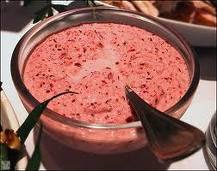
I don’t think she understood the concept of cranberry sauce as a condiment. And then I noticed it was pink. “Why is the cranberry sauce pink?”

“What do you mean? It has cranberries in it. I made it myself.”

“Did you make it from a recipe?” I asked, slightly confused.

“Of course. It’s Susan Stamberg’s recipe. I got it from NPR and I quadrupled it since there are thirteen of us.”

Susan Stamberg's Cranberry Relish

The cranberry sauce was the largest dish on the table, bigger than the Turkey platter. We placed it in the center of the table since there was no room for it on the buffet. I’m not a fan of the cranberry sauce, especially when it is pink and fluffy, so I didn’t try it, but everyone else seemed to enjoy it. And there was enough leftover to send home with every guest. And then some.

This year my cousin Sonia is joining us for Thanksgiving. She grew up in the UK. “Right,” she said in her Queen’s English. “So what do people do on the Thanksgiving holiday?”

I don’t think I’ll ask her to bring the cranberry sauce.

Mistaken Identity

My name gets misspelled a lot. “It’s K-h-a-n,” I correct people. “Not K-a-h-n.”

“Oh, but don’t worry,” I say trying to make the misspeller feel better. “It happens all the time. I’m used to it.”

When I did more freelance writing, years ago, I would file my articles with my byline, typed correctly, “Surina K-h-a-n.”

“On many an occasion, it would come out in print, “Surina Kahn.”

“Does the editor think I don’t know how to spell my own name?” I would ask who ever happened to be sitting around me.

Colleagues have been known to misspell my name, too. People will invite me to conferences to speak and ask me for my bio. I send it with my name spelled correctly, but then I see Surina Kahn in the conference program.

Just last week, I got the Sun Dial, my high school alumnae magazine, in the mail. “Look there’s a picture of your class at the reunion,” Jenny pointed.

“Oh great,” I grumbled. “They spelled my name wrong.”

So it should not come as a big surprise, that in some misguided circles, I am known as a Zionist Jewish Lesbian.

I am listed on an anti-Semitic, and seemingly white supremacist, website titled, “Jewish Control of Gay Rights.”

The website notes, “The Jews know damn well that most heterosexuals aren’t at a spiritual level where they can grasp this truth, so they use heterosexual animosity towards gays to keep our Aryan peoples divided.”

Another website called, “The French Connection,” has me listed alongside a number of other LGBT “Jewish” activists. All because of sloppy spelling.

They say, “Here is an exhaustive list proving, once and for all, that the radical homosexual movement in the United States is a Jewish movement. Jews created it and run it from top to bottom. They are pushing the perversion and degeneracy that is spreading disease, sin and sickness through America like a wildfire.” I wonder if I should let them know my name is spelled K-h-a-n? Although I’m guessing they don’t like the Muslims either.

They might be interested to know that I’m not a good Muslim, or Jew for that matter. I enjoy pepperoni on my pizza, after all. (See Where’s the Beef, posted April 2, 2010) Or prosciutto wrapped around grilled figs. I drink alcohol which is also a sin in Islam. I like to sip a glass of prosecco or an old vine zinfandel from time to time. But does that make me Jewish?

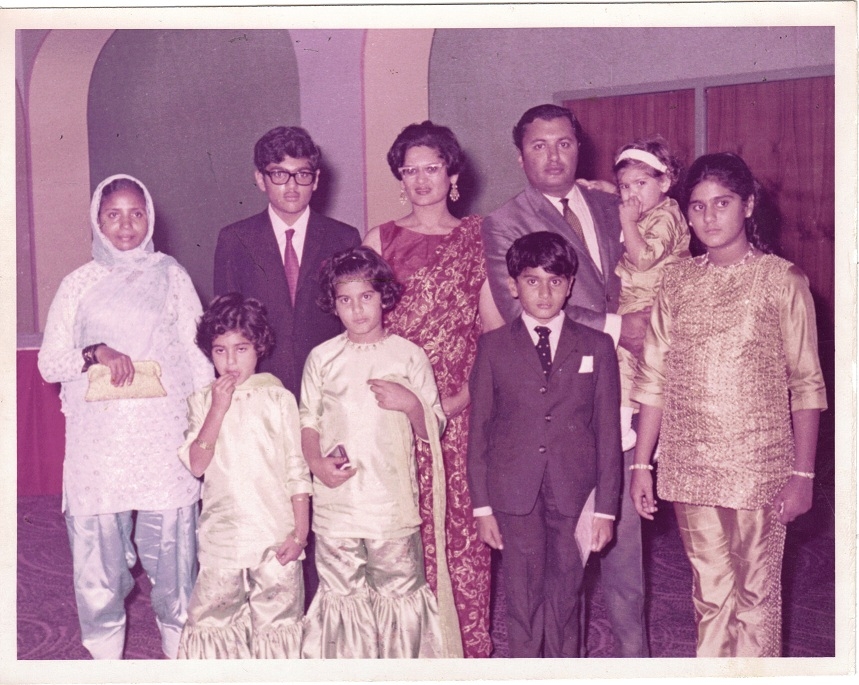
Do we look Jewish? My brothers and sisters with our parents and our Nanny Saeeda, circa 1968. I am the little one in my father's arms.

Bed Rest

I was feeling feverish. “I think I’m dying,” I told my mother. She held the back of her hand up to my forehead. “You do feel a bit warm,” she said.

We were in a taxi, on our way to the Golden Temple in Amritsar, the last of our stops on our summer holiday in India. “When we get back to the hotel, we’ll get you some aspirin.”

Aspirin? “No, really. I think I’m dying,” I repeated. But we continued on to the Golden Temple and took our tour as I sighed audibly the entire time.

“I might faint,” I complained.

“You’ll be fine,” Ami responded. “Just a slight fever.” Ami was not into organized medicine. And after six children, she knew the symptoms for most illnesses. She had been through the chicken pox, the measles, the mumps, pneumonia, and general malaise, multiple times. She knew how to treat a sick kid.

As a result, I don’t like going to the doctor. When I do go, which was erratic until recent years, they were always poking and prodding me, sometimes in unusual places. And they always need to weigh you, after which the nurse might say the dreaded words, “You’ve gained a few pounds since your last visit.”

I hardly ever get sick so for years I just avoided the doctor altogether, often with a little help from my mother.

“This form needs to be signed by a doctor,” I said on pretty much an annual basis before the school year started. “It says I need a physical.”

“Call Doctor Malik and invite him to dinner,” Ami would respond. Dr Malik was a friend of the family. I think he had a general medical practice, which you’d think would prevent him from signing a medical form without giving me a physical. But my mother was a persuasive woman.

“She’s a healthy girl,” Dr. Saab,” Ami would say after an elaborate dinner. “No need to examine her. You can sign the form here.”

The only time a Doctor was called in for actual medical treatment, was if my mother thought the illness might be serious. That summer in Amritsar, it seemed my mother was prepared to treat me herself. When we got back to the hotel, Ami gave me two aspirin, and put her hand on my forehead. “I think you may have Malaria,” she said as I groaned in pain, starting to sweat and shake with chills. “We’ll go to the Doctor when we get back to Abbottabad tomorrow.”

“Tomorrow? I might die before then,” I moaned dramatically. The next day, after crossing the border on foot and a long drive to Abbottabad, the Malaria was confirmed by the Doctor at the Missionary hospital nearby our house.

“Good. That’s settled.” Ami said as if she had just completed an errand. “You’ll start feeling better when you take the medication. And make sure to drink lots of fluids so you don’t get dehydrated,” she said matter-of-factly. “Now go pack your clothes for Nathiagali.” The thought of the drive up the winding mountain roads to our house in the foothills of the Himalayas was making me nauseous. But apparently a Malaria diagnosis was not enough to interrupt our summer plans.

“Shouldn’t I stay in bed?” I asked. “I have Malaria.”

“You can stay in bed in Nathiagali,” Ami said.

Me with my mother. Another diagnosis?

Lost Luggage

We were sitting in the back of the plane. “Make sure your father is on the plane,” Ami said to Tito.

Aba had died a few days earlier in London where he was being treated for a rare illness. Mimo, Tito, and I flew to London as soon as we got the news, to accompany Ami back to Pakistan with our father’s body. His body was placed in a coffin which had a square piece of glass over his head so that we could see his face, which seemed to be turning bluer with every passing day. “Why do they have a piece of glass there?” I asked Mimo when we went to view his body at the mortuary. “Probably because he died here and the family will want to view the body when we get back to Pakistan,” she responded.

Tito went to the front of the plane to speak with the airline staff to make sure Aba’s coffin was in the cargo section.

“They can’t find him,” he said when he returned.

“Oh good God,” Ami said. “We’ve lost your father.” For some reason this seemed funny to us and we all started giggling.

The coffin was located several minutes later. “He’s still up to his tricks,” Ami said about Aba as if, even in death, he was still playing pranks by making his own coffin disappear.

When we landed in Islamabad we were met at the airport by Puchi, Muna and Baba and my father’s brothers and sisters who took us to our family home in Abbottabad for the funeral services. Hundreds of family and friends gathered at our house to mourn the loss of our father. The men and women were segregated with the men sitting outside and the women, many of them on the floor, sitting around the coffin. Some of them held prayer beads as they wailed in grief.

“Who are all these people?” I asked my sisters. I didn’t know most of the people who had gathered, so I went up to my old bedroom. Puchi and Mimo joined me a few minutes later and we sat there sneaking cigarettes. Occasionally one of our young nephews would burst into the room.

“Where’s Dada?” Ali, the three-year old asked about Aba, calling him the Urdu term for grandfather.

We sisters looked at each other, not knowing how to respond. How do you tell a three-year old that his grandfather is dead?

“Where do you think he is?” we asked, thinking the question might buy us some time as we figured out how to tell him the truth.

Distracted by his older brother, Asif, the two boys went running from the room, continuing to play their games. They probably thought we were having a party, not realizing it was a funeral.

A few minutes later, they came back in the room. “We know where Dada is!” they said excitedly.

“You do?” we asked. “Where is he?”

“He’s in that box in the room with all the old biddies! We saw him! Through the glass.” And sure enough, that was the truth.

Aba with his first grandchild, Asif, about seven years before he died.

London Calling

When I landed at Heathrow, I took the Tube to Hyde Park Corner Station. “It’s not far from the station,” Mimo instructed me on the phone before I left. “It may shock you to see him in this state,” she said about Aba, describing the feeding tube that went through his nose to his stomach. “So prepare yourself, and try not to act stunned when you see him.”

We were taking turns helping Ami take care of Aba. His health had declined rapidly after we sold the Stoner house. His muscles were deteriorating slowly. He could still walk, but had lost the ability to speak. And eventually he lost the ability to swallow, so he stopped eating, which is when he went to London for medical care. Ami and Aba were staying in a small two bedroom flat near Hyde Park that one of their friends had generously offered them.

Mimo came to the door when I arrived. Everyone seemed cheerful, despite the fact that Aba looked like a walking skeleton. “Foosie!” Ami greeted me. Aba was sitting on a chair in the living room with a blanket over his legs.

“Come,” Mimo said just as I was sitting down on the sofa. “I’ll show you how I do the laundry.There isn’t a washer dryer in the flat, so we have to go to the laundromat.”

She led me out of the building and straight to a pub where we both ordered a lager. “Are you okay?” Mimo asked. “It’s shocking at first,” she said. “But he’s in good spirits.”

We finished our beer, and headed to the laundry while Mimo explained the routine. She was leaving to go back to Connecticut the next day. The laundry needed to be done daily since he soiled himself and the bedding at night.

In the morning we’d bathe him. Towel him dry and put lotion on his body. He always put powder between his toes when he was healthy, so we continued that ritual. But we didn’t bother to dress him fully. It was too complicated. Instead we’d pull a t-shirt over his head and a makeshift diaper under his underwear and lead him to the chair in the living room where he sat happily most of the day. A blanket would cover his bare legs.

We fed him through the tube in his nose, keeping up with his rituals like afternoon tea. He had lost so much weight that we tried to load him down with calories, hoping he’d put on a few pounds. “Let’s put condensed milk in his tea,” I suggested to my mother.

“Good idea,” she said. I loaded his afternoon tea down with sugar and condensed milk. “It’s not like he can taste it,” I said to Ami.

When Akhter Aunty came to visit, Aba got out a piece of paper and a pen and wrote her a note. “They think I don’t know that they are putting condensed milk and sugar in my tea,” he wrote. “Please tell them to stop. All I want is a simple cup of Earl Grey tea.” He was serious, but the note made me smile.

“Too bad,” I teased him. “I’m the decision-maker now.”

He still had his sense of humor, too. On occasion, he’d get up from his chair, walk down the hall to the kitchen where Ami and I might be preparing food and motion for me. “What is it?” I’d ask. “Do you need something?”

I’d follow him down the hallway, marveling at how he seemed so comfortable walking around in a diaper. His whole life he never came down in the morning unless he was impeccably dressed. But that vanity disappeared with his illness.

He’d walk back into the living room and sit in his chair pointing to the blanket, which I would pick up and put back on his legs. About the third time this happened I figured out his trick.

“Wait just a minute,” I said. “You’ve been getting up from the chair for no reason, so the blanket falls to the ground and then you walk down the hallway, interrupt what I’m doing to make me come and put the blanket on you?” Well, I’m on to you now.” Aba smiled. That twinkle in his eye glistening.

Aba, before he got sick.

Haunted House

My father refused to sell the Stoner house, even though there was an interested buyer. “I wont sell to that man,” Aba said about Gary Blonder, a high-profile, flamboyant Hartford business man who made his fortune in used auto parts. “He’s a creep,” Mimo would say. And sure enough, Blonder was later convicted for tax evasion, fraud, and lying to federal authorities, the last of which was in 2005 for trying to conceal a $100,000 bond investment from federal bank regulators. He was sentenced to 28 months in prison for that crime.

Blonder was a shady character, but he had money and we needed to sell the house. “No,” was all my father would say when we broached the subject. His stubbornness caused the house to go into foreclosure (See Walk of Shame posted May 31, 2010).

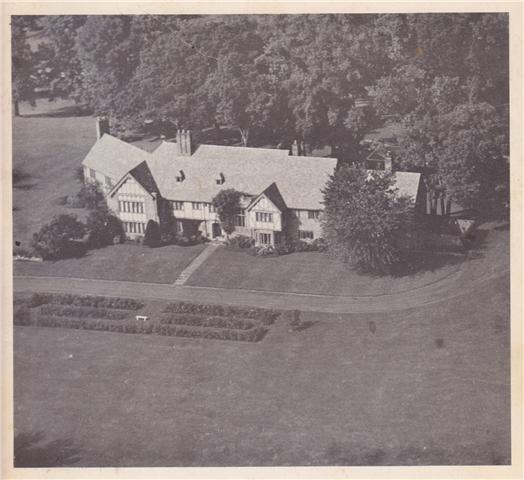
The Stoner Mansion was a former estate of the Stoner Family. It was completed in 1928 for Louis Stoner, a manufacturer who became wealthy from the Jacobs Chuck company, which produces holding devices for stationary equipment and portable power tools. The property was sold off into single lots starting in the 1950s after Louis Stoner committed suicide and his widow, Clara Stoner, faced financial hardship. (See 112 Stoner Drive, posted January 26, 2010).

Before the land was sold, the estate encompassed the entire street and contained a small 9-hole golf course as well as a stable and a rose garden. The mansion remains at the top of the hill overlooking what used to be the golf course. My parents purchased the house in 1974 for a mere $180,000. I’m sure they must have refinanced or taken a second mortgage on the house in later years and were not able to keep up with the payments, especially after my father’s head injury in 1987, which among other things, led to financial troubles.

On the day of the public auction, we got the house ready and prepared ourselves for the indignity. Mr. and Mrs. Large, our close family friends came with a cashier’s check for $50,000 in hand, the amount required to bid on the house. They didn’t want the house, but thought that bidding on it would help drive the sale price up so that at least my father would be able to pay what he owed his multiple creditors.

An hour or so before the auction was set to start, we were all looking glum. “I can’t believe this is happening,” I said to Mimo. “Why wont he agree to sell it and spare us the embarrassment of a foreclosure?”

In the final hour, my father changed his mind. “Tell the bank I’ll agree to sell to Blonder,” he said quietly, keeping the house from going into foreclosure. The public auction was called off and the sale negotiations began in earnest. He sold the house to Blonder for $1.1 million, and even that didn’t cover all his debts.

As we we packed up the house over the following weeks before the closing, my father would sit in the same chair in the Billiard Room, which we called the Big Room since we didn’t have a billiard table. There was plenty to pack up, fifteen years of memories tucked away in drawers and cabinets. A full attic and basement and piles and piles of stuff. We sold what we could and moved the rest into a friend’s storage facility. The Big Room was the last room to be packed, but eventually we had to pack it. And my father just sat there as we packed up around him. Boxes of his books and other artifacts. Until all that was left was the chair he sat on. We moved the chair after Aba walked out of the house for the last time.

My father hated leaving that house, and he hated that he had to sell it to Gary Blonder. Blonder didn’t last long in the house, which has had a series of owners after we moved out, most of whom I don’t think have really inhabited it for long.

When we lived in the house, I felt the presence of Clara Stoner’s ghost at various times. I think she mostly liked us and the hustle and bustle we brought to the house, but maybe she didn’t like Blonder and the other owners that resided in the house after him. Or maybe my father’s ghost lives there now too. He and Clara must have pretty high standards, because the house is for sale again.

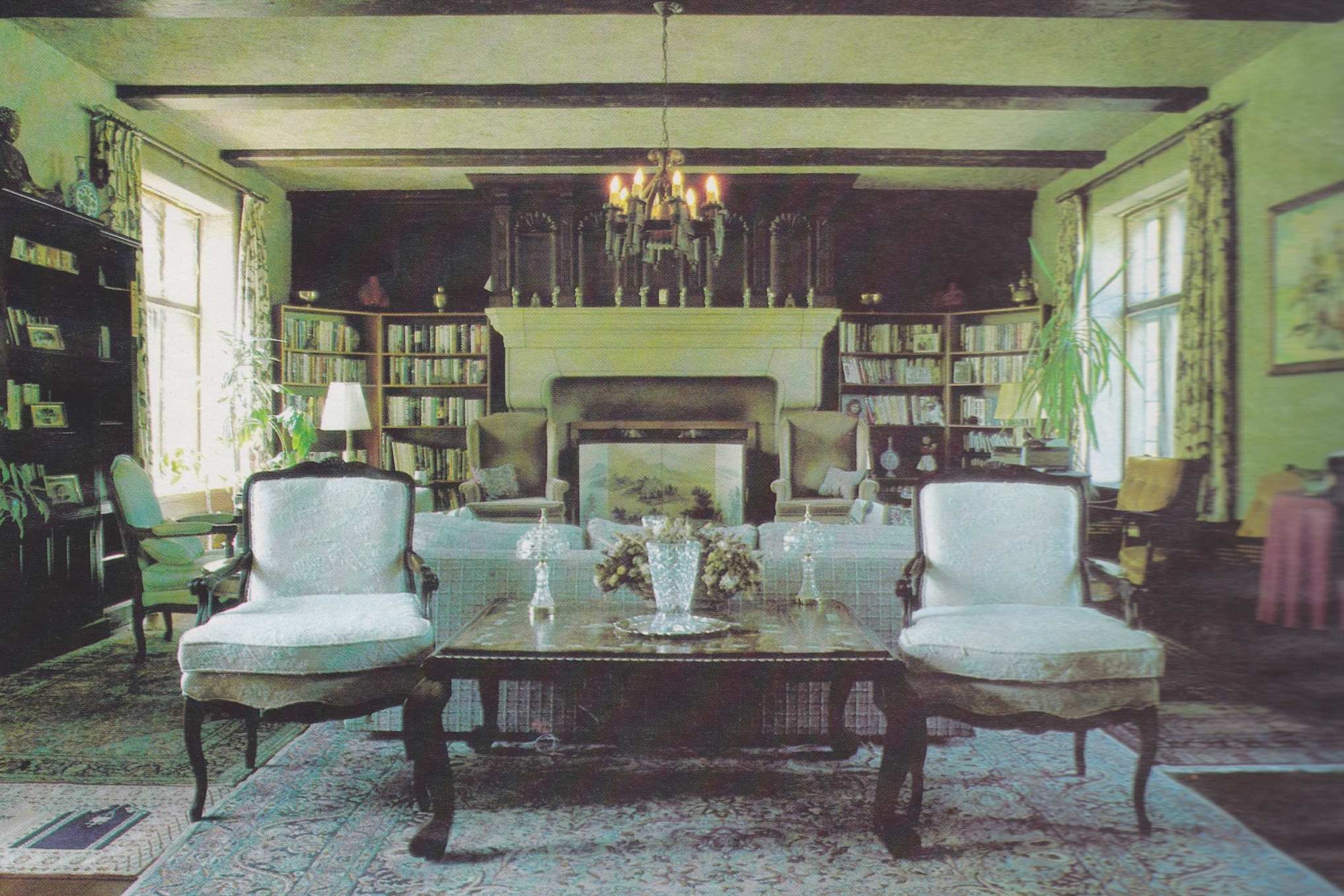
The Big Room

Walk of Shame

When I saw the foreclosure sign, I panicked. The sign at the bottom of the driveway, for everyone to see, had big black letters painted on it that read, “Notice of Public Auction.” As I kept reading in stunned silence I saw the warning, “Do not remove: violation subject to punishment by court.”

I continued driving up to the house, engulfed in shame and embarrassment that my family’s financial troubles were so public, with what seemed like a slightly smaller version of a billboard. I had just returned from my shift at the Keg restaurant, where I was waiting tables. The money I earned from tips contributed to the household bills. My sister Mimo paid for most of the bills out of her own salary as the Manager of the Edelweiss Restaurant, a small popular German restaurant in West Hartford Center. I was responsible for the weekly groceries and for paying for the classes I was taking at the University of Connecticut, trying to finish my college education.

As soon as I got inside the house, I called Mimo who was working at the Edelweiss. “There’s a foreclosure sign at the end of the driveway,” I said. “Anyone who drives by can see it. All the neighbors.”

When Mimo got home, I suggested we take the sign down. “We have to get rid of it.” We drove down to the end of the driveway so we could make a quick exit once we got the sign out of the ground, avoiding a walk of shame up the driveway. Pulling the sign out was not easy. “How far did they push these stakes in?” we both grumbled, hoping no one would drive by to see us removing the foreclosure sign. The sign was bad enough, but to be caught removing it would have been in its own category of shame.

Our determination was strength enough to pull it out, and when we finally got it out of the ground, we threw it in the back of Mimo’s red Chevrolet Cavalier and drove it up the driveway.

“Now what are we supposed to do with it?” we both wondered.

“We have to hide it,” I said. “It’s illegal to pull it out of the ground.”

“Where should we put it?” Mimo pondered. “Maybe in the attic?” The house was plenty big enough. A full basement and attic the entire length of the house which had twenty-three rooms. Known as the Stoner Mansion, this had been our home in Connecticut for the last fifteen years, since 1974.

“That’s the first place someone would look,” I said. “We need a better hiding place.”

The Stoner Mansion circa 1973 when my parents purchased it.

When we first moved into the house, it was bustling, home to us six kids, my parents, and any number of guests who were welcome to stay as long as they liked. By the mid eighties my father’s chicken business was not doing well, and after he got sick in 1987 things went from bad to worse. But my father refused to sell the Stoner house, even though it was a shell of its former self. There were just three of us living there in 1988, the year the foreclosure sign went up– Mimo, me, and Aba when he was not in Pakistan trying to revive the chick business. Amin, our cook, was also with us. Mimo put him to work at the Edelweiss so he could earn money to send home to his family in Pakistan. And he continued to cook and clean for us, though with only three of us in the house there wasn’t much to do. Ami, Baba, Muna and Puchi had moved back to Pakistan, one by one. Tito was an officer in the US Marine Corps, living in San Diego with his wife and son, and Mimo and I stayed in Connecticut and kept the house running.

Aba would sit in the same chair in the Big Room at one end of the house, reading or watching television most of the day. Mimo and I generally hung out near the kitchen, usually late at night after our restaurant shifts. The rooms were mostly uninhabited and dark. The pool hadn’t been used in years.

“Let’s put it in the swimming pool,” I suggested. “No one will look there.”

“Good idea,” Mimo said. “Let’s go. You pick up that end of the sign.” We walked around to the back of the house and threw it in the deep end.

When the bank called inquiring about the missing sign, we responded with proud condescension, “What sign? I’m sure we haven’t any idea what you’re referring to.”

Toxic Shock

I was confused by this concept of a Milk Lunch. Since I despise milk, I thought it might be best to skip it altogether. Milk Lunch was on the schedule every weekday at ten minutes after ten in the morning. This was the part of the day at my high school, the Ethel Walker School for girls, where we were served a mid morning snack of milk and cookies. I skipped the milk. And the cookies felt a bit infantile too. Really? Milk and cookies? Weren’t we supposed to be young ladies by now? Who gets milk and cookies in high school? Kindergarten, maybe, but I felt we were a little old for a mid morning snack of milk and cookies.

The Ethel Walker School for Girls.

Milk Lunch was also an opportunity to check our mail, if we were boarding students, and buy any items from the school bookstore. In addition to books and school supplies, the bookstore also carried personal care products like shampoo, toothpaste, soap, and feminine hygiene products. We’d ask for what we wanted and sign for it.

“I need a box of tampax,” I said pretty much on a monthly basis, signing for my purchase on my account which would be billed to my parents. The household bills were usually paid by my father’s secretary so I rarely heard anything about my monthly bookstore activity.

When I went home the following weekend, my mother was holding my bookstore bill, waving it at me. She did not look happy.

“You’ve been purchasing tampax at school,” she said with disapproval. My mother forbid us to wear tampons. “It’s not natural,” she instructed. “Use a sanitary napkin.”

It was bad enough menstruating, and the sanitary “napkin” was, well, a sanitary “napkin.” I didn’t like it.

“Either you stop purchasing the tampons or I’ll call the school and tell them you are forbidden to buy them,” she said. The thought of having my mother call the school to forbid me from buying tampons at the school store was too humiliating.

“You don’t need to call the school,” I said. “I’ll stop buying them.” Which I did, sort of. I stopped buying tampax from my account, but I was able to arrange a trade with a friend. “If you put my tampax on your account,” I offered, “I’ll buy your shampoo or anything else you need.” The purchases secured, we went back to Milk Lunch.

“Can I get you another cookie?” I asked my friend.

I had to hide my monthly purchase of tampax from my mother.