Do Over

I moved my blog to WordPress. Many techies tell me that WordPress is far superior to Blogger. Plus I polled people on my Twitter and all three people who responded were unanimous that WordPress is better than Blogger. So in the spirit of a life lived migrating from here there and everywhere, I have joined the world of cyber migration and moved to WordPress.

I do like the platform better for a number of reasons. The template is more flexible allowing for multiple pages. I like the Category Cloud on the right. It’s much easier to read the blog on an iPhone, which is important to some people more than others. I tend to read a lot of stuff on my iPhone and I happen to know Jenny almost exclusively reads my blog on her iPhone. And much of my life’s purpose is to please Jenny because she is the love of my life. I will migrate anywhere for her.

I also got my own domain name http://surinakhan.com which is kinda cool. And WordPress made the exporting from Blogger super easy. I hope my 33 followers on Blogger will migrate with me as well.

The only thing is that it may not be so easy to measure my outcomes. On Blogger I had 5752 hits. Note to self: add 5752 to the number of hits on WordPress.

Where’s the Beef?

When my father was home we usually ate dinner in the dining room. Puchi and I would set the table, with a table cloth, linen napkins, china and silverware.

My parents were not deeply religious, but we observed general Muslim practices. No pork products were allowed in the house, though liquor was admissible for guests, and occasionally my parents might have one drink or, in my mother’s case, one glass of wine.

When my father was not around, the dinner hour was more casual. Sometimes we’d eat at the kitchen table, laying out the food on the counters, buffet style, and grazing as we chatted with our mother about this or that.

Sometimes we ordered pizza. “What do you want on your pizza?” my mother would ask.

“Pepperoni,” I replied.

“We can’t have pepperoni,” my mother said. “It’s made with pork.”

“No it isn’t,” I lied. “They make it with beef.”

“Oh is that right? Well go ahead and order it then,” she said trusting me.

We ordered the pepperoni pizza and a mushroom pizza and maybe some other kind of pizza. Enough to feed all the people who were invariably around for the dinner hour– my sisters and brothers and any number of our friends. I don’t think my mother ever questioned my deceitful declaration that pepperoni was made with beef.

 I like pepperoni pizza.

I never really understood the no pork or alcohol rule. Or the no shellfish rule for that matter. Many of the Pakistani Muslims I encountered drank alcohol. I thought it was hypocritical. Alcohol was permissible but pork was not. So, I quietly started consuming pork products as a child, mostly pepperoni and sometimes bacon. As I got older I introduced alcohol to my diet as well. Many people would say I am not a good Muslim. And I would agree with them. In addition to the pork, shellfish, and alcohol consumption there’s the issue of my lesbianism which is also frowned upon in Islam.

When I’m not lying about how pepperoni is made, I keep my pork consumption on the down low. I make bolognese with mild Italian sausage, or I might order a side of bacon or chorizo with my eggs from time to time, but I don’t make a big deal about it.

My friend Jim introduced me to grilled figs wrapped in prosciutto. Jenny and I made them for a dinner party once, and knowing that one of our guests was a devout Muslim, we made sure to grill some figs without the prosciutto. I made the mistake of putting both on the same plate, which I should have known is also frowned upon in Muslim circles. You don’t want pork products touching non-pork products.

“What are these?” our Muslim guest asked.

“They’re figs wrapped in prosciutto,” I said. “You can’t eat them. They’re pork, but this side of the plate is not pork,” I explained.

She must not have heard me clearly because she promptly popped a prosciutto wrapped fig in her mouth and declared, “These are delicious!” And then she ate another and another.

I quickly ran to Jenny and said, “If anyone asks about the prosciutto wrapped figs, tell them it’s beef prosciutto.”

“But there’s no such things as beef prosciutto,” she said.

“Doesn’t matter,” I said. “Just make sure to say it’s beef prosciutto, they’ll never know there isn’t any such thing.”  Just like my mother didn’t know there wasn’t any such thing as beef pepperoni.

I did recently discover Halal pepperoni pizza. Halal is a term used to designate food seen as permissible according to Islamic law. Who knew? There is beef pepperoni after all.

How I Spent My Summer Vacation

I was outlining all the reasons I needed to live in Paris. “I’ve been taking French since elementary school and I’ve hit an impasse,” I explained to my mother. “My reading and writing skills are good, but I really think I need to live in Paris to master the art of conversation.” It was 1984 and I was completing my junior year in high school trying to make summer plans.

“Call the travel agent and make your arrangements,” my mother said. That was a lot easier than I anticipated. My mother loved to travel and she encouraged us to travel as well.

“Where will I live?” I asked her, hoping I could be set-up in a hotel. I love hotels.

My mother knew the Pakistani Ambassador to France and said she would be in touch with his secretary to get me set up with a French family. This probably made more sense if I was serious about learning French.

“And I’m sure you’ll want to look into French classes, if you’re serious about learning French,” my mother instructed me. I made arrangements to attend the Alliance Francaise in Paris which involved taking an entry exam so they could determine which class I would be best suited for.

A week or so before my exam, Puchi called from London, where she was spending part of the summer with our mother and oldest sister, Muna.

“I’m coming to Paris,” she said. When she arrived the next day, I picked her up at the train station and we went to my French family’s home in Meudon, just outside of Paris. The house was a beautiful stone country home, walking distance from the train in a sleepy little town. I don’t think this was exactly what Puchi had in mind for her Parisian getaway and we spent the rest of her time in Paris in hotels and bars, drinking too much wine. Often I would forget to call my French family and let them know I would not be returning home for dinner, or even the night.

The day before my exam, Puchi, who was planning to leave Paris for Italy to visit Mimo who was on an archeological dig with a group from her college, said, “Come to Italy with me.”

“I can’t. I have to take my French exam,” I responded dutifully.

“Come to Italy with me.” It didn’t really take much persuading. I was getting sick of Paris. The newness of it all had worn off, and I wasn’t really learning French since so many French people leave Paris in the summer and most everyone speaks English. The next thing I knew my bags were packed and we were on a train to Italy.

“Where are we going exactly?” I asked Puchi.

“Um, I’m not exactly sure,” she said taking a piece of crumpled paper out of her pocket. “I’ve got the directions right here.” She was not inspiring confidence in me.

“Will Mimo pick us up at the train station?” I asked.

“She doesn’t really know we’re coming to visit this week,” Puchi said.

“Oh great. We don’t really know where we’re going and no one is expecting us,” I said expressing my disapproval.  “This should be fun,” I added sarcastically.

We took several trains, sometimes without assigned seats and would have to stand for hours at a time in the heat. I looked longingly at the first class passengers, seated in the air-conditioned compartments. On one of the trains, Puchi was able to secure one seat in an air-conditioned compartment. Probably tired of my whining, she gave it to me and told me to go sit down, which I willingly did, not even thinking to offer it to her instead.

It took us about 30 hours to get to Lucera, a small town on the heel of Italy. By this time I was no fun to travel with, complaining about the heat, the food on the train, my Walkman not working, and Puchi not knowing where we were going. She was mostly patient with my bratty behavior.

“So now what are you going to do?” I said to her when we got off the bus in Lucera’s town square. “You don’t even know where we’re going.”

Puchi glared at me, annoyed with my constant negative comments. And then she looked across the piazza, and there was Mimo’s face in the window of a bar.

“See,” said Puchi. “I told you I knew where I was going. I knew we’d find her in a bar,” she said laughing and waving to Mimo.

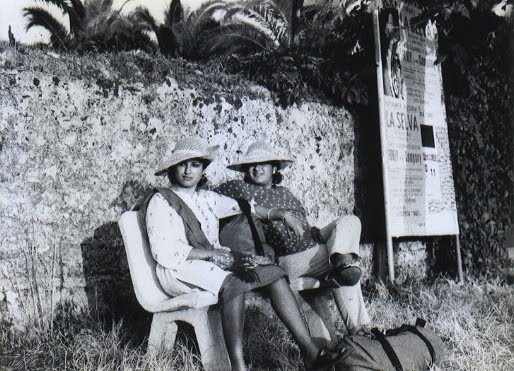
Mimo and Puchi in Italy, the summer of 1984.

Mini Me

I look a lot like my mother. When I was younger my parent’s friends as well as our extended family members called me “Chotie Sunny” which means “Little Sunny” in Urdu.

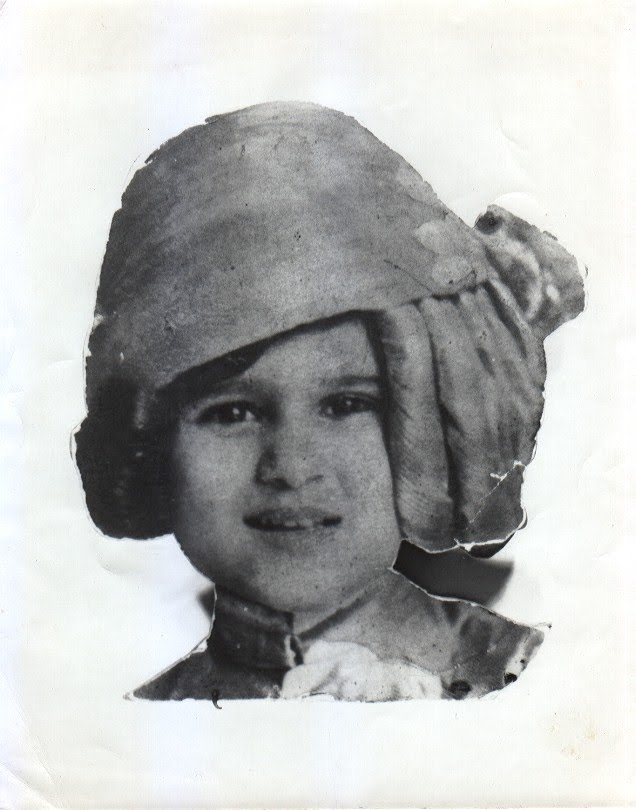
My mother as a young girl, though people often mistake this as a photo of me as a young girl.

Most of us kids resemble our mother, but in my case the resemblance is rather strong. My sister Puchi is the only one among us who looks like my father. My mother’s genes must have been stronger when it came to us kids.

Sometime around 1986 Puchi and I were commenting that she was the only one who looked like our father’s side of the family. Then we began to wonder if my parents were still having sex. “Do you think Ami and Aba still have sex?” I asked my sister.

“I don’t know,” she said. “What do you think?”

Later that evening we were in the living room with our mother and Puchi said, “Foo has something she wants to ask you.”

“I do not!” I said blushing. But I really did want to know, so I said, “You ask her,” to Puchi.

“What do you want to ask me?” my mother said, intrigued by our cryptic exchange.

“Foo wants to know if you and Aba still have sex,” Puchi said.

“Puchi wants to know too,” I said, trying to minimize the embarrassment I was feeling.

“You think people lose their sex drive when they get older?” my mother asked. My parents were only in their fifties and sixties.

“Sort of,” I said.

“Well, we don’t,” she clarified. “We have a very active sex life,” she added. Okay, this was more information than I needed.

“We don’t need details,” I said.

With that mystery solved, we moved onto other topics. “Why do you think most of us look like you?” I asked Ami.

Before she could answer, Puchi said to me, “Well, I know who my father is. Do you?”

I Need a Lesbian Lawyer

My mother wanted a new lawyer. She was on the verge of settling a lawsuit started by my father before he died, and was unhappy with her lawyers. They were advising her to settle the lawsuit because their star witness, my father, was dead.

He slipped and fell in a parking lot in 1986, hit his head on the concrete, suffered a head injury, and was in the process of suing the company that owned the parking lot when he got sick. He died before the case was settled. My mother was still grieving the loss of her husband, and her desire to not settle the lawsuit had more to do with her grief over my father’s death than the settlement that was being offered.

“If you aren’t happy with the counsel your lawyers are giving you, get a new lawyer.” I advised. My mother and I had recently reconciled after a two-year period of not speaking with each other. Our rift occurred because of  her discomfort with my choice to live openly as a lesbian. Despite this period of estrangement, I knew her well. I thought her grief process was more important than the money the settlement offered, and I wanted her to do what she needed to face the loss of the love of her life. “Get a lawyer whose advice you value,” I said.

By the look on her face, this thought had not occured to her. “Well then, find me a new lawyer,” she said.

I found her a lawyer in town that I knew from my work at the lesbian and gay magazine that I was publishing. I made an appointment for my mother and I to meet with the new lawyer to explain the lawsuit. We were in the car on the way to the lawyer’s office, when my mother said, with an air of disapproval, “I presume this woman is a lesbian?” Just when I thought she was finally coming to accept my lesbian identity she started up again with the lesbian stuff.

“Yes, she is.” I replied, thinking to myself, I cannot believe we are going to rehash all this lesbian stuff. Again.

“Well, the men aren’t helping me,” she said. “I might as well go to the dykes,” the smile on her face widening. I didn’t even know she knew the word dyke. Maybe she really was changing her attitude.

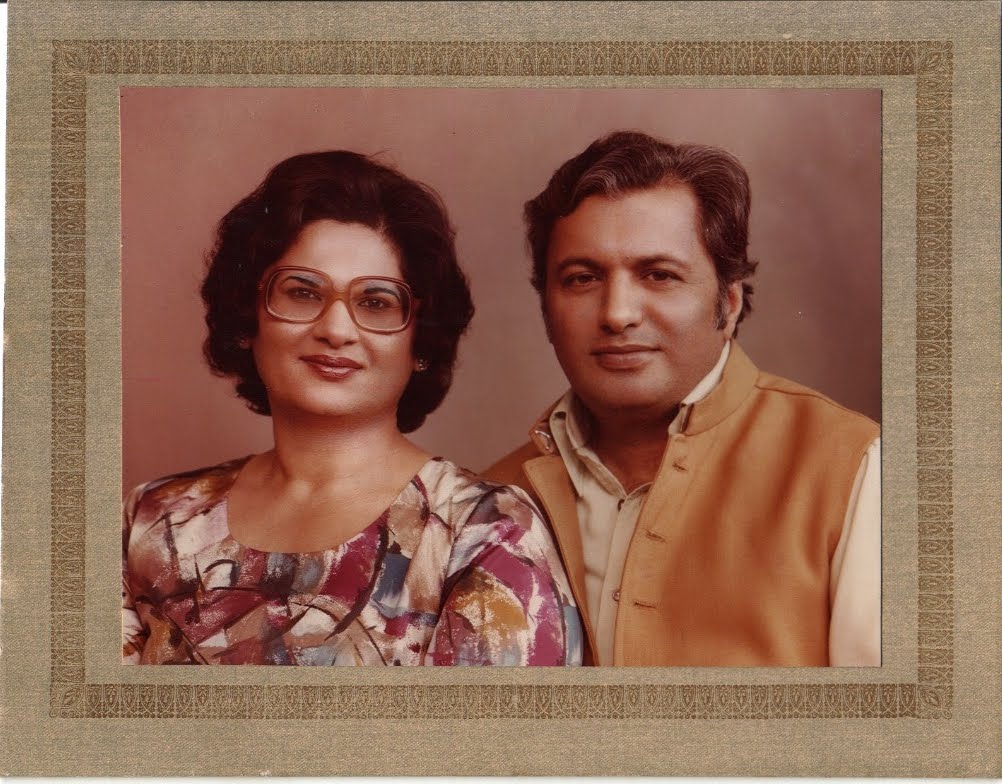
Sunny and Afzal a few years before my father died.

No-Fly Watch List: The End?

I think I am off the No-Fly Watch List. The last two trips I took were like the good old days. Print boarding pass at home, breeze through security without any additional screening.

Now I am back to focusing on the regular inconveniences of airline travel. Like the drunk man that was removed from the plane before we took off. Or the television screen that kept cutting out because it was “searching for a signal.” Or the very large man that sat  in the middle seat next to me on the seven hour flight home from New York. To be fair, the large man did not cause me the kind of discomfort I anticipated when I saw him trying to get in his seat. He kept his arms to himself and generously passed me my Diet Coke and Terra Blue chips when the JetBlue staff was passing out snacks and beverages.

After we landed, our other fellow passenger in the aisle seat on the other side of the large man said to him, “You were really good on this flight. You didn’t need to get up once. You must have a lot of patience.” To which the large man replied, “I grew up with four older sisters.” Now that makes sense. I grew up with three older sisters and I am also very patient.

When I was in New York I had several meetings with various Foundations. New York office buildings have high security but I didn’t have any problems getting into the buildings after I showed my identification and they cross-checked my name to make sure I was on the list. The last day of my trip I had a meeting with the President of a large Foundation. We only had half an hour together and I wanted to be sure I was on time for the meeting. I arrived at the building about ten minutes early thinking that would give me plenty of time to get checked in with security and get upstairs.

“You’re not on the list,” the security guard said.

“But I have a meeting,” I responded.

“Your not on the list. You’ll have to call upstairs and ask them to fax me an email.” Fax an email? I was starting to get confused.

“I have to call upstairs?” I asked. This, too, seemed odd. By this point in the trip I had been to several high security buildings and usually the security people call upstairs to verify the visitor’s name. “Can you call upstairs?” I asked.

“No,” he responded. “You have to call.” I wasn’t sure what good it would do for me to be on the phone with the receptionist. But I went ahead and called upstairs.

“Hello, this is Surina Khan, I have an appointment with your President at 10:30 and I’m having a little trouble getting upstairs. Security says I am not on the list and they say you need to send an email.”

“I’m so sorry for this inconvenience,” the receptionist said. “I’ll email them right now.” Five minutes passed. And I called again. “I sent them the email five minutes ago,” she said.

“She sent the email five minutes ago,” I said to the security guard.

“I don’t have it yet,” he said. “When the email comes they will bring me the fax,” he said cryptically. Did he not know the difference between an email and a fax?

“Well, I’ve got her on the phone, can you just speak to her by phone?” I asked.

“No,” he said. “That’s not how the system works.”

Another five minutes passed and someone from the Foundation had to come down and get me. I finally got upstairs with only about fifteen minutes left in the half hour time we had allotted. I happen to know this Foundation president reads my blog from time to time, or at least my Facebook status updates, and he knows about the trouble I have been having with the No-Fly Watch List.

“You and security again. Racial profiling?” he asked with a knowing smile.

“I know,” I said. “I may have to blog about it.” Now that I seem not to be on the No-Fly Watch List any longer, I’m realizing that some security lists are important to be on.

I was able to get in some of these New York City buildings without any trouble.

Podge and Rodge

My sister Mimo sent a message on Skype today. A while back I emailed Mimo asking if I could blog about her engagement to Seamus (See: Who Needs Marriage? Posted February 12, 2010). I told her I was dying to tell her engagement story, but that I wouldn’t do it without her go ahead.

“Of course you have the go ahead. I am beyond caring what people think,” she wrote. “As Podge and Rodge say, ‘If I could care less, I would.'”

“Great!” I responded, “But who are Podge and Rodge?”

Apparently Mimo and Seamus cannot get on the internet that easily from Ireland, where they live, and it took her a while to get back to me. “We still do not have internet and I have to use a dongle to get connected.” I don’t know what a dongle is, but it sounds slightly obscene. She finally got back to me today about Podge and Rodge.

“Podge and Rodge are two v. v. (read: very very)  famous Irish puppets,” wrote Mimo. “They have their own T.V. show and everything. Seamus lives by their philosophy.” Mimo said she and Seamus have books by them as well as coffee mugs and bottle openers. ” Google them and maybe you will convert also. Happy St. Pattys. They are twin brothers.”
So I googled them, and they do in fact have their own television show, The Podge and Rodge Show.

.
I can’t really say that I understand their “philosophy” yet, but Podge and Rodge have been good for my relationship with my sisters with their “If I could care less, I would,” approach. Whenever Puchi or Mimo start acting testy, I say, “Remember Podge and Rodge,” and it works wonders. Happy St. Patrick’s Day.

Check All That Apply

Jenny was making a good point. “There’s no there there,” she said about the 2010 US Census. The Census categories do seem limited. Name, race, sex, date of birth, whether we own or rent our home, and the number of people living in it.

“Bank of America and Amazon.com know more about us than the US Census Bureau,” Jenny continued.
“Or Facebook,” I chimed in. “Facebook knows everything about us.” The US Census Bureau should get with Facebook or utilize technology by offering an online survey option in addition to the paper option for those who don’t have the necessary technology. This way, they could aggregate the data more easily. Not to mention the paper and postage an online option would save. It would be cost-effective, environmentally friendly, and would also allow for a few more questions.
For instance, Jenny and I checked unmarried partner, but wrote in domestic partner. Couldn’t they add that as a category? Not to mention LGBT. I’m all for Queering the Census, but I think they could also consider asking about education, occupation, income, whether we have health care. And what about pets? They didn’t even ask about Rosie and she’s a big part of our household.
Rosie would like to be counted in the US Census.
After we completed our form, I updated my status on Facebook, “I checked Other Asian for my race in the 2010 Census.” Jenny’s brother Dane commented, “Do they have a Eurotrash category or are we all considered white now?”
I told him, “You are now white. In previous years, you were considered pink according to Jenny’s papers.” Jenny’s birth certificate lists “complexion.” The categories are pink, brown, and we think it might have included yellow, but we need to fact check that.

Jenny has a registration card issued to her father in 1946. The racial categories listed are, “White, Negro, Oriental, Indian and Filipino.”  It also asks for complexion, “Sallow, light, ruddy, freckled, light brown, dark brown, or black.”

I guess I would be light brown or dark brown. I’m not sure. It depends on the season. But I’m still curious about this “Other Asian” category in the 2010 Census. Why did they separate Asian Indian from the rest of the South Asians? The Bangladeshis and Sri Lankans didn’t even make it onto the form.
Jenny’s other brother Neal chimed in on Facebook. He wanted to know, “Is there a category for ‘fond of Asians?’”
No, but they might consider including Gaysians and Rice Queens in the 2020 Census.

Other Asian

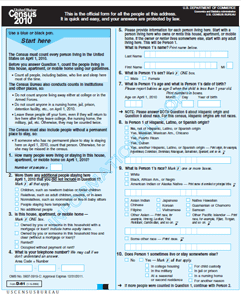
Our US Census form arrived in the mail. We want to be counted, so Jenny filled it out and asked me to mark my race. “I think you are Other Asian,” she said pointing to a box.

I’m used to checking the “Other” box on these kinds of forms, but “Other Asian” was new to me. When I was a kid growing up in Connecticut, I remember coming home from school, confused about which box I should check for some form. Back then I don’t think there was even a category for Asian, we were just simply “Other.”

At the time my mother insisted that I check “Caucasian” because she said we are descended from the Mongol Empire. I didn’t then, and probably don’t even now understand how this would make us Caucasian, so I continued to check “Other,” against her wishes. Though I am just now noticing that Caucasian has asian in it. Cauc-asian. I think I am on to something.

In later years the category of Asian Pacific Islander emerged as an option on this, that or another form and I began checking it. Asian Pacific Islander, or API, also became part of the vernacular. “Are you API?” people would ask me. It felt strange to lump myself into such a large population encompassing all of Asia and the Pacific Islands so I thought it best to be specific. “I was born in Pakistan,” I would respond.

Back to the 2010 US Census form. I could not help but notice that some of the other Asians got their own category. Like the Asian Indians, Japanese, Koreans, Filipinos, Vietnamese, Samoans, Native Hawaiians, Guamanians and Chamorros. Then there are two additional categories: “Other Pacific Islander” and “Other Asian.” If you check the “Other Asian” box like I did, the form asks you to “Print race, for example, Hmong, Laotian, Thai, Pakistani, Cambodian, and so on.”

And so on? I think the US Census needs a sensitivity training. Though I will say it was helpful to see Pakistani included in the “Other Asian,” list, otherwise I might have checked “Asian Indian.” After all, my parents were both born in India. Doesn’t that make me part Indian?

When I posted on my Facebook page that I had checked “Other Asian” on the US Census from, a colleague whose family is originally from India, commented, “Now I know what I check when I get a form.”

To which I wrote, “Actually you have your very own category: Asian Indian. We Pakistanis are relegated to Other Asian.”

This cannot be good for Indian Pakistani relations.

Mother Knows Best

My mother and I were getting out of a cab in New Orleans. “Where are we?” she asked as we arrived at the campus of Tulane University, noticing the palm trees and the tropical heat. “Are we even in America anymore?” She was not pleased with my choice of Tulane for college.  I started to cry. “I’ll go back to Connecticut if you think this is a bad idea,” I offered.

“No, you’ve made your choice, now better see it through,” she said, trying to lift my spirits. She had wanted me to stay close to home and attend Trinity College in Hartford. When I received notice from Trinity, it stated I was on the wait list, and to please respond about whether or not I wanted to remain on it.

My parents were beginning to have financial troubles and attending Trinity would have meant I could live at home which would save quite a lot of money. But I wanted the full college experience, to be “away” from home. So, without telling my mother, I responded to Trinity that I needed to stay on the wait list for personal reasons, but did not really want to attend the school. The next letter that arrived from Trinity, to my relief,  informed me that I had not been accepted. So I accepted admission to Tulane, packed my things, and my mother and I went to New Orleans.

We attended the parent student orientation activities. She helped me set up the tiny dorm room I shared with another student. And then she pulled out the phone book.

“There must be some Pakistani families in New Orleans,” she said flipping to the K’s.

“I guess so.” I said, not realizing what she was doing.

“Here we are,” she said pointing to the name Khan. She picked up the phone and started dialing the number.

“What are you doing?” I asked. “Do you even know these people?”

“Hello,” she said into the phone. “My name is Sunny Afzal Khan, and my daughter is starting school at Tulane University this month. Are you from Pakistan?” she asked. “It would be nice to have some of our people to look after her.”

I was beginning to shrink into a state of embarrassment, thinking to myself, I can’t believe she’s calling random people from the phone book.

“That sounds lovely,” she said. “One O’ Clock? Okay then. In front of the main entrance.” They invited us for lunch the next day.

“But we don’t even know these people.” I protested.

“They’re from Pakistan,” my mother responded confidently. “You’re so far from home. It will be nice for you to have some of our people to look after you.” I was audibly groaning by this point.

The next day, a very nice middle-aged couple picked us up and took us to their home for lunch. He was a doctor and she was a housewife. The lunch was perfectly pleasant, as were they, but this is not what I had in mind for college.

“It’s important for our people to stick together,” my mother said to the doctor and his wife. “You’ll look after her wont you?”

They called me often after that, respecting my mother’s wishes, and inviting me over for dinner or lunch. I never returned the calls. I was too busy with college life to visit with my “people.”

In the end, it turned out my mother was right. Tulane was a not a good choice for me, for a number of reasons, and  I only stayed there one year. 

My mother, with her people. This photo was taken in Pakistan, not in New Orleans.