Leaving Pakistan

We left Pakistan under the cover of darkness in November 1972. Zulfikar Ali Bhutto was in power and according to the family lore, and as it’s documented in my father’s obituary,  my parents had learned of a plot by Bhutto to arrest and torture my father.

So on relatively short notice, passports were arranged,visas were obtained, and with just a few belongings, we all piled into our mustard orange-colored Volkswagen van and drove over the border to Afghanistan. We spent about five days there, in Kabul, and then carried on to Iran.
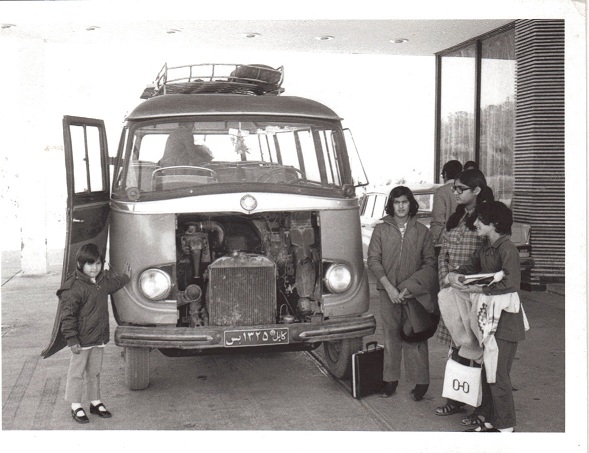
I think this is the van we drove across the border.

I had my fifth birthday in Tehran. It seems strange to say now, but  in 1972, Tehran was my first exposure to what I came to associate with the West. It was the first time I saw an escalator. The first time I experienced toy stores abundant with a variety of things with which to play, and the first time I experienced square slices of  cheese that were made to fit perfectly on sliced bread, also a novelty.
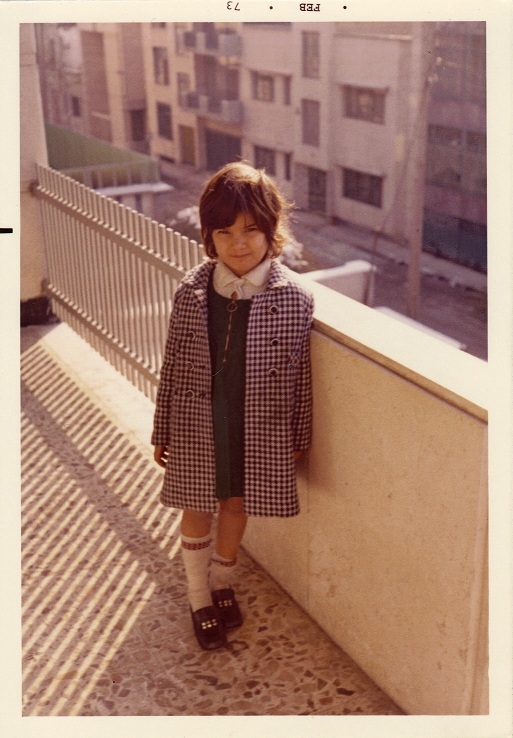
I think this photo of me was taken on my fifth birthday in Tehran. December, 1972.

From Tehran, we flew to Madrid, where my parents left us with their friends, Mehru Aunty and Rahim Uncle, while they carried on to the US to search for a house for us. Rahim Uncle was the Pakistani Ambassador to Spain and they were busy with their diplomatic duties and their own two children and yet generous and kind enough to look after the six of us. By now we ranged in age from five to seventeen.

In Madrid I had strawberry yogurt for the first time and the dreaded liverwurst sandwiches that were packed for us to take to the park every day. I also learned to tie my shoes.

In early 1973, after a short stay in London, we arrived in West Hartford, Connecticut where we moved into a small house on 17 Wiltshire Lane.

In an interview with the local paper published in August 1973, my mother said that she felt “a little boxed in,” referring to the Wiltshire Lane house. Understandable.  The chicken business had done well and my parents had left behind several residences in Pakistan.

There was Dumlotti, the seven acre farm (where the dairy farm was located) near Karachi. And Rocky Ridge, a beautiful stone house in Mansehra in the North West Frontier Province which had become our main residence in the late 1960s. And Miranjani House, a rustic mountain retreat in Nathiagali which is a hill station in the foothills of the Himalayas, and our apartment at the Sindh Club, a sort of residential country club in the middle of Karachi which I adored.
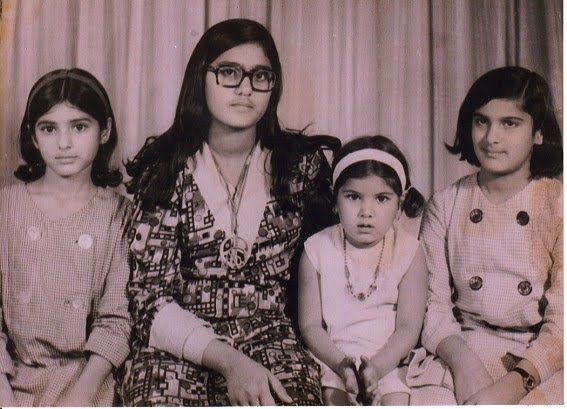
Us four sisters. Puchi, Muna, me, and Mimo. It was taken the same day as our passport photos which I will post just as soon as Jenny scans them. Then you can have a look at my brothers as well. But for now, the sisterhood (in full on 70s garb) is where it’s all at.

My parents chose Connecticut because they had friends in the area and also because the West Hartford public schools, at the time, were among the top five systems in the country.

Ours was not the classic immigrant experience. My parents did not want to leave Pakistan. If anything, they wanted to stay and help build the new nation. I always thought we had to leave because my father’s older brother, Air Marshal (ret’d) Asghar Khan had run for Prime Minister against Bhutto. But then wouldn’t his family have been the one to flee the country?

One of my cousins once told me she thought Bhutto was targeting my father because of his association with Arbor Acres. That, because it was an American company, Bhutto thought my father was connected to the CIA, which I’m certain he wasn’t.

We stayed in the Wiltshire Lane house only about a year. And then in 1974 came 112 Stoner Drive.
Working for the (Wo)man

I am having a lot of fun with this blog. I’ve been wanting to write some of these stories for years, especially the ones about my family. I hadn’t planned on starting a blog. It was not one of my new year’s resolutions. It was not on my list of things to do, but earlier this month, somewhat on a whim, I entered my first post.

I’ve always had a love-hate relationship with writing. Kind of like going to the gym. I feel good and accomplished afterward, but I don’t much care for the actual activity while I’m doing it. Not so with this blog. I am really enjoying the act of writing and wish I could spend even more time with it everyday. But alas, I have a job. A demanding one. That keeps me really busy. And even though today is technically a holiday (happy birthday, Dr. King) I need to get back to work since the Women’s Foundation of California, where I am happily employed, is holding a big statewide conference for community leaders and donors later this week. It’s called Connecting California 2010 and I’m excited about it, if not a bit focused on the multiple details that come with hosting 200 people–but I’ve had good training in all things related to entertaining and I love a good party. Thanks to my mother (and my sisters). So the blogging will have to happen at odd hours of the morning and night, and on weekends.

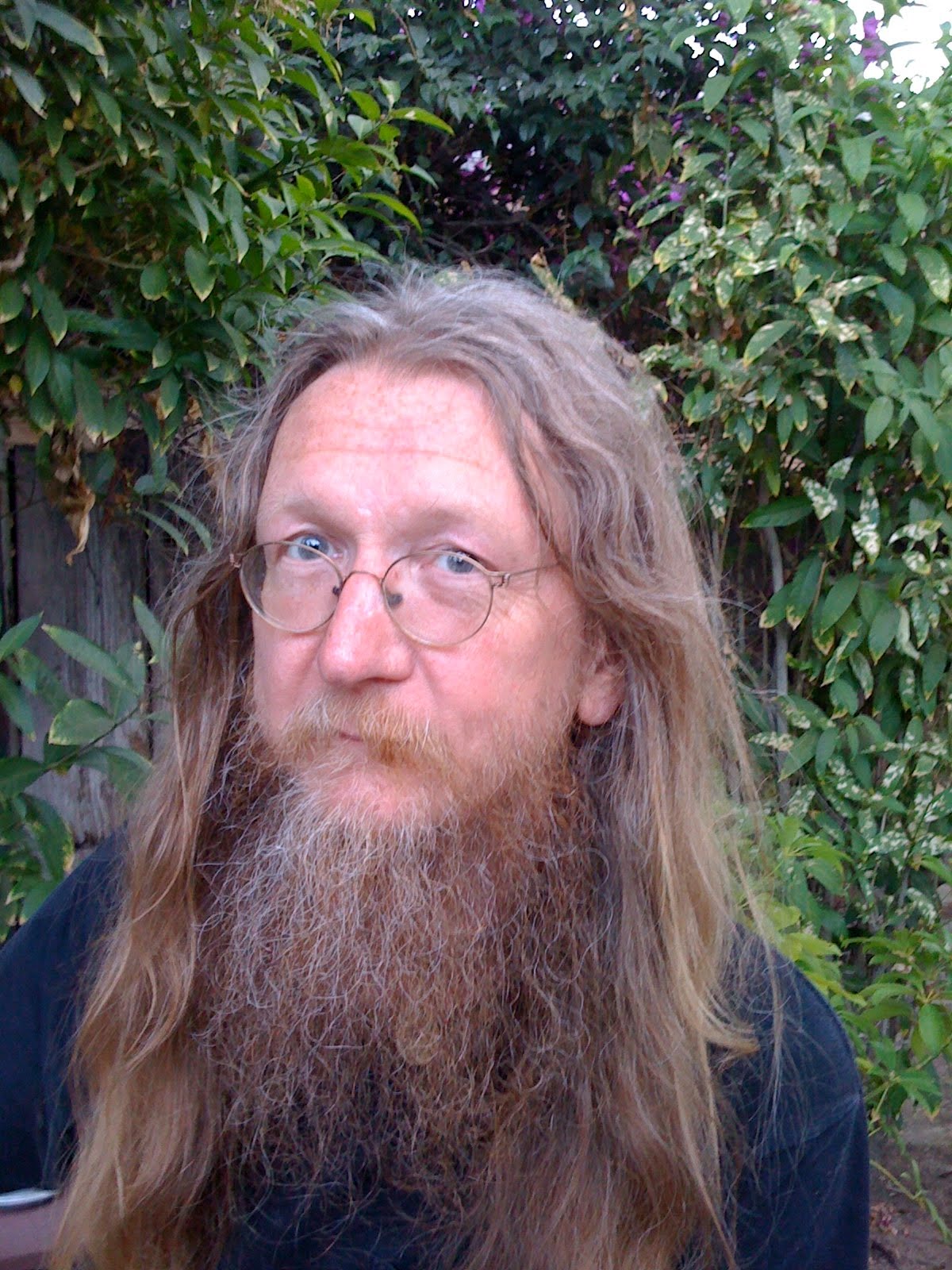
So off to work I go. Which reminds me of Jenny’s brother, Dane. My brother-not-in-law. He’s the oldest sibling of three. A really smart guy, with long hair, beard and mustache. Yes, that’s right, he’s a hippie. Dane has many talents, but he does not like working for “the man.” So I said to him, “Don’t. I work for the woman. You can too.”

Here’s Dane. He’s considering working for the (Wo)man.

Chicks is Our Business

My father came from a long lineage of military men. They held distinguished titles like Air Marshall and Brigadier General. In the early 1960s, before I was born, my father retired from the Pakistani Navy and went into the chicken business. After that he was still known as Commander Afzal Khan or Commander Saab.

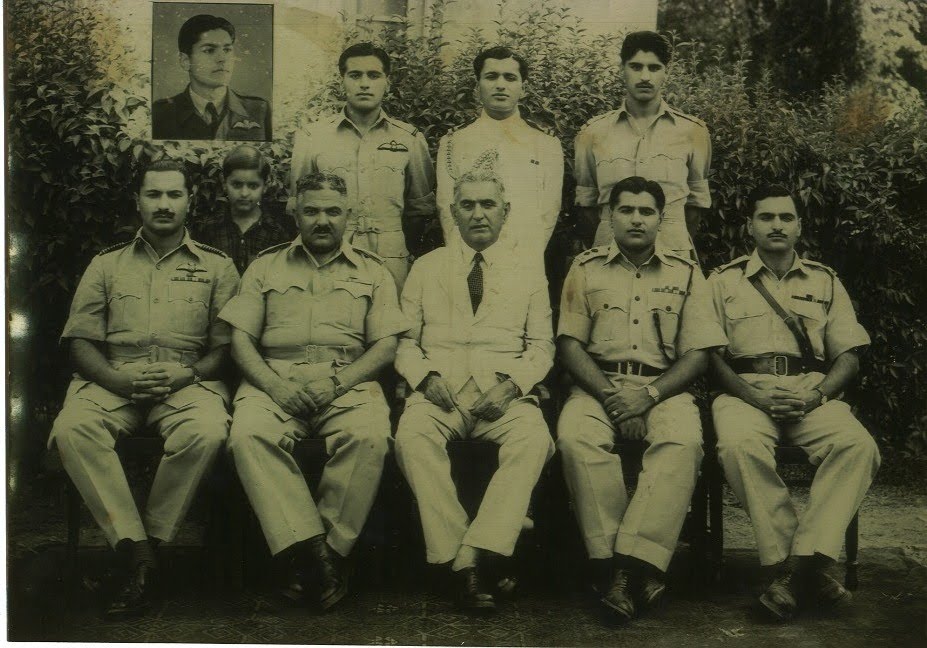
My father with his brothers and my grandfather. 
My grandfather is seated in the middle, the only one of the grown men not dressed in military attire and my father is standing directly behind him. The super-imposed photo on the upper left is another brother, Asif, who died in a plane crash while serving in the Air Force, before this photo was taken.

My parents were married in 1954. My mother, Sunnaiya, or Sunny as she was called affectionately by family and friends, was just eighteen years old, my father about nine years older. Shortly after their wedding, my father was posted to the UK. And my mother, who came from a wealthy family, had to adjust to living on a military salary. She wrote in a letter to a friend in November 1954, “Can you imagine I do all the sheets and towels by hand? I cook, clean, wash, iron, and in short am a drudge of all work and yet don’t seem to mind in the least as Afzal’s image is always in my mind and his love in my thoughts.”

The love between Sunny and Afzal was strong, but I’m sure living on a tight budget had its challenges,  especially for a woman who was used to every luxury. At one point while they were living in England, as my mother once recounted to me, she said to my father, “I wish we could have chicken for dinner just one night.” And he replied, “If you wanted chicken for dinner, you should have married someone else.”

Hearing this story growing up, I always thought it was romantic that my father chose to go into the chicken business. His business choice probably had more to do with the fact that Pakistan was a new nation, not even twenty years old, and there were many opportunities in building the agricultural infrastructure of the country, but I think it’s romantic that he chose chickens.

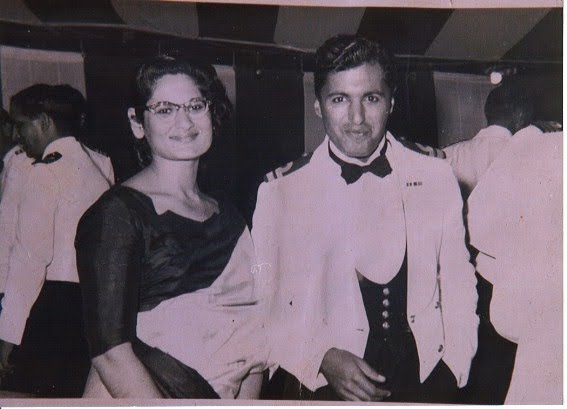
Here’s a photo of my parents as a young married couple. 
I think it was taken when they were living in the UK.

In any case, he purchased a subsidiary of Arbor Acres Inc., which was headquartered in Glastonbury, Connecticut and went on to become a very successful businessman until he became ill and passed away in the late 1980s. Now the family company is basically defunct, although  my eldest brother continues to benefit financially from my parents estate. He’s the only one among us who got anything from their estate, refusing to share it with his siblings, but that’s another story.

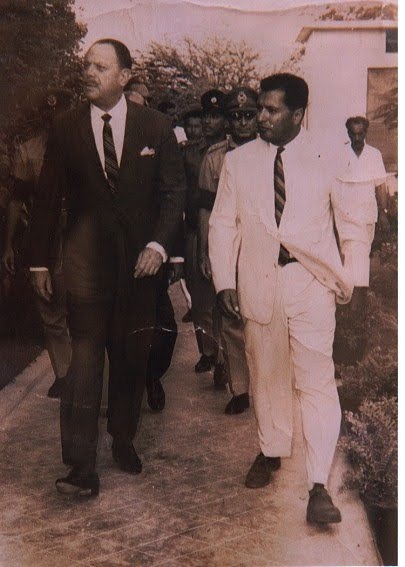
Here’s my father with Pakistani President Ayub Khan, touring the Arbor Acres farms. Ayub Khan was the first military ruler of Pakistan, from 1958-1969. 

In its heyday, the motto for Arbor Acres  was “Chicks is Our Business.” I wonder if I took this very literally on  some kind of subconsious level. For one thing  there is this issue that I am a lesbian, and now I work in women’s philanthropy. Chicks is my business too.

I Hate Milk

Drinking milk makes me gag. I’m not lactose intolerant or anything since I love cheese and all things cream-based, especially soups and sauces, but for some reason, I hate milk. Maybe because I was made to drink it as a small child?

There’s a story in my family that my mother was the first person in Pakistan to pasteurize milk. She and my father had six children, so I gather a lot of milk was required for us. I think the milk in Pakistan in the 60s may not have been that good, so my mother started a dairy farm. I’ve never actually fact-checked this. I mean, I do remember the dairy farm, I just don’t know about the first-person-to-pasteurize-milk part. But I believe it to be true. My mother was smart, assertive, and if she wanted something, she made it happen.

By the time she had me, her sixth child, she had perfected the art of parenting. Instead of doing things for me, like making breakfast, or packing a lunch for school, or helping me with my homework, or telling me to go to bed at a reasonable hour, she had me doing things for her.

For example, it was my job every morning to bring her coffee in bed.  Or I’d have to search the house for her packet of Kent cigarettes when she asked me to. And sometimes I would get the dreaded task of rubbing her feet. I also hate feet. Since I was mostly left to my own devices when I was not fetching something for my mother, no one really noticed that I had stopped drinking milk.

When I was eight years old, by now living in Connecticut, I became concerned that I was not getting enough calcium. So I would go down to the kitchen, alone, and after making my mother her cup of coffee and bringing it to her in bed, I would make myself drink a cup of milk. No one made me do this, and no one was ever in the kitchen to watch me drink it since they were usually lounging around in bed while I got myself ready for school. I would shut my eyes, hold my nose and drink it as fast as I could, trying not to gag. I think this lasted about a week. Now I just take a calcium pill and avoid milk altogether.

Blogettiquette

Well, this is embarassing. You know that bcc field in the email option? It exists for a good reason. I should have used it last night when I sent an announcement to all my contacts that I started a blog. I was trying to pretend this had not happened. But this morning when we were having our coffee, Jenny said,” You sent me an email last night and it keeps crashing my iPhone.” Ouch.

I like to think of myself as a savvy user of technology. I’ve used that bcc field many times. It’s good because then when you get a mass email you don’t have to scroll down through endless amounts of names to get to the content of the email. And you don’t share peoples email addresses. But, no. I was moving too fast, and before I knew it, I hit that send button, and everyone’s name was in the to field, not the bcc field.

What’s worse is that I have quite a robust contact list. I’m not sure how to get the exact number of people in my contacts, but I think it numbers more than 1,000. Many of these are professional contacts like funders and otherwise important people with whom I work. Not to mention all the listservs I am on. Oh, and did I mention I sent this email from my work account and not my personal account? I’m pretty sure that is inappropriate since this blog is not work-related (note to self: blog about something work-related to cover up inappropriate blog promotion). And, I’m sure my contacts did not appreciate getting a mass email and having to scroll down more than a thousand email addresses to get to my shameless effort at self promotion. Sigh.

To be fair, I am new at this. And the helpful hints on the blogger site do suggest you email all your contacts with the blog link. But they should consider including some advice about using the bcc field.

The good news is that I got some nice responses. And I increased my followers 200 percent  from 2 people to 4 people, or is that 100 percent? Anyway, I’m a bit embarrassed. I will not be publicizing this post, and I think I might have to spend the day lounging on the couch watching Brady Bunch reruns.

Christian Reconstructionism is Hard

I get a perverse sense of satisfaction when the right wing writes about me.

Have you ever heard of Paliban Daily? Me either. It’s a website dedicated to “what Christians (and other fundamentalists) are up to in the world.” I came across it today because it popped up when I was searching my name on Google. Right, like you’ve never searched for yourself on Google.

Anyway, they think I have grasped the concept of Christian Reconstructionism. I take this as a big compliment given that I studied the Christian Right for many years when I was a researcher at Political Research Associates. It took me a good while to grasp Christian Recontructionism.

As they say on Paliban Daily, the goal of Christian Reconstructionism  “is to replace the secular Constitution with God’s Law.” This may seem like a simple concept but there’s a lot more to it. I read books, attended right wing conferences, poured over direct mail from organizations like the Family Research Council, Concerned Women for America, and the Chalcedon Foundation (the go-to place for all things Christian Reconstructionist).  I even took a guided tour of Focus on the Family for God’s sake. I mean that very literally. So when a self-declared Christian Rightist says I’ve grasped the concept of Christian Reconstructionism, it makes me happy.

The title of the post is “Liberal Grasps Reconstruction,” and it is in response to an article I authored last year, titled, Tying the Not: How the Right Succeeded in Passing Proposition 8. In the article I note that “the broader agenda that the Christian Right will continue to pursue will promote Christian nationalism, an ideology that seeks to use laws and regulations to promote fundamentalist Christian values on the nation.” This is the basis of Christian Reconstructionism.  Glad to know the folks at Paliban Daily think I got it right. They did say my article is “rather wordsome,” but whatever. Christian Reconstructionism is hard.

They go on to say that I work for a “sexist and ungodly group that supports and promotes women–only women–seeking leadership positions.” This is in reference to my current place of employment, the Women’s Foundation of California.

Egads! Supporting and promoting women. Shame on me.

Back in the Saddle

When I was eighteen, I fell off a horse and fractured my vertebrae in three places. The accident happened in Islamabad when I was visiting my family, after my first year of college. A few years earlier, when I went to middle school in Islamabad, my older sister Puchi and I used to ride horses regularly.

A few years had passed since I had been on a horse and I was feeling, well, not so confident in my  riding abilities. So when Puchi asked me if I wanted to go horseback riding, I reluctantly said, “Um, okay.”

When we got to the riding club, my insecurity was confirmed. “I’m not feeling comfortable on this horse,” I told my sister. So I suggested we just ride around the ring on this first day back in the saddle. At first Puchi seemed agreeable, but after a few minutes of going round and round the ring, she must have gotten bored and off she went. And my horse followed. We rode along the outskirts of the city on riding trails. My horse galloping at various moments trying to keep up with Puchi and her beast. I cursed her the entire ride. And tried to hang on to my horse for dear life.

We were just ending our ride, at a slow trot, about fifty or so yards away from the Club, when I lost my balance. In that second, I made the decision to let go and fall. I sort of remember thinking, lots of people fall off a horse at some point. It will be okay.

And thud. I hadn’t noticed that we were crossing over pavement and I hit the concrete with force. Screaming, all the way down.

After I fell,  Puchi got off her horse and walked over to where I was lying flat on my back on the concrete walkway. “Oh, get up,” she said, sounding a bit annoyed with me.

But I couldn’t. Eventually, I mustered the strength to roll over and pick myself up slowly, all the while in excruciating pain. I somehow managed to put myself in the backseat of a Suzuki that was smaller than the Chevrolet Chevette that we had at my parents house in Connecticut. I’m not really sure an ambulance was even an option let alone a simple call to 911. We were in Pakistan.

We drove to the hospital. I managed to get out of the car and made my way inside after climbing up a steep flight of steps, holding my lower back with my hand and staggering up slowly. Having lived in the US for most of my life, with the exception of junior highschool and these somewhat infrequent visits, I was having a hard time understanding why a hospital would have a flight of steps at its entrance. It was 1986, surely the Pakistani medical community had heard of handicap access ramps?

Then came the x-rays. I had to lift myself onto the x-ray table and while I was lying there, I noticed that the machine had wheels which were tied up. That was about when the medical staff asked me to move over a half of an inch. I think of myself as a generally polite person, but in that moment, I lost it. “Move over a half an inch? You want me to move over a half an inch? Do you know how difficult that is for me? Why don’t you untie the wheels and move the x-ray machine a half an inch. That’s why it has wheels.” All of this was said in English, because my Urdu was not very good. Certainly not good enough to express this kind of frustration. 

They ignored me. Then came the stretcher to take me up to my hospital room. It was about an inch higher than the x-ray table so they asked me if I could please get up on the stretcher. ” You mean, it’s not collapsible?” I cried, incredulous. “Stretchers are meant to be collapsible. That’s the whole point!” They continued to ignore me.

The hospital room was another disaster, as far as I was concerned. For starters, the room was carpeted. Sure it made for a cozier space, “But what about the germs? How can you keep this room sterile if it’s carpeted?” I asked the nurse. She smiled at me, not answering my question. Then she left the room.

That was when I saw a wasp buzzing around my room. I have an irrational fear of wasps, so I started desperately looking for the call button and realized it was behind my head on the wall. I couldn’t reach it. Another flaw. I covered myself in the bed sheet from head to toe to protect myself from the wasp. Fuming. X-ray machines with wheels that don’t move. Carpeted rooms. A call button I can’t reach. And surely the wasp didn’t come from out of nowhere. Was there a wasps nest outside the window?

By now, my mother had been phoned and arrived around the same time the doctor came to pay me a visit. He confirmed that I had fractured my vertebrae and would need to be hospitalized for a few weeks until the swelling went down enough so that they could put on a cast.

“If all I can do is lie here, can’t I just go home and lie in bed?” By now I had complained so much, that finally, exasperated, the doctor, said, “Fine. Go.”

That’s when I realized I could not get out of bed, much less walk. And so I resigned myself to the fact that I would be bed-ridden in the carpeted hospital room. Full of germs. “And if I have to stay here, so do you,” I told Puchi. “You’re the one that made me get on that horse.”

The nurse brought a bed pan so they could take a urine sample. And then I heard some commotion in the hallway. “There’s blood in her urine,” the doctor said to my mother in a hushed tone. “She may be paralyzed for the rest of her life.”

And my mother’s response? “That’s no way to live. Put her down.” As if I were a horse. Fortunately Puchi overheard this conversation and said, “She has blood in her urine because she has her period.” You’d think the nurses would have communicated this when they saw the “sanitary napkin” I was forced to wear. My mother disapproved of tampons.

I have often wondered what was going through my mother’s mind when she said “put her down.” We had a good relationship. I was the studious, responsible, youngest child with good manners who had learned not to give her too much trouble. I’m sure she did not want me dead. Did she think she was sparing me the pain of living with a disability? Did she think they would actually carry out that kind of request?

Puchi spent the night with me, and every night that followed. Rather happily too. I think she was being considerate… and I think she was motivated by the handsome doctor who supplied her (and me) with valium. And that because my mother refused a stronger pain killer. “She’ll get addicted.”

What’s in a Maiden Name?

My sister Mimo (pronounced Meemo) changed her name, too, when she got married. Mimo is her family nickname. Her given name (given to her by my grandmother) is Fazilet, and when we moved to the US from Pakistan in 1973 people had a hard time pronouncing it, so her friends shortened it to Fizz. Sometimes affectionately her friends would, and still do, call her Fizzy.

Mimo met Seamus sometime around 1999. And when they got married a few years later, she too said to me, “I’m thinking about changing my name. What do you think?”

Without hesitating, I said, “Do it.” Given my feminist politics, she seemed a bit surprised that I would advocate that she take on her new husband’s name. “Why? she asked skeptically.

“Because then your name will be Fizzy O’Flynn.” What a perfect name for that Pub she’s always wanted to open. And what other brown skinned, brown-eyed, brown-haired South Asian woman do you know with a name like  Fizzy O’Flynn? Very original. One of a kind really. Gives new meaning to the term Black Irish too, I thought.

Even better, I soon realized, were her new initials. Fazilet Khan O’Flynn or FKOF. Perfect for such a bossy older sister.

It’s All in a Name

Here it is. Surina Khan Blog. Took me long enough. It’s 2010 after all, and everyone and their great grandmother already has a blog. But, the year is off to a good start, and I’ve got plenty to blahg blahg blahg about.

I have a multi-issue concept, thanks to my name.

Surina Khan Cook. Surina Khan Travel. Surina Khan Entertain. Surina Khan Party. Surina Khan Design. Surina Khan Garden (sort of). Surina Khan Do A Lot of Things. Surina Khan Blog. You get the picture.

The idea started when my sister Puchi called me several years ago after her second wedding. “I’m thinking about changing my name,” she said. She had recently married Colonel Terry Cook. Puchi is her nickname. Her “real” name is Chanel. My mother gave her this name because she is the fifth child in our family. Chanel No. 5. Seriously, I’m not making this up.

Puchi is the glamorous one in the family. Which means she looks good, she’s smart even. But not really the domestic type.

So when she told me she was thinking of changing her name, I said, “to what?”

“Chanel Khan Cook.”

To which I replied, “But Chanel caaan’t cook.” She really cannot even boil an egg without burning the pan. And so was born this idea. Chanel Khant Cook, but I can, I mean I Khan. Surina Khan Cook, and travel, and lots of other things that I hope to post on this blog. And eventually, maybe I’ll send people the link so they can read it. Surina Khan Blog. Here goes.