Mistaken Identity

My name gets misspelled a lot. “It’s K-h-a-n,” I correct people. “Not K-a-h-n.”

“Oh, but don’t worry,” I say trying to make the misspeller feel better. “It happens all the time. I’m used to it.”

When I did more freelance writing, years ago, I would file my articles with my byline, typed correctly, “Surina K-h-a-n.”

“On many an occasion, it would come out in print, “Surina Kahn.”

“Does the editor think I don’t know how to spell my own name?” I would ask who ever happened to be sitting around me.

Colleagues have been known to misspell my name, too. People will invite me to conferences to speak and ask me for my bio. I send it with my name spelled correctly, but then I see Surina Kahn in the conference program.

Just last week, I got the Sun Dial, my high school alumnae magazine, in the mail. “Look there’s a picture of your class at the reunion,” Jenny pointed.

“Oh great,” I grumbled. “They spelled my name wrong.”

So it should not come as a big surprise, that in some misguided circles, I am known as a Zionist Jewish Lesbian.

I am listed on an anti-Semitic, and seemingly white supremacist, website titled, “Jewish Control of Gay Rights.”

The website notes, “The Jews know damn well that most heterosexuals aren’t at a spiritual level where they can grasp this truth, so they use heterosexual animosity towards gays to keep our Aryan peoples divided.”

Another website called, “The French Connection,” has me listed alongside a number of other LGBT “Jewish” activists. All because of sloppy spelling.

They say, “Here is an exhaustive list proving, once and for all, that the radical homosexual movement in the United States is a Jewish movement. Jews created it and run it from top to bottom. They are pushing the perversion and degeneracy that is spreading disease, sin and sickness through America like a wildfire.” I wonder if I should let them know my name is spelled K-h-a-n? Although I’m guessing they don’t like the Muslims either.

They might be interested to know that I’m not a good Muslim, or Jew for that matter. I enjoy pepperoni on my pizza, after all. (See Where’s the Beef, posted April 2, 2010) Or prosciutto wrapped around grilled figs. I drink alcohol which is also a sin in Islam. I like to sip a glass of prosecco or an old vine zinfandel from time to time. But does that make me Jewish?

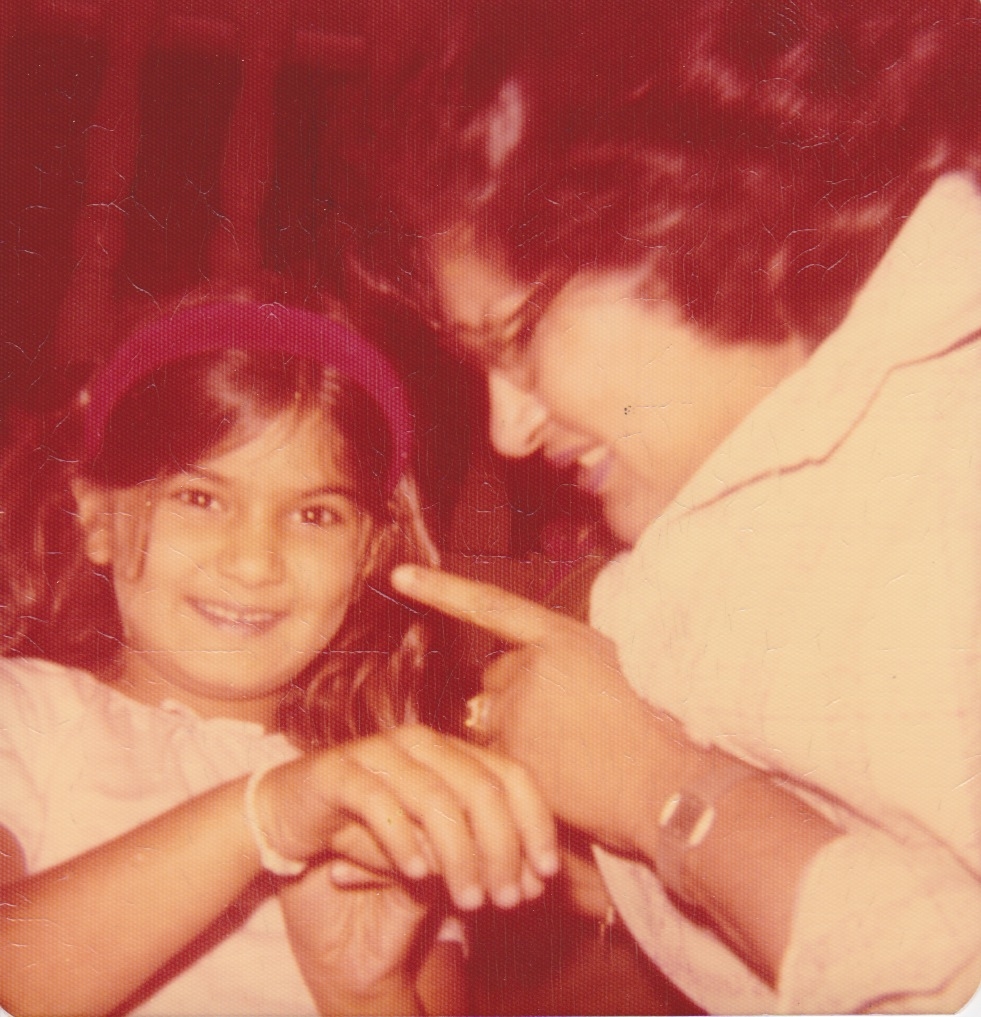
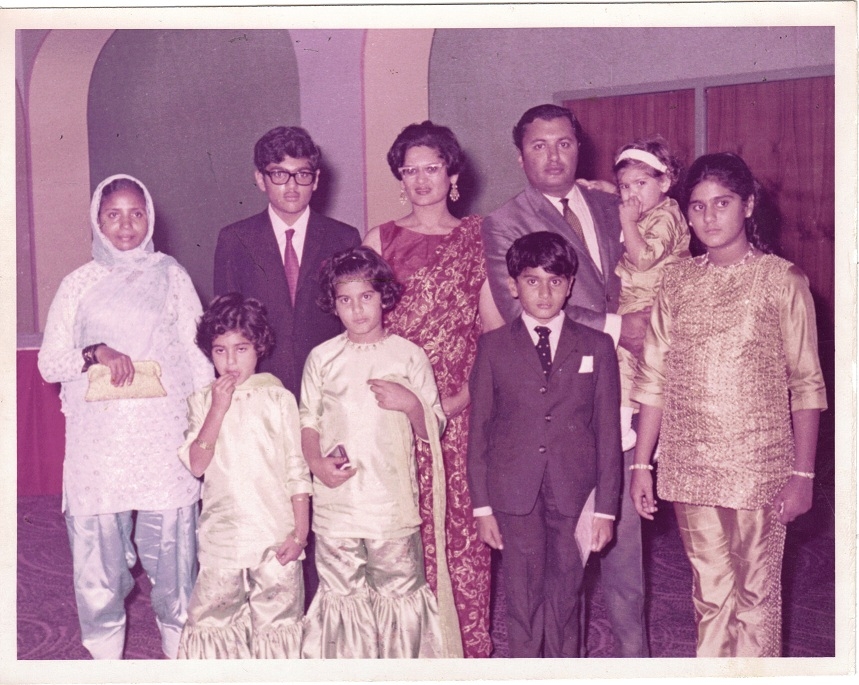
Do we look Jewish? My brothers and sisters with our parents and our Nanny Saeeda, circa 1968. I am the little one in my father's arms.

No Fly Watch List: Part 10

I got a good scare when I tried to print my boarding pass and the JetBlue website would not let me. “Oh no!” I started overreacting. Am I back on the No-Fly Watch List?

Earlier this year I was placed on the No-Fly Watch List. I’ve written about the experience on this blog at least nine other times, all tagged in the No Fly Watch List category. For the past few months though, I’ve been traveling with ease. No problems with security, no problems printing my boarding pass out in advance. I even heard directly from the Department of Homeland Security, letting me know that they could neither confirm nor deny that I was on the List. Even though this was not particularly helpful information, I appreciated the effort.

“No need to get to the airport early,” I say to Jenny with some regularity now. “I’ve got my boarding pass right here,” as I wave the coveted piece of paper, feeling confident in my frequent flier status.

Maybe a little too confident, because the last time I had to fly, I had trouble printing my boarding pass. I was sitting in the San Francisco office in back to back meetings when I realized I better print my boarding pass out in advance. But that day the website would not let me. The button where it usually says “Check-In for Your Flight,” now said, “Check in (avail. 24 hrs before flight)” and would not respond to my furious clicking.

The flight was later that same afternoon, certainly within the 24-hour time frame. “Why can’t I print my boarding pass?” I blurted in the middle of the meeting. I then looked at the actual flight coordinates and realized the problem. I thought I was flying home that evening, but in fact, I had actually booked the flight for the next evening. The problem? I had put the flight in my calendar on the wrong day, and organized everything including hotel accommodations and the next day’s meetings in Los Angeles thinking I was traveling home on a Wednesday when in fact I purchased a ticket for Thursday. This is not good.

I no longer have any administrative support due to economic cutbacks so I have to keep myself organized. I manage my own schedule. I book my own travel. I do my own filing. I reconcile all my receipts. And for the most part this has worked out okay, even if I do look a bit harried from time to time.

After a moment of panicking, realizing I had no lodging for the evening and two in-person meetings in downtown Los Angeles the next day, I regained composure. “Get a grip,” I said to myself, realizing I needed to change the flight. A change fee and one hundred and thirty dollars later, boarding pass in hand, I was headed home. The Department of Homeland Security had nothing to do with this particular travel snafu. I was on the No Fly list because I didn’t have a ticket. This month’s travel chaos was all of my own doing.

Lesson learned: seek administrative assistance.

Bed Rest

I was feeling feverish. “I think I’m dying,” I told my mother. She held the back of her hand up to my forehead. “You do feel a bit warm,” she said.

We were in a taxi, on our way to the Golden Temple in Amritsar, the last of our stops on our summer holiday in India. “When we get back to the hotel, we’ll get you some aspirin.”

Aspirin? “No, really. I think I’m dying,” I repeated. But we continued on to the Golden Temple and took our tour as I sighed audibly the entire time.

“I might faint,” I complained.

“You’ll be fine,” Ami responded. “Just a slight fever.” Ami was not into organized medicine. And after six children, she knew the symptoms for most illnesses. She had been through the chicken pox, the measles, the mumps, pneumonia, and general malaise, multiple times. She knew how to treat a sick kid.

As a result, I don’t like going to the doctor. When I do go, which was erratic until recent years, they were always poking and prodding me, sometimes in unusual places. And they always need to weigh you, after which the nurse might say the dreaded words, “You’ve gained a few pounds since your last visit.”

I hardly ever get sick so for years I just avoided the doctor altogether, often with a little help from my mother.

“This form needs to be signed by a doctor,” I said on pretty much an annual basis before the school year started. “It says I need a physical.”

“Call Doctor Malik and invite him to dinner,” Ami would respond. Dr Malik was a friend of the family. I think he had a general medical practice, which you’d think would prevent him from signing a medical form without giving me a physical. But my mother was a persuasive woman.

“She’s a healthy girl,” Dr. Saab,” Ami would say after an elaborate dinner. “No need to examine her. You can sign the form here.”

The only time a Doctor was called in for actual medical treatment, was if my mother thought the illness might be serious. That summer in Amritsar, it seemed my mother was prepared to treat me herself. When we got back to the hotel, Ami gave me two aspirin, and put her hand on my forehead. “I think you may have Malaria,” she said as I groaned in pain, starting to sweat and shake with chills. “We’ll go to the Doctor when we get back to Abbottabad tomorrow.”

“Tomorrow? I might die before then,” I moaned dramatically. The next day, after crossing the border on foot and a long drive to Abbottabad, the Malaria was confirmed by the Doctor at the Missionary hospital nearby our house.

“Good. That’s settled.” Ami said as if she had just completed an errand. “You’ll start feeling better when you take the medication. And make sure to drink lots of fluids so you don’t get dehydrated,” she said matter-of-factly. “Now go pack your clothes for Nathiagali.” The thought of the drive up the winding mountain roads to our house in the foothills of the Himalayas was making me nauseous. But apparently a Malaria diagnosis was not enough to interrupt our summer plans.

“Shouldn’t I stay in bed?” I asked. “I have Malaria.”

“You can stay in bed in Nathiagali,” Ami said.

Me with my mother. Another diagnosis?

Bar Tab

I almost had a panic attack when we walked into the Twofish Baking Company at the start of our summer vacation in Sea Ranch. “Are you already out of baguettes?” my eyes widening with fear as I noticed the empty baguette shelf.

“Relax,” Hilla said. “They haven’t even come out of the oven yet. They come out at 9:30.”

“Do they come out at 9:30 everyday?” I asked, breathing a sigh of relief.

“Yes,” Hilla confirmed. “You gals are just here early today.” Even still, sometimes it doesn’t matter if Margaret’s baked goods are not out of the oven yet. She often sells out before she even bakes things, because people-in-the-know pre-order.
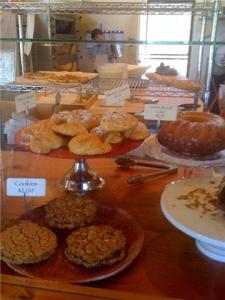
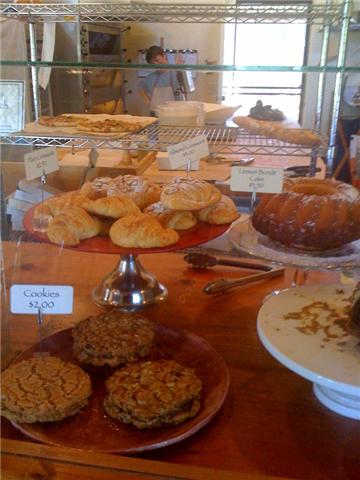
Twofish baked goods. Margaret is in the back by the ovens, waving.

We discovered the Twofish Baking Company the year before last when we noticed the bakery in the sleepy Ranch Center. It was probably about two in the afternoon and we were in search of bread. I stuck my head in to see what kinds of baked goods they had, and saw one lone cupcake and a cookie.

“I don’t know what kind of bakery that is,” I said to Jenny as I got back in the car. “They hardly have any baked goods. And I didn’t even see any bread.”

The next year, in search of bread again, and disappointed with the offerings at the Surf Supermarket in Gualala, we decided to try the bakery again. “Drive faster,” I said to Jenny. “I think they close early.” But it was a Wednesday and the bakery was closed. “Open Thursday-Sunday,” noted the sign on the door.

When I woke up the next morning, in our rented house about a mile down the road from the bakery, I nudged Jenny. “Do you smell that?” I asked. “I think I smell blueberry muffins.”

“Me too,” Jenny said. We pulled on some clothes and drove to the bakery. The shelf behind the counter was full of bread, and the glass case was full of baked goods. Chocolate croissants, almond croissants, morning buns, sticky buns, pumpkin bread, bear claws, and blueberry muffins.

“Look!” I whispered to Jenny. “I knew I smelled Blueberry muffins!”

“I’ll have a cup of coffee and a chocolate croissant,” Jenny said.

“And I’ll have a blueberry muffin and a cappuccino,” I said. “And a baguette.”

“This chocolate croissant is just the right combination of sweet and savory,” Jenny said as she took another bite of the pastry.

The next morning the smell of lemons came wafting through our bedroom window. “Do you smell that?” I asked Jenny. “She must be making lemon scones!”

And sure enough, there were lemon scones in the glass case.

“I’ll have a lemon scone and a cappuccino,” I said. “And a baguette.” I’d sidle up to the bakery bar and watch Margaret pull things out of the oven and make conversation with all the local Sea Ranchers.

“Hey Margaret,” said an older gentleman in biking gear. “Can you save me a pizza? I’ll come back after my bike ride.”

“She makes pizzas too?” I whispered to Jenny as I watched Margaret frost cupcakes and Hilla whip up a moccachino. The pizzas come out of the oven just before noon. Margaret also makes sandwiches and salads, and she’ll roast a soup in the baking ovens, usually on Thursdays or Fridays. The semolina rolls come out on Saturdays. Crispy and airy rolls that go great with burgers. She also bakes her own dog biscuits in case you bring along your pooch. Something for everyone.

I had lots of questions for Margaret, but I was too shy to ask. Do you have a stove or only baking ovens? How many pounds of butter do you go through in a week? Is that Focaccia coming out of the oven? How long does it take to make a baguette? Is Hilla your business partner and your life partner? Where did you get your baking training? Do you make granola every day? How did you decide to become a baker? What time do you get here every morning? Do your feet get tired? How many baguettes do you make in a day?

“Look,” I whispered to Jenny. “She’s cutting the baguettes for sandwiches.”

One of our last days of vacation last year, we got to the bakery and ordered our morning pastries and coffee. “And a baguette, please.”

“Sorry,” Hilla said. “I just sold the last one.” We got there late that day. The sandwiches were all made and Margaret was making the pizzas by the time I sat down at the bar with my cappuccino.

I mustered the courage to ask Margaret a question.

“Margaret?” I asked, “Do you make pizzas everyday?”

“Yep.” Margaret doesn’t waste words.

“Could we reserve two?” I asked hesitantly.

“Sorry. Sold out.”

“Harumph,” I sighed out loud. “No baguette and the pizzas are sold out before they’ve even come out of the oven? Maybe I should pre-order.”

“You really should,” Hilla and Margaret both agreed. “You buy a baguette everyday. You may as well rest assured that there’ll be one for you when you get here.”

“Okay, well then I’ll take two baguettes for tomorrow,” I requested. The next day was Sunday and I had to make sure to have enough bread until the bakery opened again on Thursday. “And four pizzas.”

Four pizzas?” Margaret teased. Uh-oh, did I over-order? Is that bad bakery etiquette?

“We have guests,” I lied.

“Sure you do.”

This year, with the ice broken with Hilla and Margaret, I sometimes hang around the bakery bar for hours. Observing all the baking activities. Locating the phone when it rings. Asking questions. And I pre-order everyday. One baguette on Thursdays, Fridays and Saturdays. Two baguettes on Sundays as well as a loaf of wheat or multigrain for toast on the mornings that the bakery is closed. And Pizza or sandwiches for lunch. We don’t usually pre-order the morning pastries.

“Do you have a pastry policy?” I asked Margaret. It seemed the savory croissants were always gone by the time I arrived at the bakery.

“Depends,” she said as she frosted a cake.

“On the customer?” I asked.

“Pretty much,” Margaret said. “I generally require people to order seven pastries if they want them reserved. I can’t reserve one morning bun, just because some people don’t like getting up early.” I didn’t want to press my luck and ask her to reserve me a savory croissant just because I am not a morning person. Maybe since they’re savory, they aren’t part of the pastry policy?

“I wonder if I should risk it and get here early on Thursday?” I pondered aloud.

“What are you looking for?” Margaret asked, leaning in on the counter.

“Well, I’d like a baguette, two pizzas and… a savory croissant.”

“Spinach and Feta or Ham and Gruyere?” I decided on the Ham and Gruyere.

“Consider it done,” Margaret said.

A few days later, we got to the bakery early, in time for the savory croissants. But Jenny and I decided on our own policy. “We better start sharing a pastry in the morning,” we decided, otherwise we might need another policy involving Weight Watchers.

Jenny wanted an Apple Danish that day. The danish was delicious, a crisp, buttery pastry with the perfect combination of cinnamon and apples that were still slightly crunchy. But I couldn’t stop thinking about the ham and gruyere croissants. Liz, another regular, sat next to me at the bar.

“How are you today?” she asked.

“Oh, I’m fine. I’m just sitting here trying to resist the savory croissants.”

“Which one is your favorite?” Liz asked.

“Well I like them both, but today I am trying to resist the ham and gruyere.”

“Want to split one?” Liz asked. “My treat.”

Delighted by this turn of events, I said, “No, it will be my treat. They’ll put it on my bakery bar tab. But we better get on it. Look at all those people in the line.”

The savory croissant was worth every calorie. I was so mesmerized by its crispy and flaky exterior and the thinly sliced ham and gruyere cheese that was melting in my mouth, that I walked out without paying for it.

“We better take a long walk today,” I said to Jenny. Later when we came back to the bakery for our lunch, I confessed. “I walked out of here without paying for anything this morning.” Margaret smiled.

Now we do our bakery finances once a day, either in the morning or the afternoon after lunch. I think it saves Hilla time, especially with all the loot we carry out of there everyday. Our daily order can take her a good three minutes to ring up.

“Hit me,” Hilla will say.

“One coffee, one cappuccino, an apple danish, a savory croissant, an almond croissant, a Sunday New York Times, three baguettes, a loaf of wheat bread, an Italian sandwich, two pizzas, two lemonades, a bag of granola, and two dog biscuits,” I said last Sunday. “Oh and a trail mix cookie.” This order was a little larger than usual because we really did have a guest this time. My seventeen-year-old nephew with a healthy appetite, Akber, was visiting, and he loves the baguettes as much as I do.

“That will be $62.50,” Hilla said as I handed her my card. “Quite a bakery day,” she observed.

“I have a new line item in our budget,” I said. “The bakery budget.”

Rumor has it that Margaret and Hilla are going to start selling their granola online, so those of us who live far away can mail order it. I wonder if I could convince them to FedEx me a baguette from time to time?
Masala Madness

When I was helping Ami take care of Aba in London, I asked her to teach me how to cook Pakistani food.

She showed me a basic recipe for chicken masala. “You have to make sure to bhoono the spices,” she instructed. This technique, done on high heat with constant stirring, cooks the spices and prevents them from tasting raw.

“When the oil separates from the water, you know you’ve bhoonoed it enough.”

I used this technique over the years for all kinds of dishes. Chicken masala, vegetable masala, ande (egg) ka masala. And then an aunt told me about Shan Masala. “Have you tired Shan Masala?” she asked.

“No, what is that?”

Shan Masala is “premium quality” pre-mixed spices for a variety of South Asian dishes. Everything from Dal to Chappli Kababs and Biryani. I found Shan Masalas at my local Indian grocery store. First I tried the Chappli Kababs. They were delicious. Every Shan Masala I tried, tasted authentic. Never mind the high sodium content.

The instructions, however, can be confusing.

“How many grams in a pound?” I asked Jenny. The Chappli Kabab recipe called for 500-600 grams of minced beef.

I like Dal with my Chappli Kababs so I got out the Shan Dal Curry box. “Let’s make Dal, Doll,” I said to Jenny. I carefully measured a cup of lentils or 175 grams plus three tablespoons.

The recipe instructed me to add six glasses of water to the lentils. “Six glasses? What do they mean six glasses?” I blurted. “What size glasses? Tall glasses, or small glasses?”

Before that I was instructed to fry some onions “for few minutes.” That’s straight forward enough, but how many minutes equals “few minutes?” Three to five? Or more like ten? And a few minutes until what? Until they turn golden brown? Or just translucent? On high heat or medium high? Fortunately, I had my mother’s cooking training to fall back on. I decided one glass is the equivalent to one cup and cook for “few minutes,” means until they are golden brown. Which takes close to ten minutes.

I still don’t know how many grams are in a pound.

Canine Confusion

When Jenny talks to the dog, sometimes I think she is talking to me.

The other day Jenny was picking Rosie up to put her in the car and she said, “You are getting so heavy.”

“What?” I said surprised. “You think I’ve gained weight?” And then I realized she was talking to Rosie.

“I don’t mind feeding you twice a day if you exercise,” Jenny said yesterday. I was a little surprised that suddenly Jenny seemed so interested in my diet and exercise.

“I have been exercising,” I said, slightly defensively as I munched on some crusty French bread and stinky cheese. And then I realized she was talking to Rosie.

Or sometimes Jenny will coo, “Oh such a pretty girl,” and I start smiling and fluttering my eyes. “Oh, sorry. I thought you were talking to me.”

I’ve seen the same thing happen to Rosie. Jenny might say to me, “Should we have some dinner?” And Rosie will look at us expectantly thinking another serving of Grammy’s Chicken Pot Pie might be served.

Does this dog make me look fat?

Cherry Picking

I was opening a kitchen drawer looking for a clean cloth when a cockroach the size of a baby hummingbird scurried across the inside. “Ugh! there’s a cockroach!” I screamed.

Jenny came running into the kitchen. “Over there! Over there!” I yelled pointing at the drawer.

Jenny swatted at it. “Did you get it?”

“I don’t think so. It got away.”

“Ewwwe,” I said in disgust. “We need to remodel the kitchen. I can’t cook in this place.”

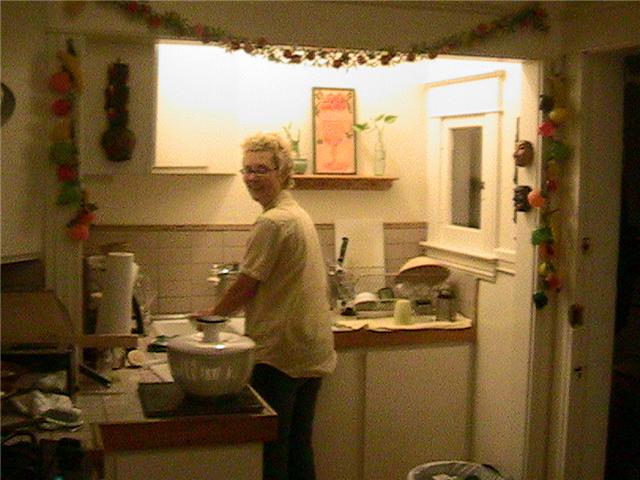
Jenny in the old kitchen.

We had purchased the house in Long Beach a few months earlier. For the most part it was in good shape, but the kitchen was a dump. The cabinets seemed to be made of plywood and the drawers required a lot of maneuvering to open and close. When we pulled up the interior of a lower cabinet to install the new stove when we moved in, we found rat droppings. I almost threw up.

“No sense in waiting,” I declared, even though we had already taken on a big debt with the purchase of the house. “I’m calling the bank to see if we can get a loan.”

With the loan secured, I called our contractor, Earl Weaver. Earl is a gentle older man, originally from Pennsylvania. His suspenders look like tape measures.

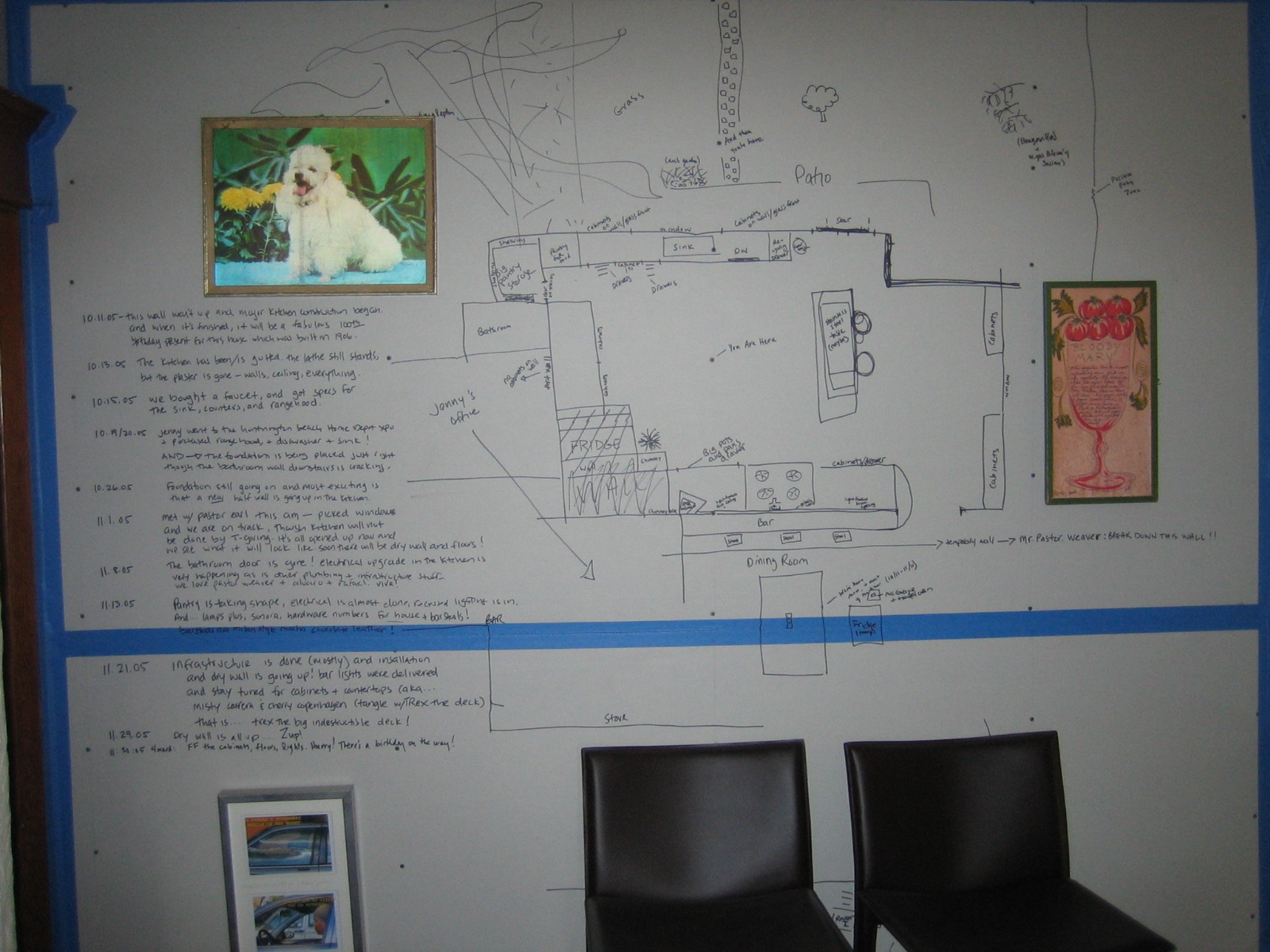
Earl arrived the next day to survey the kitchen. “We want to take down the wall between the dining room and the kitchen,” I explained. I decided I could design the place myself. Not that I am trained as an architect or a designer, except in my fantasy life, but I sketched out a rough design on a piece of paper anyway, and Earl, his assistant, Alvaro, and I made decisions along the way.

My attempt at sketching out a design for the new kitchen. Super-imposed on the temporary wall while the remodel is in progress.

“What kind of cabinets will you want?” Earl asked.

“I’m not sure,” I replied. “Maybe Maple?”

“I recommend Cherry wood,” Earl said.

“I love Cherry wood,” I said. “But we might not be able to afford it. I’m trying to stay within our budget.”

“How about if I bring over some wood samples?” Earl asked.

The next day Earl brought five samples of wood, some stained lighter than others. “Which one is the Maple?” I asked, eying a lighter stain.

“Oh, these are all Cherry,” Earl responded.

“I thought you were bringing over samples of different kinds of wood.” I said.

“No, these are all Cherry, with different stains so you can see the variety.”

“But we might not be able to afford Cherry,” I reminded him.

“I recommend you go with the Cherry wood,” Earl said. It seemed easier to agree with him on this rather then keep pressing for Maple.

“Ok, then.”

The new kitchen, almost finished. Earl was right about the Cherry wood.

When it came time to install the windows, Earl gave me a card of a woman he uses to purchase windows. “But this is a housecleaning service,” I said reading the card.

“That’s her other business,” Earl clarified. “The window business is on the other side.”

“Well that’s handy. We need a housecleaning service.”

I called Adriana the next day. “Our contractor, Earl Weaver, gave me your card. We’re going to be purchasing windows from you, but I notice you also have a house cleaning business and we need a housecleaner.”

“Oh, yes, Earl Weaver. He’s my pastor,” Adriana said on the other end of the phone.

“No,” I corrected her, thinking she must have had someone else in mind. “Earl Weaver is a contractor.”

“No, you see. Earl is like me. During the day he has one job, and at night and on weekends, he is a pastor.”

Not that I am religious, but for some reason, knowing my contractor is also a pastor, gives me great comfort.

Pass the cherry wood, please, Pastor Earl.

No-Fly Watch List: Part 9

The mail came early this morning. “Looks like I got a response from the Department of Homeland Security,” I told Jenny as I opened the envelope.

I had submitted a Traveler Redress Inquiry Form to the Department of Homeland Security’s Traveler Redress Inquiry Program back in February when I learned I had been placed on the No-Fly Watch List. (See No Fly Watch List: Part 3, posted February 15, 2010).

For most of February and March, traveling was a hassle. I couldn’t print my boarding pass in advance. I waited in lines at the airport while the airline staff completed the No-Fly Watch List paperwork. I’d often get stopped for extra screening. I generally tried to have a good attitude about it, but flying as often as I do, I needed a long-term solution so I filed my paperwork with the Department of Homeland Security to try to get my name off the list. Sometime around late March I was able to print my boarding pass from home, which made me think the system was working. I filed my paperwork, and I am off the list. Hooray. But according to the letter I received, that may or may not be the case.

“What does the letter say?” Jenny asked.

“It says they have researched and completed review of my case.”

And then the letter goes on to say, “Security procedures and legal concerns mandate that we can neither confirm nor deny any information about you which may be within federal watchlists or reveal any law enforcement sensitive information.” That is so not helpful.

They also suggest I provide my redress control number when booking travel. “This information will assist new technologies being introduced in 2009-10 to help prevent misidentifications.”

And after all these not so helpful explanations, the letter concludes, “Despite these positive efforts, we cannot ensure your travel will be delay-free.” Thanks a lot.

I can only hope that the Department of Homeland Security may or may not have communicated this information to the Transportation Security Administration because for the past couple of months I have been able to print boarding passes out in advance and breeze through security. Have I triggered a new watch list status? Or did filing my paperwork actually help? Hard to tell.

Lost Luggage

We were sitting in the back of the plane. “Make sure your father is on the plane,” Ami said to Tito.

Aba had died a few days earlier in London where he was being treated for a rare illness. Mimo, Tito, and I flew to London as soon as we got the news, to accompany Ami back to Pakistan with our father’s body. His body was placed in a coffin which had a square piece of glass over his head so that we could see his face, which seemed to be turning bluer with every passing day. “Why do they have a piece of glass there?” I asked Mimo when we went to view his body at the mortuary. “Probably because he died here and the family will want to view the body when we get back to Pakistan,” she responded.

Tito went to the front of the plane to speak with the airline staff to make sure Aba’s coffin was in the cargo section.

“They can’t find him,” he said when he returned.

“Oh good God,” Ami said. “We’ve lost your father.” For some reason this seemed funny to us and we all started giggling.

The coffin was located several minutes later. “He’s still up to his tricks,” Ami said about Aba as if, even in death, he was still playing pranks by making his own coffin disappear.

When we landed in Islamabad we were met at the airport by Puchi, Muna and Baba and my father’s brothers and sisters who took us to our family home in Abbottabad for the funeral services. Hundreds of family and friends gathered at our house to mourn the loss of our father. The men and women were segregated with the men sitting outside and the women, many of them on the floor, sitting around the coffin. Some of them held prayer beads as they wailed in grief.

“Who are all these people?” I asked my sisters. I didn’t know most of the people who had gathered, so I went up to my old bedroom. Puchi and Mimo joined me a few minutes later and we sat there sneaking cigarettes. Occasionally one of our young nephews would burst into the room.

“Where’s Dada?” Ali, the three-year old asked about Aba, calling him the Urdu term for grandfather.

We sisters looked at each other, not knowing how to respond. How do you tell a three-year old that his grandfather is dead?

“Where do you think he is?” we asked, thinking the question might buy us some time as we figured out how to tell him the truth.

Distracted by his older brother, Asif, the two boys went running from the room, continuing to play their games. They probably thought we were having a party, not realizing it was a funeral.

A few minutes later, they came back in the room. “We know where Dada is!” they said excitedly.

“You do?” we asked. “Where is he?”

“He’s in that box in the room with all the old biddies! We saw him! Through the glass.” And sure enough, that was the truth.

Aba with his first grandchild, Asif, about seven years before he died.

London Calling

When I landed at Heathrow, I took the Tube to Hyde Park Corner Station. “It’s not far from the station,” Mimo instructed me on the phone before I left. “It may shock you to see him in this state,” she said about Aba, describing the feeding tube that went through his nose to his stomach. “So prepare yourself, and try not to act stunned when you see him.”

We were taking turns helping Ami take care of Aba. His health had declined rapidly after we sold the Stoner house. His muscles were deteriorating slowly. He could still walk, but had lost the ability to speak. And eventually he lost the ability to swallow, so he stopped eating, which is when he went to London for medical care. Ami and Aba were staying in a small two bedroom flat near Hyde Park that one of their friends had generously offered them.

Mimo came to the door when I arrived. Everyone seemed cheerful, despite the fact that Aba looked like a walking skeleton. “Foosie!” Ami greeted me. Aba was sitting on a chair in the living room with a blanket over his legs.

“Come,” Mimo said just as I was sitting down on the sofa. “I’ll show you how I do the laundry.There isn’t a washer dryer in the flat, so we have to go to the laundromat.”

She led me out of the building and straight to a pub where we both ordered a lager. “Are you okay?” Mimo asked. “It’s shocking at first,” she said. “But he’s in good spirits.”

We finished our beer, and headed to the laundry while Mimo explained the routine. She was leaving to go back to Connecticut the next day. The laundry needed to be done daily since he soiled himself and the bedding at night.

In the morning we’d bathe him. Towel him dry and put lotion on his body. He always put powder between his toes when he was healthy, so we continued that ritual. But we didn’t bother to dress him fully. It was too complicated. Instead we’d pull a t-shirt over his head and a makeshift diaper under his underwear and lead him to the chair in the living room where he sat happily most of the day. A blanket would cover his bare legs.

We fed him through the tube in his nose, keeping up with his rituals like afternoon tea. He had lost so much weight that we tried to load him down with calories, hoping he’d put on a few pounds. “Let’s put condensed milk in his tea,” I suggested to my mother.

“Good idea,” she said. I loaded his afternoon tea down with sugar and condensed milk. “It’s not like he can taste it,” I said to Ami.

When Akhter Aunty came to visit, Aba got out a piece of paper and a pen and wrote her a note. “They think I don’t know that they are putting condensed milk and sugar in my tea,” he wrote. “Please tell them to stop. All I want is a simple cup of Earl Grey tea.” He was serious, but the note made me smile.

“Too bad,” I teased him. “I’m the decision-maker now.”

He still had his sense of humor, too. On occasion, he’d get up from his chair, walk down the hall to the kitchen where Ami and I might be preparing food and motion for me. “What is it?” I’d ask. “Do you need something?”

I’d follow him down the hallway, marveling at how he seemed so comfortable walking around in a diaper. His whole life he never came down in the morning unless he was impeccably dressed. But that vanity disappeared with his illness.

He’d walk back into the living room and sit in his chair pointing to the blanket, which I would pick up and put back on his legs. About the third time this happened I figured out his trick.

“Wait just a minute,” I said. “You’ve been getting up from the chair for no reason, so the blanket falls to the ground and then you walk down the hallway, interrupt what I’m doing to make me come and put the blanket on you?” Well, I’m on to you now.” Aba smiled. That twinkle in his eye glistening.

Aba, before he got sick.