Burning Down the House

The house burned to the ground in July of 2012 just a few days shy of my mother’s birthday. If she had been alive, my mother, Sunny Afzal Khan, would have turned 77 that year and like many of the birthdays that came before, she would have celebrated it surrounded by family and friends at her beloved summer retreat in Nathiagali, one of the many hill stations in the Pakistani Himalayas where our family had been going since the 1960s. But on that day in July, fire engulfed the house, the flames burst out of the roof and stood as tall as some of the hundred year old pine trees on top of the hillside. Within hours, the fire reduced the house to a pile of rubble.

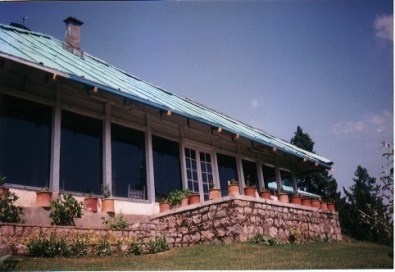
Our house was named Miranjani House because it looked onto Miranjani Mountain. Miranjani House was a historic landmark that my parents purchased through a lease to own agreement in 1969 from a man named Shiekh Iqbal– a tender old man who indulged me when I was a young girl with Laddus, my favorite sweet treat.
miranjanihouse

The original Miranjani House

My earliest memories are of Miranjani House. It was among my favorite places in the world. A large rustic cabin with a blue tin roof, wood floors and a square stone fireplace with a copper chimney in the living room that we would all gather around in the evenings. The bedrooms were full of bunk beds, and in the summer months the house was teeming with children. The dining table was long and easily sat thirty or forty people. There are six children in our family and I am the youngest. I have three older sisters and two older brothers. In addition to us we would be joined by friends, aunts and uncles, and cousins. My mother loved sharing our home and welcomed many guests over the years.
img_1772

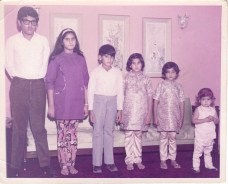
The six kids. From L to R: Samad, Gulfiza, Asad, Fazilet, Chanel, and Surina.

In the summer when the house was full of kids, my father, M. Afzal Khan, a retired Navy Commander who went on to found a successful poultry breeding business, would crave peace and quiet. We would tumble out of bed in search of breakfast which would usually be laid out on the kids dining table.
aba-solitude

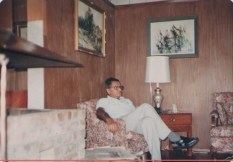
My father enjoying his solitude at Miranjani House in the 1980s.

“Breakfast is up there this morning,” my father said on more than one occasion, pointing to Miranjani Mountain. Picnic baskets were packed in advance and we kids would go off hiking up the mountain munching on fruit and snacks until we got to the top, a beautiful open meadow where we would have our picnic.

When they entered into the lease to purchase agreement with Shiekh Iqbal, my mother did not like the layout. “The kitchen had the best views,” she would say. So she hired a carpenter, and the two of them went about remodeling the house so that the living room had the best views of Miranjani Mountain.

“Architects always marvel,” my mother would say, “that the house is standing on three beams.”

The house sat atop a seven or eight thousand foot high mountainside. We would be short of breath when we first arrived, needing to adjust to the altitude. We would sit in the garden looking out at the forests of cedar and pine trees. In July and August the fog would roll in.

“Come,” my father would beckon me. “It’s time to sweep the clouds out of the house.” We would each take a broom and sweep the fog that would make its way into the house. It was our little ritual. One I will never forget, even if the house is long gone, and even amidst a family property dispute that began after my parents death and continues to this day.
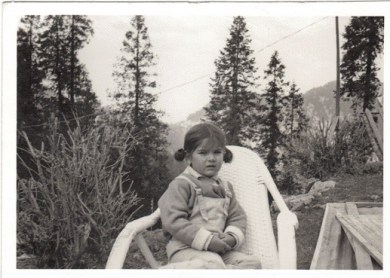
foobnw

Surina as a young girl at Miranjani House.

When my mother was sick with cancer in the 1990s, my oldest brother, Samad Afzal Khan, convinced her that after the final payment was made on the house, she should put it in his wife, Lalarukh Samad Khan’s name to safeguard it against business debts that Samad alleges our father left behind when he died in 1989.

“I have the power of attorney on the house,” my mother told me in 1998. “I’ll make sure it reverts back to all of you kids.” She died before that happened and since then Samad has insisted that the house never belonged to our parents and has always belonged to his wife. But he can’t erase the memories or the reality that many people are witness to, that the house did in fact belong to our parents.

In November of 2011, through the Abbottabad courts, Samad and Lalarukh filed an ex parte decree, which is a decree passed against the defendants in absentia. By this time, the rest of us were living outside of Pakistan. As required by law, Samad and Lalarukh sent notice of the ex parte decree to all of us, but they sent it to old or fraudulent addresses and none of us received the notice. Once we learned of the decree, we challenged it in the courts in order to reclaim what rightfully belongs to us.

Meanwhile, less than one year later, the house burned to the ground–we don’t know what caused the fire, but we do know that it allowed Samad to realize a long-held dream of developing the property into a hotel and cottages. Now called “Miranjani Properties” the website for the development notes, “The management is constructing multiple luxury villas on the property which are available for sale or lease.”

img_2332

After the house burned to the ground, construction began swiftly. Trees that were more than a hundred years old, were cut down. The hillside was carved up, creating environmental damage that may not be reparable. “The gated community will offer state of the art estates with a contemporary look,” notes the website. The problem is, the development is illegal.
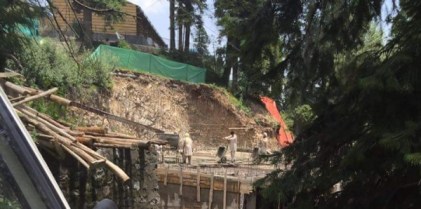
miranjani-ed3

Samad and Lalarukh carved up the pristine hillside in order to develop the property.

My siblings and I are pursing justice through the courts which is a long process. We’ve been standing on the right side of history since our father’s death in 1989 and our mother’s death in 1999. For almost 30 years, our brother, Samad Afzal Khan, has tried to keep our parents’ estate from us. But we are not deterred. We are appalled at the environmental damage they have caused. We are repulsed by Samad and Lalarukh’s greed.
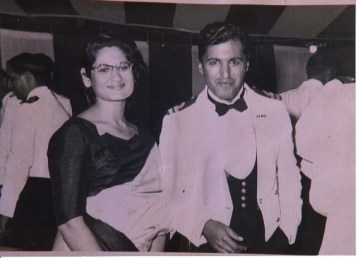
sunnyafzal

Sunny and Afzal Khan shortly after their wedding in the 1950s.

And we are determined to seek justice so that we might preserve the legacy of our parents.

In January of 2017, we won an important legal victory. A civil Judge in the Abbottabad Court ruled in our favor, setting aside the ex parte decree and allowing us to present the evidence that shows that we are the rightful heirs of Miranjani Property. Our legal efforts are sure to take many more years and we will be patient and resolute in seeking justice. We may not be able to restore the property to its early glory. We may not be able to repair the environmental damage. But we will continue to seek resolution so that the truth may prevail.
A Tribute to Jean Hardisty

Jean Hardisty hired me to be a research analyst at Political Research Associate in 1995. Getting the job at PRA was a dream come true. “If you offer me this job,” I said to Jean in my interview, “I would accept it in a heartbeat.” That seemed to work, because a day later she called to offer me the job and I moved from Connecticut, where I had been publishing an LGBT magazine, to Boston to research the Right.

On my first day, I was sitting at my desk around 6pm not wanting to leave because Jean was still at her desk and I wanted to make a good impression. We had an open office layout, like a newsroom, the idea being that it would enhance communication among us.

“Tell me again, what did you get your degree in, dear?” Jean said leaning over towards my desk. Oddly, this had not come up in my interview process.

Sh!*t! I thought to myself. I did not have a degree, which is another much longer story. The short story is that my first year of tuition at Tulane University had not been paid for family financial reasons and because of that, I could not matriculate anywhere else. Which left me with a huge debt from a private university and no degree. Meanwhile here I was at an esteemed think tank, on my first day of work, and the dreaded question of my degree had come up. So I told the truth. “I don’t actually have a degree,” I said, waiting for the other shoe to drop, expecting Jean to gasp in horror.

“Well, you’ll fit right in, dear. I’m the only one here who has a degree. Everyone else is a college drop out.”

“Even Chip?” I asked in disbelief.

“Oh, yes, he didn’t finish his BA either,” she said nonchalantly as she finished doing something at her desk. And that was the end of that, for a year or two. And then one day, she brought it up again. “I’m worried that it will hold you back, not having a degree,” Jean said. “I think we should pay your debt so that you can finish your BA.”

“It’s more than $20,000,” I said. “I don’t have that kind of money.”

“We can negotiate it down. I’ll pay the debt, if you promise me you’ll get your degree.” I was a little stunned by her generosity.

“That is very generous. I’ll think about it,” I said. But at that moment, I didn’t want to go back to school. I felt like I was just starting my career. I barely had enough money to get by, and I didn’t want to build up more debt. A day or two later, I thanked her for her offer and politely declined.

She didn’t judge, or make me feel bad. She just continued to mentor me, and teach me, with care, and calm, and her signature dry wit.

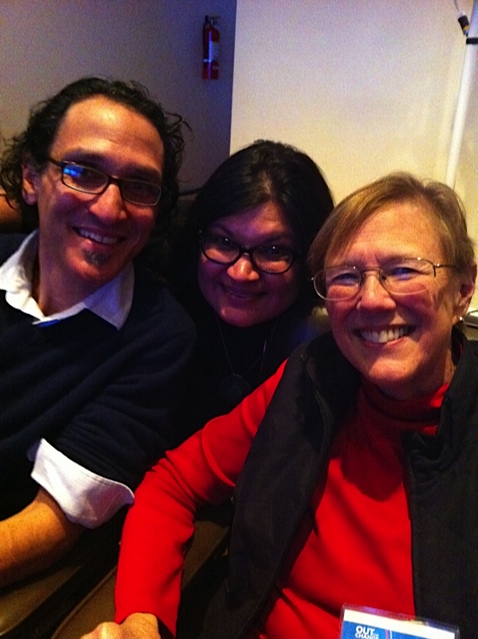
With Jean and Tarso Ramos, current Executive Director of Political Research Associates at the Ford Foundation launch of the LGBT Rights Initiative in  November of 2012.

With Jean and Tarso Ramos, current Executive Director of Political Research Associates at the Ford Foundation launch of the LGBT Rights Initiative in November of 2012.

On my second day of work, I said to Jean, “So…should I be researching anything in particular?” I was reading various articles and publications, but was not really sure if I should focus on anything specific.

“Oh, that will probably take you a year or two to figure out,” she said. “Just keep reading and it will come to you. And if you need a more quiet atmosphere you should stay home and read.” I almost fell off my chair. “I’m getting paid to read,” I said to my housemate later that evening.

I didn’t stay home much to read, though. I was too excited about coming to work.

A few weeks later, an article I wrote about sexuality in South Asia that was published in Trikone magazine elicited a nasty letter to the editor, which I was upset about. “I can’t believe they would write something so mean,” I said, wanting Jean or anyone else around me to sympathize with me.

And Jean said, very calmly, “What did you learn from your attacker, dear?” Those simple words have lived with me ever since. In times of conflict and adversity, I think about what I am learning, rather than focusing on my anger or frustration.

Another time, Jean came back to the office after giving a talk. I don’t know who might have spoken with her at the same event, but when she returned to the office she offered us some unsolicited advice: “When you are giving a talk, it’s never a good idea to start with ‘I’m not feeling well or I’m nervous,’” she said. “No one will focus on the substance of your comments, they’ll focus on your cold or on how nervous you might appear.”

When I got my first iPhone, I showed her how I could search for anything I wanted. “This changes everything,” I said. “We have access to information in a new way.” And Jean, ever the measured sage and analyst said, “We might have access to information in a new way, but who will make meaning of it?”

Whenever I needed advice over the years, I would call Jean. When I had good news to share, I would call Jean. In 2010 I was appointed by the University of California as the Regents’ Lecturer and spent a week in residence at the University of California, Santa Cruz, teaching classes, meeting with students and giving a public lecture. “Oh that’s wonderful, dear,” Jean said. ‘I don’t think we need to worry about your BA now,” she said with delight in her voice.

In 2011, I was working at the Ford Foundation where I went to launch the LGBT Rights Initiative. A year later in 2012 I was promoted to lead the entire unit, which included LGBT Rights, Women’s Rights, and HIV/AIDS. Jean sent me an email titled, “Your Promotion,” which I still have on my computer. “I’m bustin’ my buttons with pride and delight.  You go, girl! Love, xox Jean.”

One of our last email exchanges, late in 2014, when we were trying to find time to write something together for the Astraea Foundation, my schedule was overloaded. I was on and off a plane, moving across country back to California and starting a new job, and she said, “Let’s not stress about this. You have enough on your plate.” I was relieved and responded, “Thanks for saying that, because I really do have a lot on my plate. Monday is my first official day at the new job and let me tell you, they have got me tightly scheduled! Plus, did I mention I have a Board meeting my first week? It’s kind of comical.”

Jean responded, “Sending sympathy your way. As my old, beloved auntie used to say, ‘This too shall pass.’ I find I often have to invoke that saying, then try to believe it. Love, xox, Jean.”

In her quiet, gracious and genteel way, Jean Hardisty fostered courage, conviction, rigor, intellectual curiosity and generosity. She was, put simply, a treasure. And I will forever be grateful that I got to call her a mentor and a friend.

Rest in peace, dearest, Jean.

No Fly Watch List: Part 11

I’m getting mixed messages from the Department of Homeland Security. Last year I was placed on the No-Fly Watch List which made traveling a real hassle, mainly because I was not able to print my boarding pass from home for several months. You can read No-Fly Watch List: Parts 1-10 for greater detail.

Shortly after I discovered my status on the No Fly Watch List, I filed my paperwork with the Department of Homeland Security’s Traveler Redress Inquiry Program. A month or two later, I received a redress number and was able to print my boarding pass from home. Traveling resumed pretty much to normal. In fact, it kind of became easier.

Last November I was traveling to Albuquerque for a conference on a Southwest travel voucher. Because it was a voucher, I had to go to the airline counter to get my boarding pass.

“Here you go,” the nice lady said to me as she handed me my boarding pass.

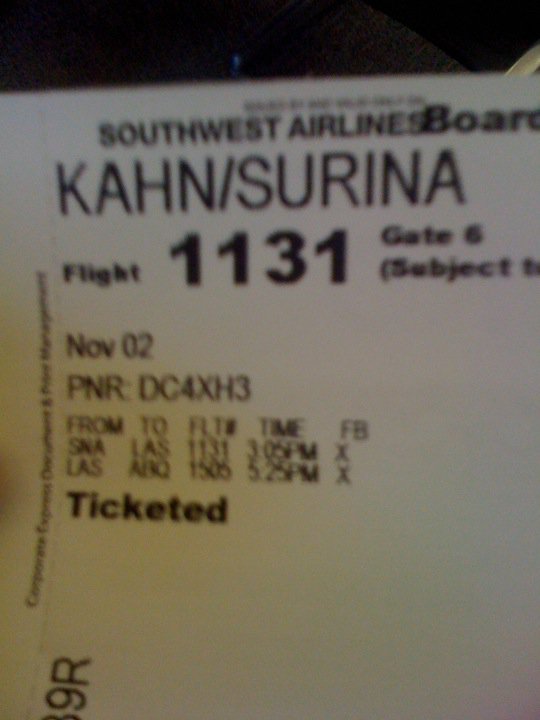
I was in line at security when I noticed my last name was spelled wrong on the boarding pass. My name gets misspelled with some regularity. Khan becomes Kahn, which I’ve also written about on this blog. See Mistaken Identity. Oh great, I thought to myself. I’ll probably get held up in security because the spelling doesn’t match my identification.

It's Khan, not Kahn.

I didn’t have time to go back to the counter so I chanced it. And they waved me through. Hmmm, I thought to myself. Have I advanced from the No Fly Watch List to the Go Ahead and Fly Even if Your Name on Your Boarding Pass Doesn’t Match Your ID?

Yesterday, I checked in for a flight and it seems the Department of Homeland Security and the TSA are trying to get their act back together because this time, I got a new message.

“Please enter the redress number for Surina Ms. Khan, if available. We have all other required information.”

Good thing I got that redress number, because I entered it and I was able to print my boarding pass, even though I was confused by the new name they gave me. Surina Ms. Khan. Usually I go by Ms. Surina Khan. At least they spelled my last name right.

Measurable Outcomes: 2010 Greatest Hits

The stats folks at WordPress.com mulled over how this blog did in 2010, and here’s a high level summary of last year:

Healthy blog!

The Blog-Health-o-Meter™ reads Wow. What ever that means.

Let’s Do the Numbers

The WordPress folks came up with this analogy, not me. But given my activity on the No Fly Watch List in 2010, it seems appropriate: A Boeing 747-400 passenger jet can hold 416 passengers. This blog was viewed about 4,600 times in 2010. That’s about 11 full 747s, assuming everyone got through TSA. And before I migrated to WordPress I was posting on Blogger which has been viewed about 7682 times. I don’t know how many 747s that is but it’s more than 12,000 views in 2010. I should note that when I first started this blog, I accidentally sent everyone in my contacts an invitation to view it, without using the bcc field. Ouch. Surely that boosted my numbers early on. I wrote about it in Blogettiquette just over a year ago.

In 2010, there were 95 new posts. I’m pretty sure there wont be nearly as many in 2011 since I seem to be averaging about 1-2 posts a month these days. There were 226 pictures uploaded, taking up a total of 25mb. That’s about 4 pictures per week.

The busiest day of the year was December 12th with 125 views. The most popular post that day was My Big Gay Funeral, a tribute to Jenny’s mom, Patricia Terry who passed away on December 10, 2010.

How Did You Get Here?

The top referring sites in 2010 were facebook.com, surinakhanblog.blogspot.com, twitter.com, en.wordpress.com, and ohcrapihaveacrushonsarahpalin.blogspot.com. Wait, what? Who has a crush on Sarah Palin?

Some visitors came searching, mostly for surina khan, surina khan blog, surina kahn, shan masala, and surina.

Attractions in 2010

These are the posts and pages that got the most views in 2010.

1

My Big Gay Funeral December 2010
1 comment

2

About April 2010
2 comments

3

Writing April 2010

4

Polly Wants More Than a Cracker May 2010
2 comments

5

That’s So Gay October 2010

My Big Gay Funeral

We invited Jenny’s mom, Pat, to move to Long Beach the same year we moved here, in 2003. After many years of teaching elementary and middle school, she had retired and was living in Newburyport, Massachusetts and was starting to have a little trouble. Mostly small stuff, like opening a jar or making sense of her landlord’s puzzling demands. And since we had just moved to southern California we thought it would be a good idea for her to join us, especially since one of Jenny’s brothers, Neal lived nearby. “She’s getting old,” I said to Jenny. “She’s going to need help doing things.”

Pat, after she moved to Long Beach

Pat was happy when we suggested she move here. “My children have invited me to live closer to them,” she would say proudly.

Pat adored her kids, Dane, Neal, and Jenny. Sometimes I would poke fun, “Pat, I don’t know how you did it, but you managed to raise two gays and a hippie.”

Before the hippie grew his hair long and the two gays came out.

The gay stuff didn’t seem to bother her, at least by the time I came on to the scene. She welcomed me into her family when Jenny and I got together. “It’s been a happy time for me this past week to have you visit with Jennifer,” she wrote to me in 2002. “I enjoyed seeing you and Jennifer giving so much of your caring support to each other in your work and daily life.” Later that year, I started calling her my mother-not-in-law.

When we first met.

Jenny’s brother Neal is a big gay too, but he didn’t come out to Pat until after she moved to Long Beach. When she was well into her 70s and he was well into his 40s.

Before we moved to Long Beach, Jenny and I were living in San Francisco, and we invited Pat to visit us over her birthday. Neal decided he would fly up from Orange County to surprise Pat. So he flew up and let himself into to our apartment while the three of us were out to lunch. When we came back, Neal hid in the closet of the guest bedroom. And when Pat went into the bedroom, Neal jumped out of the closet.

“Oh my goodness!” Pat shrieked in surprise. “Neal, how long have you been in there?”

“Oh about 45 years,” Neal responded. Perhaps, subtly, or maybe not so subtly, trying to come out to her.

Later that evening, as we recounted the story to our friends Jim and Matthew, Pat said gently, “Neal, are you trying to tell me something?”

Neal is a big gay.

Neal and Pat had a special relationship. He was her second child and they always had a strong bond. She visited him every winter and would stay three or four months. The two of them were inseparable. “Meet my significant mother,” Neal started saying.

After she moved to Long Beach, Pat did her best to be helpful. She called often.

“Girls,” she said once on the answering machine. “I just saw on the news that there’s a virus and it’s coming to California. On the computers. You know like the ones you two use? Well, they say the virus should be here by noon, so make sure you turn your computers off.”

She did the same thing to Neal. “Oh Neal,” she said leaving a message on his answering machine. “I just read an article in the Boston Globe, and it said men who tie their ties too tight get glaucoma, so don’t tie your tie too tight, okay?”

Sometimes when she’d get overly anxious, I’d say, “Pat, your having a patty meltdown.”

Even in these last years of her life, she kept making us laugh. A year or two ago, she was taken to the hospital and they had her all rigged up with wires and patches, probably monitoring her heart beat or some such thing.

We rushed to the hospital and when we got to her bedside, she looked at us, deadpan. “I’m wired.”

Sometimes her sense of humor was a little racy. “When they’re toes to toes his nose is in it, and when they’re nose to nose, his toes are in it.” I’m still figuring that one out. But it sounds inappropriate.

A few years ago, we were getting in our car. Pat was buckling herself up in the back seat and I turned to her wanting to know if she had enough room. “Are you good back there?” I asked.

“I’m trying to be,” Pat said. And she was good. For all of her 82 years.

Pat passed away peacefully on December 10 with Neal at her side holding her hand and playing music. Silent Night was on the iPod and the words “sleep in heavenly peace” had just played when she took her last breath.

Now we’re planning her memorial service and I’m beginning to think it’s pretty gay. We asked her former neighbor and good friend, Bill Benson, to officiate the service. “I think you’re really going to like my neighbor,” Pat said when she met Bill. “He’s gay.”

And the funeral director is gay too. Even the priest who is going to say a prayer for Pat is a gay.

I’m beginning to think we should call Pat’s memorial service, “My Big Gay Funeral.” I’m sure the hippie will not be offended.

Read more about Pat on her Memorial website.

Thanksgiving: It’s Not Just for Americans Anymore

My family embraced the Thanksgiving holiday when we moved to the US from Pakistan in the 1970s. It was another excuse to have a dinner party, even if the food was a bit strange. Over the years we came to love the Thanksgiving turkey and gravy, and stuffing and mashed potatoes. Maybe with an extra dash or two of pepper to add spice.

When my mother and some of my siblings moved back to Pakistan in the 1990s, they continued celebrating the American holiday.

“Happy Turkey Day, Foosie,” my mother said over the phone one year. She was calling from Pakistan. “We’re getting ready to have our Thanksgiving dinner.”

“You’re having Thanksgiving dinner in Islamabad?” That seemed so wrong. “With a turkey? Do they even have turkeys there?”

“Not exactly,” my mother responded. “But we managed to find one. And Mimo made stuffing and mashed potatoes too!” She exclaimed with a little too much excitement. I love Thanksgiving as much as the next sister, but in Pakistan?

Nevertheless, I take great joy in planning and cooking the Thanksgiving dinner every year. Here in the US, where it seems more appropriate. We invite friends and family every year, which sometimes might include a South Asian or two.

A few years ago, I was planning the Thanksgiving menu. “I’m going to make an herb roasted turkey with gravy, sausage stuffing, mashed potatoes, and brussels sprouts in a horseradish cream sauce,” I explained to Jenny.

“We’ll start with pomegranate champagne cocktails, parmesan and caramelized onion scones, rosemary spiced roasted pecans, and thyme dip with toasts,” I continued.

“You shouldn’t do everything yourself,” Jenny suggested.” People like to bring things.”

So when my one of my friends, a Bengali, asked if he could bring something, I said, “Sure. How about cranberry sauce?”

“What is that?” he asked.

“Or dessert,” I said, not sure how to explain cranberry sauce to a Bengali.

“Okay, I’ll bring a chocolate cake.”

“He’s bringing a chocolate cake,” I said to Jenny with mild disappointment. “Who has chocolate cake for Thanksgiving? That’s not a Thanksgiving dessert.”

When another of my friends, also from the Indian subcontinent, asked what she could bring, I suggested the cranberry sauce again. “How about cranberry sauce?” I asked.

“How do you make that?” she asked.

“I have no idea,” I replied. “I would go to a gourmet grocer and just buy some. Make it easy on yourself.”

When she arrived, carrying an enormous bowl, I asked, “What’s that?”

“It’s the cranberry sauce. You asked me to bring it,” she replied.

“The entire bowl is filled with cranberry sauce?” I asked.

“You said there would be thirteen of us.”

I don’t think she understood the concept of cranberry sauce as a condiment. And then I noticed it was pink. “Why is the cranberry sauce pink?”

“What do you mean? It has cranberries in it. I made it myself.”

“Did you make it from a recipe?” I asked, slightly confused.

“Of course. It’s Susan Stamberg’s recipe. I got it from NPR and I quadrupled it since there are thirteen of us.”

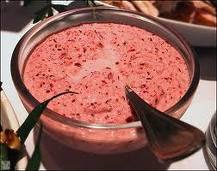
Susan Stamberg's Cranberry Relish

The cranberry sauce was the largest dish on the table, bigger than the Turkey platter. We placed it in the center of the table since there was no room for it on the buffet. I’m not a fan of the cranberry sauce, especially when it is pink and fluffy, so I didn’t try it, but everyone else seemed to enjoy it. And there was enough leftover to send home with every guest. And then some.

This year my cousin Sonia is joining us for Thanksgiving. She grew up in the UK. “Right,” she said in her Queen’s English. “So what do people do on the Thanksgiving holiday?”

I don’t think I’ll ask her to bring the cranberry sauce.

That’s So Gay

I am a big gay. And since today is National Coming Out Day, I thought I would make a big note of it. Most, if not all, of the people in my life know that I am a lesbian, so I’m not sure I have anyone to come out to on Coming Out Day. (See Gay, Gay, Gay, posted on April 23, 2010 and I Need a Lesbian Lawyer, posted March 25, 2010).

My friend Shauna, who is not a big gay, updated her Facebook status to show support for the gays. She wrote on her status update that she “is a straight ally and today is National Coming Out Day. I’m coming out for lesbian, gay, bisexual and transgender equality because it’s 2010 and almost 90% of LGBT youth experience harassment in school, and too many lives have been lost.”

I posted a comment on her status update in response, “That’s so gay.”

Shauna seemed to like that comment a lot because then she wrote on my wall, “You know what I think I’m going to do? Start using that phrase for when things are really cool. As in, Hey, great job on your paper! It was so gay! And, Wow. Beautiful dog. She’s… so gay! And maybe even, Congratulations on your nuptials! That’s so gay! Do you think it’ll catch on?” she asked.

I told her I did think it would catch on. “Oh yes,” I replied. “I do think it will catch on.” And then I suggested she also try, “You’re acting like a gay.”

She really liked that suggestion too, but asked for clarification. “As in, Hey, that was quite eloquent. You’re acting like a gay?

Then our friend Liz chimed in and said, “This conversation is so gay! Did I use it correctly?” she wanted to know.

I commended them both on their usage of the term. “Good job girls. You are both being über gay.”

I also had another suggestion for Shauna. “You can also use a variation and say: Wow. Are you a gay?

Or if the person is really interesting, I suggested, “Wow. Are you a BIG gay?

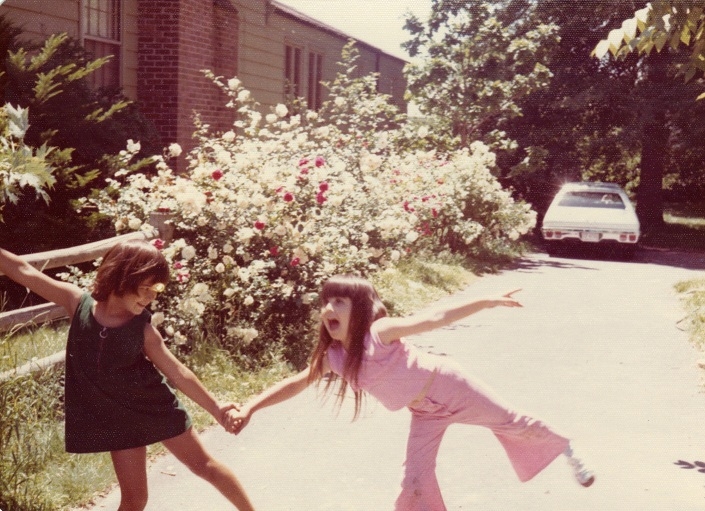
Here I am (on the left) acting like a big gay in earlier days.

Surina Khan Cook: Bruschetta

Day old crusty bread is good for a lot of things. Today I’m making bruschetta. A few years ago, Jenny and I went to a dinner party where the host served a delicious bruschetta. It seemed to be made with swiss cheese and carmelized onions.

“How did you make this?” I asked our host.

“It’s bruschetta,” he responded.

“Yes, I see that. It’s delicious. Did you caramelize the onions?” I asked. “And what about the bread, did you toast it first, or all together with the cheese and onions?”

“Oh, it’s just a simple bruschetta,” he said evasively, not telling me anything I needed to know about the ingredients or baking process.

“I can’t believe he wouldn’t tell me how he made the bruschetta,” I complained to Jenny on the way home. “I’m going to make my own bruschetta,” I declared.

Since then I’ve sampled many varieties of bruschetta. My favorite is from the Farmer’s Market in Gualala, a small town on the Mendocino/Sonoma coast. I’ve recreated a version of it since first tasting it about three years ago. The ingredients and the measurements are not exact, which makes it all the more appealing, to taste and to make. You can mix just about anything together, as long as it is fresh, and it will taste good. So if you’re out of rosemary, don’t make a special trip to the market. It will taste just as good with parsley and thyme. And any cheese will work well, though I do like a little blue cheese mixed in with whatever cheeses happen to be lingering in the fridge.

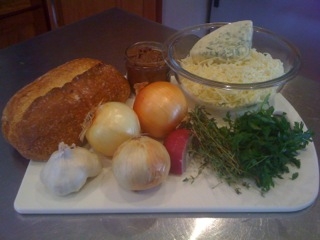
This will become bruschetta.

Day old bread (a french baguette or an Italian loaf works well)
2 tablespoons olive oil
2 large onions
1 tablespoon chopped fresh rosemary
1 tablespoon chopped fresh thyme
2 tablespoons chopped fresh parsley
1 tablespoon chopped garlic
a variety of grated or crumbled cheeses (cheddar, blue, parmesan, asiago or just about anything you have in the fridge will do)
olive tapendade

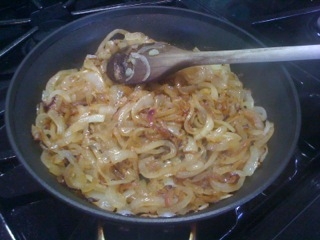
slice the onions and caramelize on medium or medium low heat in the olive oil (careful not to burn or crisp any of the onion)

when the onions turn a rich brown, take off heat and let cool

carmelized onions

preheat oven to 375 degrees

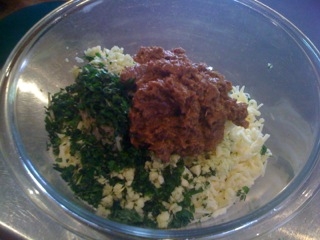
combine chopped rosemary, thyme, parsley, garlic, cheeses (grated or crumbled), and olive tapenade in a bowl and mix together

mix everything together in a bowl

add onions after they have cooled

place a piece of parchment paper on a cookie sheet

slice the bread (1/4 inch slices), and place on cookie sheet

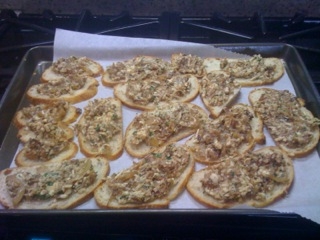
top each slice with cheese mixture and bake in preheated 375 degree oven until cheese is melted and browned

ready to go in the oven

Serve warm or at room temperature with a chilled sparkling shiraz or any other refreshing beverage.

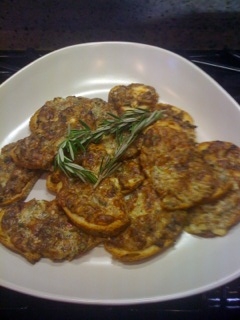
garnish with rosemary or other herbs and enjoy.

Surina Khan Cook: Bolognese

I’m making Bolognese tonight. The heat wave in SoCal has almost broken. Yesterday’s dental trauma in the form of a root canal is healing, thanks to the good Doctor’s advice.

“Take vicoden as needed,” Dr, Chin told me as I was getting up from the procedure. The vicoden helps the pain and makes me crave comfort food.

“What should I get from the farmer’s market?” Jenny asks me on most Friday’s. I am usually stuck at my desk with the phone to my ear while she is free to go to the market.

I tell her not to buy too much since I am traveling all next week. “Don’t buy too much, since I will be gone most of next week for work,” I remind her. “I’m craving Bolognese,” I add.

And so begins the grocery list for the Bolognese ingredients:

1 tablespoon olive oil
1 large yellow onion, chopped
a teaspoon (or more to taste) of crushed red pepper
1 head of garlic, peeled and chopped
1 lb mild italian sausage, in bulk
1-2 cups red wine
1 1/2 cup heavy cream
oregano
bay leaves
8 oz can of fire roasted tomatoes
8 oz pasta (garlic and herb fettuccine from Trader Joes)
1 bunch of fresh parsley, chopped as a garnish
fresh Parmesan cheese, grated as a garnish
crusty french bread

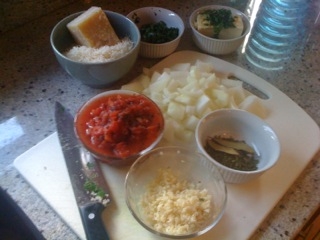
Bolognese ingredients from the market.

In fact, it being Friday, we may as well purchase several bottles of red wine. I suggest a combination of old vine zins, riojos, cabernets, syrahs and a few bottles of prosecco since it’s still warm out and it’s nice to start the evening with a chilled fizzy beverage.

I start the bolognese by prepping the ingredients, which also might involve pouring myself a glass of prosecco and sipping slowly.

prep the ingredients by chopping onions, garlic, parsley. also some grated cheese, oregano, bay leaves and tomatoes.

And then:

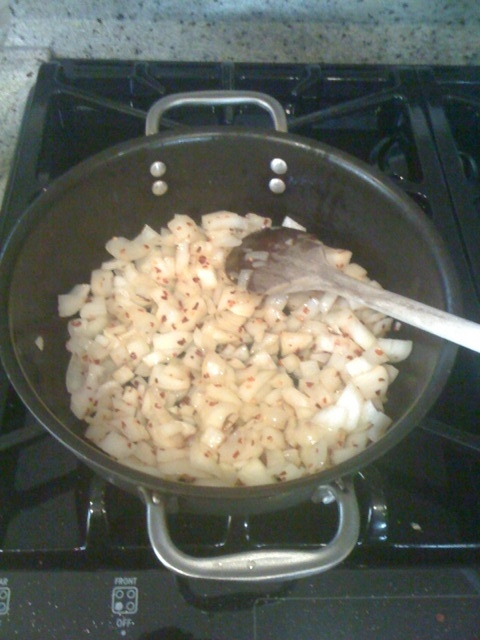
on medium high heat, sauté the onions (with a sprinkle of crushed red pepper) in a tablespoon or two of olive oil until they are slightly browned

sauté the onions with some crushed red peppers.

add chopped garlic, sauté for 1 minute

add mild Italian bulk pork sausage (remove from casing), saute until browned, breaking into pieces

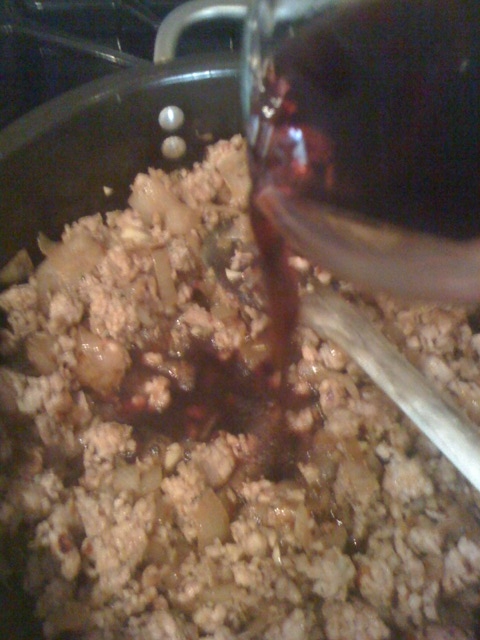
add 1 1/2 – 2 cups of red wine and cook on medium high until wine reduces

I added a cup and a half of red zinfandel.

add 1 1/2 cup of heavy cream, bring to boil

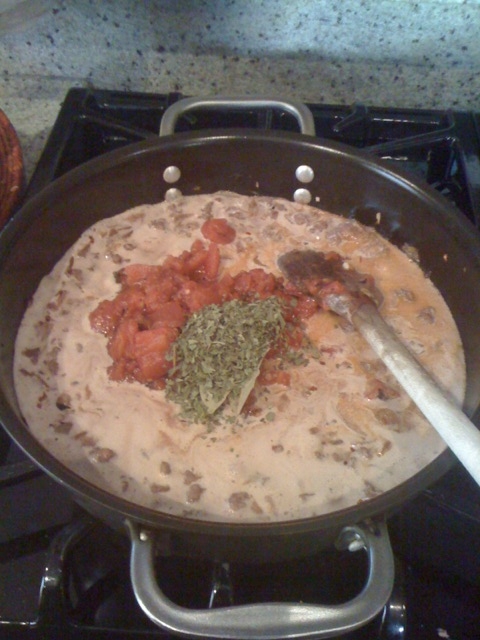
add 8 oz can of fire roasted tomatoes

add 1-2 tablespoons of dried oregano

add 2 bay leaves

with the tomatoes, oregano and bay leaves.

simmer on medium or medium low for at least 2 hours and as much as 4 hours.

Spoon off extra grease as needed.

Pour another glass of prosecco and sip slowly. Proceed to back deck and enjoy the evening air. Snack on some olive tapenade, enhanced with fresh chopped thyme, parsley and crushed garlic. Served with warm toasted bread brushed with olive oil and fresh ground black pepper.

When the prosecco bottle is empty, open a bottle of red wine as you continue to simmer the Bolognese. When feeling slightly tipsy, return inside. Continue to spoon off extra grease. Taste Bolognese sauce. Is it turning a rich maroon color? Good. Top it off with the remaining half cup of wine for a richer flavor. Add salt and black pepper to taste. Go back out to deck and continue sipping wine, until you’re ready to cook the pasta.

boil pasta and drain
add pasta to Bolognese sauce
let pasta and sauce co-mingle for a few minutes
warm the crusty bread in oven on 375 degrees

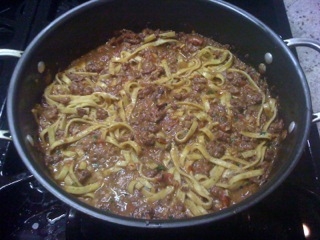
It should start looking like this.

Garnish with parsley and grated parmesan. Serve with another bottle of red wine. Enjoy.

I’ll post a picture of the plated Bolognese with fresh parsley and parmesan garnish as soon as it’s ready. Right now I’m sipping prosecco on the back deck with Rosie and Jenny.

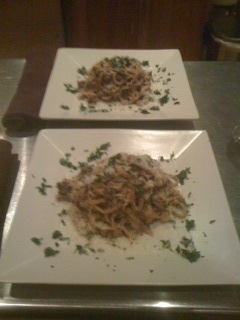
the photo came out slightly blurry, but here it is. party of two, your table is ready.

Don’t Ask

This gays in the military thing has been going on for a long time. Earlier this week, a defense bill that would repeal the military’s “don’t ask, don’t tell” policy got blocked in the Senate by a Republican-led filibuster. Back in the early 90s I was co-publishing a gay magazine called Metroline with my friend and colleague Bill Mann. Anytime something gay would hit the mainstream news, they would call us for a comment.

“It’s the Gayle King Show,” Bill said, the phone pressed to his ear. “They want one of us to go on the show this afternoon to talk about gays in the military.” Gayle King, also known as Oprah’s BFF, was a prominent African-American news anchor who had her own show in Connecticut.

Bill didn’t want to do the show. “I didn’t shave today,” he said. “And look at what I’m wearing. I can’t go on television like this. You do it,” he said to me.

“Me?” I responded. “I don’t think I know enough about gays in the military to go on television.” I was in my early twenties and was not an expert on much, let alone the military. But Gayle King was Oprah’s best friend, and going on her show would be good visibility for our rinky dink publication.

We had editorialized about the issue in the magazine, calling for lifting the ban. Though we were careful not to liken it to the ban on African-Americans in the late 1940s and early 50s when the military balked at integrating African-Americans into the armed forces, a comparison made by many gay and lesbian leaders.

White soldiers will not shower or sleep in the same barracks as African-Americans. Mixing African-American troops with whites will weaken a unit’s cohesion. “These are arguments that opponents of integration were making 50 years ago,” gay leaders would say. “Substitute ‘gay’ and ‘lesbian’ and it’s the same arguments being heard today. The common denominator is prejudice.” That may be true, but these were leaders who had done little, if anything at all, to build alliances with African-American communities. Not to mention that there are many differences and nuances. African-Americans have a history of slavery in this country, after all. Bill and I understood that discrimination against African-Americans was not the same as discrimination against gays and lesbians, so we were careful not to make this comparison.

When I got to the set in downtown Hartford. I took the elevator to the basement where the show was filmed. On a commercial break, before the gays in the military segment began, Gayle motioned for me to come over and put me at ease. Without mentioning that she was preparing me for the show, she casually asked me questions about the issues.

And then the real thing started. Live. “Joining us today is Surina Khan, co-publisher of Metroline, a local gay and lesbian newspaper,” Gayle said as the cameras panned over to me. I was trying not to look like a nervous wreck.

Gayle was gentle. “Tell us why you think the ban on gays in the military should be lifted,” she said.

I went on and on about equal rights this and equal rights that. “We deserve the same rights as everyone else,” I said.

As the interview progressed I got more nervous. Gayle was calmly talking about how there were many people who opposed lifting the ban.

“What do you say to people who are concerned about unit cohesion?” She asked. I was sure I did not have any idea what she was talking about.

“Units will be cohesive,” I responded as if I knew what I was saying.

“Well,” Gayle said, looking slightly puzzled. “There are soldiers who do not want to serve with gay service members and military officials are concerned that they would not perform properly if forced to do so.” I think she was trying to explain unit cohesion to me.

I had no idea how to respond. And then things really began to devolve. “Well what about the Blacks, Gayle? What about the Blacks?” I couldn’t even pull myself together to clearly articulate the comparison, which I knew I should not be making, to the integration of African-Americans into the military. I kept repeating, “What about the Blacks?” as Gayle’s head tilted to one side and she looked at me quizzically. Gayle cut to a commercial, and I sat there, thinking I cannot believe I just said that, on live television. To a Black woman.

When I got back to the office, Bill asked how the show went.

“Don’t Ask,” I said as I considered crawling into a filing cabinet.