I was feeling feverish. “I think I’m dying,” I told my mother. She held the back of her hand up to my forehead. “You do feel a bit warm,” she said.
We were in a taxi, on our way to the Golden Temple in Amritsar, the last of our stops on our summer holiday in India. “When we get back to the hotel, we’ll get you some aspirin.”
Aspirin? “No, really. I think I’m dying,” I repeated. But we continued on to the Golden Temple and took our tour as I sighed audibly the entire time.
“I might faint,” I complained.
“You’ll be fine,” Ami responded. “Just a slight fever.” Ami was not into organized medicine. And after six children, she knew the symptoms for most illnesses. She had been through the chicken pox, the measles, the mumps, pneumonia, and general malaise, multiple times. She knew how to treat a sick kid.
As a result, I don’t like going to the doctor. When I do go, which was erratic until recent years, they were always poking and prodding me, sometimes in unusual places. And they always need to weigh you, after which the nurse might say the dreaded words, “You’ve gained a few pounds since your last visit.”
I hardly ever get sick so for years I just avoided the doctor altogether, often with a little help from my mother.
“This form needs to be signed by a doctor,” I said on pretty much an annual basis before the school year started. “It says I need a physical.”
“Call Doctor Malik and invite him to dinner,” Ami would respond. Dr Malik was a friend of the family. I think he had a general medical practice, which you’d think would prevent him from signing a medical form without giving me a physical. But my mother was a persuasive woman.
“She’s a healthy girl,” Dr. Saab,” Ami would say after an elaborate dinner. “No need to examine her. You can sign the form here.”
The only time a Doctor was called in for actual medical treatment, was if my mother thought the illness might be serious. That summer in Amritsar, it seemed my mother was prepared to treat me herself. When we got back to the hotel, Ami gave me two aspirin, and put her hand on my forehead. “I think you may have Malaria,” she said as I groaned in pain, starting to sweat and shake with chills. “We’ll go to the Doctor when we get back to Abbottabad tomorrow.”
“Tomorrow? I might die before then,” I moaned dramatically. The next day, after crossing the border on foot and a long drive to Abbottabad, the Malaria was confirmed by the Doctor at the Missionary hospital nearby our house.
“Good. That’s settled.” Ami said as if she had just completed an errand. “You’ll start feeling better when you take the medication. And make sure to drink lots of fluids so you don’t get dehydrated,” she said matter-of-factly. “Now go pack your clothes for Nathiagali.” The thought of the drive up the winding mountain roads to our house in the foothills of the Himalayas was making me nauseous. But apparently a Malaria diagnosis was not enough to interrupt our summer plans.
“Shouldn’t I stay in bed?” I asked. “I have Malaria.”
“You can stay in bed in Nathiagali,” Ami said.
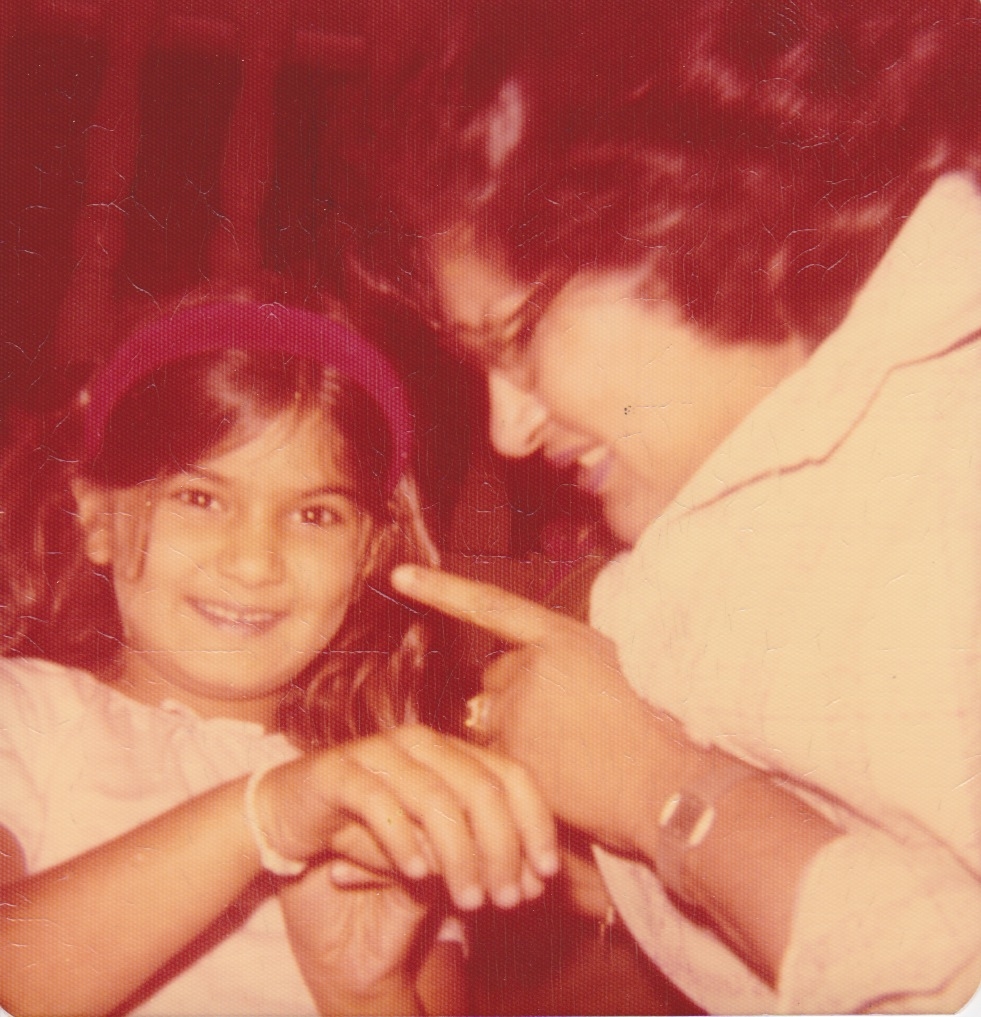
Me with my mother. Another diagnosis?
 Leaving Pakistan