The driveway was full of school children. “What’s going on?” I asked Puchi.
“Ami’s been feeding school children everyday,” Puchi replied. I had recently arrived in Islamabad, in October of 1986.
My mother had noticed some local children passing by our house everyday on their way home from school. They looked malnourished, emaciated with runny noses and open sores on their tiny bodies. They were in elementary school and ranged in age from about five to nine years old.
Ami had the cook make a big pot of dal or masala and a stack of naans from the tandoori oven. He would put a scoop of dal or masala on the naan and offered it to the children. The first day one or two kids hesitantly took the food. And the next day a few more, and a few more after that until the driveway was full of forty or fifty children everyday. Within a couple of weeks they started looking healthier. The open sores went away and they put on a bit of weight looking bright-eyed and cheerful. “See how little it takes to give someone a chance in the world?” my mother would say.
Ami planned the menu so they would get all the basic food groups in a week. Naan or roti everyday, with a scoop of dal for protein, or vegetable masala another day, and meat the next day or maybe rice pudding with milk and fruit. “This way they get protein and carbohydrates,” Ami explained. “And we don’t need to use plates since we put the food right on the roti.” Eventually as the menus became more varied she purchased metal plates and cups.
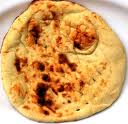
The cook would put a scoop of food on top of the naan for the kids.
The kids were shy. At first they trickled in. Ami asked one of the household staff to stand at the gate to invite them for lunch but that wasn’t really working so she went out there herself and invited them to eat. Initially many brought their fathers so they could ask permission which helped. And then Ami asked Puchi to stand at the gate to invite the new kids. She had Puchi sit with the kids while they ate. “I don’t want them thinking we’re treating them like poor kids,” she said. “They should feel like they’re eating with a member of the family.”
“One boy used to stand outside the gate, too hesitant to come in when the servants invited him,” Puchi remembers. Ami asked Puchi to invite him in, and maybe because she was part of the family, he eventually came in. His father came to thank us later in the week. And some of the other parents would stand at the gate in a bit of shock that this was a daily event, moved by my mother’s generosity.
Ami knew that just feeding the kids wouldn’t solve the problem, so she formed a committee, deciding that working through the government-run schools would be the best way to help families living in poverty. The World Food Bank was giving nutritious food to Afghan children, and my mother thought they should expand the program for Pakistani school children as well. This never happened, but it was a good idea.
She worked with the village mothers as well, trying to get them involved in advocating for the schools to feed kids. “This will increase family income as well,” my mother explained, “because then families will spend less money on food.”
Ami had only one rule. The kids had to eat at the house. “No take aways,” she said. “I want to be sure that they eat the food.”
 Leaving Pakistan
This is just lovely Surina. What a mensch, your mom. I love this story–except for the part where the World Bank doesn’t get it together to feed Pakistani children.
“Ah Ma Kah” something Ami’s grandmother used to say to everyone who came to the house. Means come dear one, eat.
Ami and Aba carried on the tradition. Thanks Foo.