Walk of Shame

When I saw the foreclosure sign, I panicked. The sign at the bottom of the driveway, for everyone to see, had big black letters painted on it that read, “Notice of Public Auction.” As I kept reading in stunned silence I saw the warning, “Do not remove: violation subject to punishment by court.”

I continued driving up to the house, engulfed in shame and embarrassment that my family’s financial troubles were so public, with what seemed like a slightly smaller version of a billboard. I had just returned from my shift at the Keg restaurant, where I was waiting tables. The money I earned from tips contributed to the household bills. My sister Mimo paid for most of the bills out of her own salary as the Manager of the Edelweiss Restaurant, a small popular German restaurant in West Hartford Center. I was responsible for the weekly groceries and for paying for the classes I was taking at the University of Connecticut, trying to finish my college education.

As soon as I got inside the house, I called Mimo who was working at the Edelweiss. “There’s a foreclosure sign at the end of the driveway,” I said. “Anyone who drives by can see it. All the neighbors.”

When Mimo got home, I suggested we take the sign down. “We have to get rid of it.” We drove down to the end of the driveway so we could make a quick exit once we got the sign out of the ground, avoiding a walk of shame up the driveway. Pulling the sign out was not easy. “How far did they push these stakes in?” we both grumbled, hoping no one would drive by to see us removing the foreclosure sign. The sign was bad enough, but to be caught removing it would have been in its own category of shame.

Our determination was strength enough to pull it out, and when we finally got it out of the ground, we threw it in the back of Mimo’s red Chevrolet Cavalier and drove it up the driveway.

“Now what are we supposed to do with it?” we both wondered.

“We have to hide it,” I said. “It’s illegal to pull it out of the ground.”

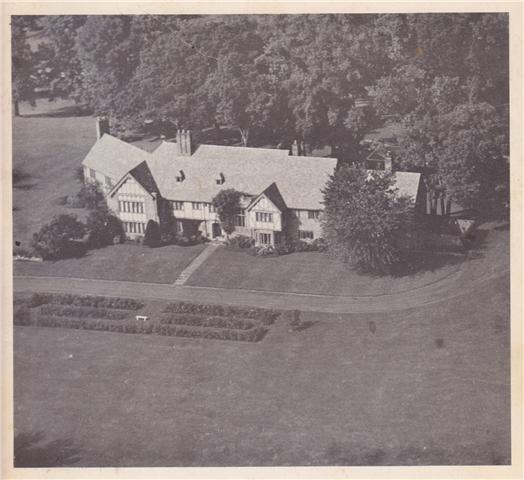
“Where should we put it?” Mimo pondered. “Maybe in the attic?” The house was plenty big enough. A full basement and attic the entire length of the house which had twenty-three rooms. Known as the Stoner Mansion, this had been our home in Connecticut for the last fifteen years, since 1974.

“That’s the first place someone would look,” I said. “We need a better hiding place.”

The Stoner Mansion circa 1973 when my parents purchased it.

When we first moved into the house, it was bustling, home to us six kids, my parents, and any number of guests who were welcome to stay as long as they liked. By the mid eighties my father’s chicken business was not doing well, and after he got sick in 1987 things went from bad to worse. But my father refused to sell the Stoner house, even though it was a shell of its former self. There were just three of us living there in 1988, the year the foreclosure sign went up– Mimo, me, and Aba when he was not in Pakistan trying to revive the chick business. Amin, our cook, was also with us. Mimo put him to work at the Edelweiss so he could earn money to send home to his family in Pakistan. And he continued to cook and clean for us, though with only three of us in the house there wasn’t much to do. Ami, Baba, Muna and Puchi had moved back to Pakistan, one by one. Tito was an officer in the US Marine Corps, living in San Diego with his wife and son, and Mimo and I stayed in Connecticut and kept the house running.

Aba would sit in the same chair in the Big Room at one end of the house, reading or watching television most of the day. Mimo and I generally hung out near the kitchen, usually late at night after our restaurant shifts. The rooms were mostly uninhabited and dark. The pool hadn’t been used in years.

“Let’s put it in the swimming pool,” I suggested. “No one will look there.”

“Good idea,” Mimo said. “Let’s go. You pick up that end of the sign.” We walked around to the back of the house and threw it in the deep end.

When the bank called inquiring about the missing sign, we responded with proud condescension, “What sign? I’m sure we haven’t any idea what you’re referring to.”

Hotel Fetish

I love hotels. The first thing I do when I get to my hotel room, no matter where I am, or how long I am staying, is unpack. I carefully hang my clothes in the closet, place my toiletries on the sink in the bathroom, and put away my suitcase. Even if I am just staying one night.

“Why are you unpacking everything?” Jenny will ask me on occasion. “We’re only staying one night.” I like things to be orderly in the hotel room, I tell her.

After I unpack, I look for the hotel information, usually in a binder titled Guest Services. I like to know when check-out time is, or how to get on the internet, room service options, fitness facilities and other helpful hints.

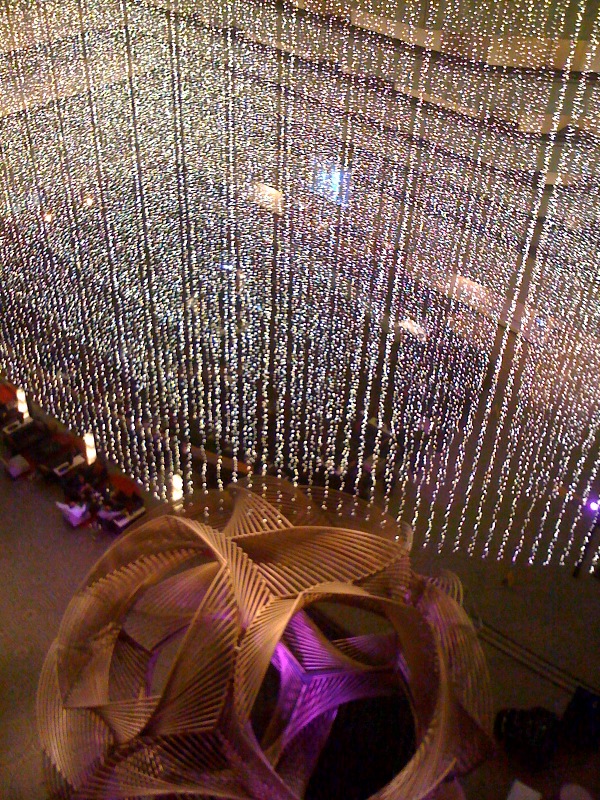
One of my favorite hotel lobbies.

A a kid I was often left to my own devices. Especially on family holidays. My siblings were a good bit older and didn’t want their kid sister hanging around. And my parents might have a dinner party to go to and didn’t want a ten year old tagging along.

“Oh don’t worry about me,” I’d say. “I’ll just stay here in the hotel and order room service.” Or if it was daytime I’d offer, “You all go ahead without me. I’ll just go to the pool.” It was a win-win situation. They didn’t want me hanging around, and I much preferred being on my own, especially if it involved a full-service hotel.

I imagined myself as Eloise, the young fictional character who lived in the Plaza Hotel in New York. Like Eloise, I would say, “Charge it to my room, please,” with an air of importance.

I’d roam the hallways. “May I help you?” a concierge might say, seeing me wandering aimlessly around the lobby. “No thank you,” I’d reply sitting down on a comfortable couch watching people walking in and out of the hotel.

Ordering room service was my favorite activity. “May I help you Miss Khan?”

“Yes, I’d like to order some dinner please.” This would usually consist of a hamburger.

“Will there be anything else? Some dessert perhaps?”

“Oh, yes please,” I’d respond. Possibly a slice of chocolate cake, or a scoop of chocolate ice cream, which I might have to eat first in case it melted too quickly.

I travel all the time for work now, and I stay in lots of nice hotels. I’m always trying to save the Foundation money, so I usually Priceline a hotel room. I have some basic criteria. I only stay in four star hotels, five stars if I can get it, but my price range usually goes no higher than $125, which is pretty good for a four star hotel, and almost unheard of for a five star hotel.

I frequently travel to San Francisco, where our main office is. At least twice and sometimes three times a month. For a brief moment I considered renting a room up there, but then I thought the better of it. “Then I’d have to do laundry in two places,” I told Jenny. This made her chuckle, because I don’t usually do the laundry at home, Jenny does. “And apartments don’t have room service,” I continued.

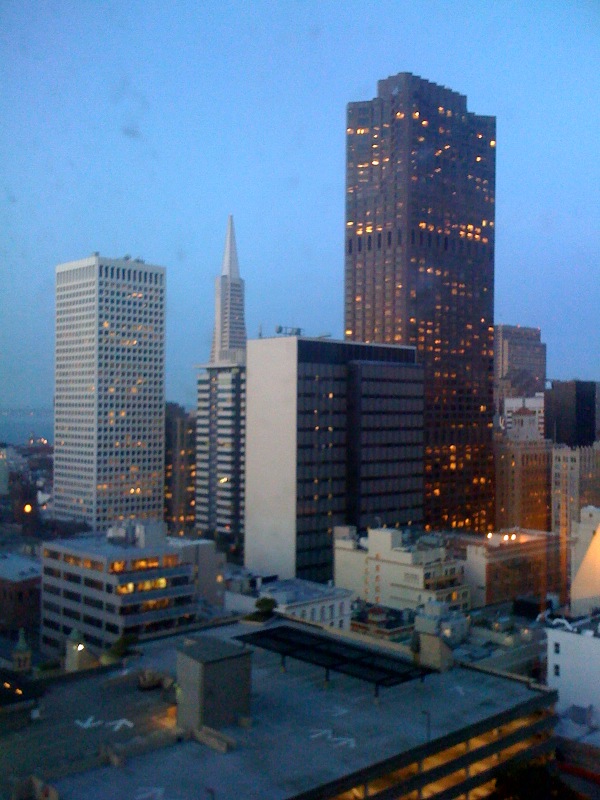
Room with a view.

My hotel etiquette of unpacking my bags and carefully hanging up my clothes does not apply at home, for reasons that Jenny is still trying to figure out. “Are you going to unpack your suitcase?” she asks me a day or two after I return from a trip.

“Yes, I’ll get to it,” I say, putting it off another few hours or another day. When I finally do take the clothes out of the suitcase, I tend to leave them in small piles on the washer-dryer, or the chest in the bedroom.

“Are these clothes dirty?” Jenny will ask me pointing to the pile on top of the washer.

“No,” I respond. “I need to put them away,” which I might not do for another day or two. “And what does this pile mean?” Jenny will ask, confused about the clothing on the chest in the bedroom. “I need to put those away too,” I say. And that hardly ever happens. The pile of clothes on the chest in the bedroom is a revolving pile. These are clothes that are not clean enough to put in a drawer, but not dirty enough to be washed. Or they might include a sweater or two that I wear with some frequency, so why bother putting them away?

When I do finally get around to putting my clothes away or putting them in the laundry, I might have a separate pile for delicates. “That’s delicate,” I’ll say, not realizing how delicate the whole situation may be from Jenny’s point of view. I think she’d prefer me to be as orderly around the house as I am in hotels.

Who’s the Boss?

We were supposed to meet in the hotel lobby at ten after six. “Ladies, I’ll see you in the lobby at six ten,” instructed Ami, (pronounced Aimee). Ami is our coordinator for the Women’s Economic Security Campaign (WESC) and she is always telling us what to do. Ami should not be confused with my mother who we also called Ami (pronounced Ummi). Come to think of it Ami, my mother, was also often telling people what to do. And Ami, our coordinator, was herding us around like a bunch of kids. So much so that I noticed some of the ladies in our group started calling her Mom. “Okay, Mom. We’ll be there at ten after six.”

WESC is a collaborative of four women’s funds. My colleagues from Chicago, Memphis and DC and I are working together in collaboration with the Women’s Funding Network to improve economic security for women and girls. Earlier this month, WESC released the second in a series of policy reports, Aiming Higher: Removing Barriers to Education, Training and Jobs for Low-Income Women, which focuses on job creation, training and supports for low-income women. We were in DC to release the report and meet with national advisors and policymakers. Ami had arranged everything for the trip. And if it weren’t for her we would never have gotten our act together to actually complete the report.

We all have big important jobs and we work hard, but left to our own devices we could never accomplish all the things we want to do with this campaign, so we hired Ami. Through our work together, we’ve also really come to enjoy each other.

“Let’s go to the bar and get a drink,” Shelley said. Shelley is from the Chicago Foundation for Women and like me, she loves red wine, preferably a full-bodied red like a Cabernet or Zinfandel. “I need to go up to my room and change really quickly. I’ll meet you there,” Shelley said.

“Sounds good,” the rest of us said in unison. We’re a very agreeable group which is an essential quality for a collaborative.

“I’ll have a Pinot Grigio,” Jennifer said when we got to the bar. Jennifer is the Interim Co-President and Vice President of Programs for the Washington Area Women’s Fund. She has two jobs so she really needed that glass of wine.

“Make that two,” said Shante, our colleague from the Women’s Foundation for a Greater Memphis. When Shelley came down, she ordered a Cabernet.

My boss, the President of the Women’s Foundation of California joined us a few minutes later. “Can I get you anything?” the waiter asked.

“No,” Judy replied. “I’m just going to sit here and watch them drink.” Judy enjoys a glass or two of wine from time to time, but she was getting ready to head to the airport. She had to leave us early.

“Too bad you can’t join us at the White House,” we said to Judy. Ami and Shelley had worked together to get us a meeting with Tina Tchen, the Executive Director of the White House Council on Women and Girls. We were talking with excitement about this meeting when Ami found us in the bar.

“I knew I’d find you ladies in here,” Ami said appearing at our table and tapping her watch with her index finger.

“Is it ten after six already?” we said earnestly. “Time flies.”

“Let’s go, ladies. We don’t want to be late.” We had been invited by a well-connected DC colleague, Kathy, to her apartment at the Watergate. Kathy, who has done some communications work with some of our funds, was kind enough to invite some DC-based feminist leaders to have dinner with us. Everything was lovely, including her apartment and the dinner she had arranged. “Ruth Bader Ginsburg used to live just a few doors down,” Kathy told us. “And Condie Rice. She lived down there.”

My WESC colleagues and I put on our networking faces and charmed the elder feminists. Marcia Greenberger, the executive director of the National Women’s Law Center was there. And Ellie Smeal from the Feminist Majority was there with her colleague Kathy Spillar, the executive editor of Ms. Magazine.

We all nibbled on salmon, and chicken, and salads as we continued drinking wine.

“Ladies, we’ve got an early morning tomorrow,” Ami was trying to get us out the door after the chocolate cake had been served. Kathy told us we could get a cab at the Kennedy Center across the street.

It was spitting rain and slightly chilly and we were not happy with having to walk the short block. “Where’s the taxi stand?” we asked Ami expecting her to know the details of the Kennedy Center taxi stand.

“Maybe it’s up those stairs,” she said.

“Up the stairs?” Ruby, the executive director of the Women’s Fund for a Greater Memphis moaned. She had heels on and was not having it. And the rain was really complicating things. I’m surprised Ami didn’t remind everyone to bring an umbrella. I had my umbrella which was good because Shante kept sidling up to me trying to get cover from the rain. She forgot her umbrella. Jennifer and Ruby also forgot their umbrellas so they wrapped their shawls around their heads which made them look like they were good Muslim ladies wearing hijab.

“There’s the taxi stand,” Ami said pointing to a sign.

“But there are no taxis,” we noted as if Ami was not smart enough to notice the absence of any cabs. I think we were getting a bit too reliant on Ami’s coordinating skills. Surely the rest of us knew how to look up a cab company on our fancy iPhones and Blackberries. But instead we looked at Ami, like a bunch of kids. “What are we supposed to do now?” we asked Ami.

Ami called us a couple of cabs, and we waited. And waited. For forty minutes. In the drizzle.
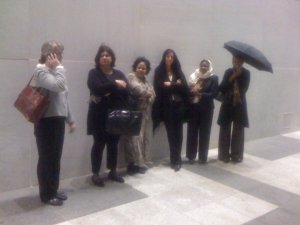
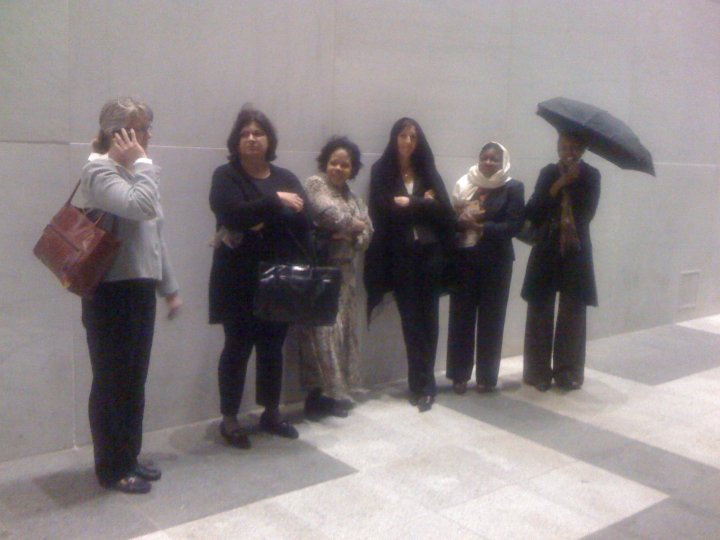
Ami is the one on the left on the phone trying to get us a cab as the rest of us look on while we wait in the rain at Kennedy Center.

“I want to see you at 8 am,” Ami said to me when we got back to the hotel. “And I want to see you at 8 am,” she instructed Ruby. She said the same thing to each of us. I was expecting the next words out of her mouth to be “and not a minute later,” but she was gentle with us. Ami has two young boys, and I could tell she had good, caring parenting skills. “Get a good night’s sleep,” she added.

The next day we had a series of meetings with our national advisors, and had to tape a segment for a webcast for the Spotlight on Poverty and Opportunity. Ami had us do a run through of the webcast earlier in the morning, reminding us each of our roles. “You’ll all be great,” she cheered.

When we got to the studio for the taping, the news anchor who was going to interview us was late, and Ami was not happy. “We need to get back to the hotel for the meeting with our national advisors by 11:30,” she said. Too bad Ami, wasn’t coordinating the anchor’s schedule. If she had, we would not be running late.

“Can we bring our notes on to the set?” we asked.

“No,” replied Ami. “But you guys know all this stuff. You’ll do great.” We couldn’t help but notice that the news anchor, when she finally arrived, not only got to bring her notes on the set, but she also had an ear piece into which the producer would speak to her giving her guidance.

“Why can’t we have Ami talking to us through an ear piece in case we forget anything?” we wanted to know. No one even bothered answering that question.

After the webcast taping we rushed back to the hotel for our lunch meeting. And then like clockwork, at 1pm we left for the White House, where we arrived in two cabs.

“Is this the right entrance?” we asked from the backseat of the cab. Ami was sitting up front with the cab driver and decided to go out and check. “You stay in the cab,” she told us.

When a police car pulled up to the cab, we knew we were at the wrong entrance. “You know you’re not supposed to be here, right?” the officer said over his speaker.

The cab began to pull away just as Ami was running back, and she jumped back in just before it took off. “We need to go to the Pennsylvania Avenue and 14th Street entrance,” Ami instructed the cab driver.

We arrived at the Northwest gate and waited for the rest of our colleagues who were in another cab. Ami got out her cell phone and guided them to the right entrance. “Walk faster,” she said.

When we were all assembled, Ami looked us over. I almost expected her to start fixing our hair, or straightening our collars. “Let’s go ladies,” she said as she rang the buzzer. After making sure our names were on the security list, the guard buzzed us in. We had to put our bags through an x-ray machine and we walked through a scanner, each one of us causing it to beep. Each of us was then scanned with a wand and passed through to the other side. We walked to the West Wing where we were greeted in the lobby by a young receptionist sitting at the cleanest desk I have ever seen. There was not a thing on it. I later noticed that she had a computer, but it was embedded in the desk.

“Remember our pact,” Shelley said. “No acting cool as a cucumber. We need to get some photos while we’re here.”
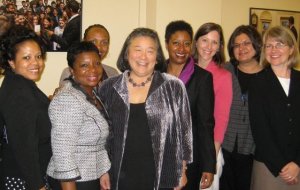
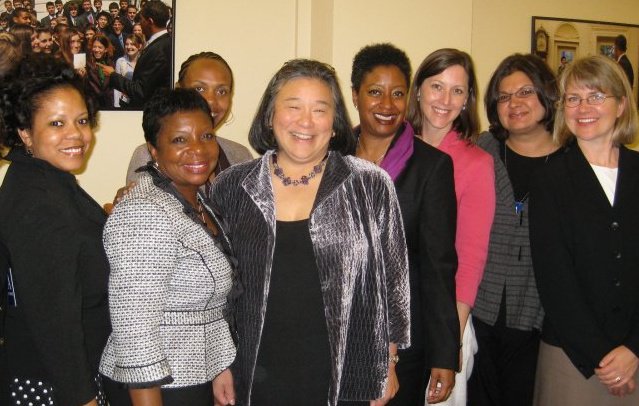
With Tina Tchen at the White House Council on Women and Girls. From left, Shante, Ruby, Shaune, Tina Tchen, Shelley, Jennifer, me, and Ami.

As we walked out of the West Wing, we passed by Valerie Jarrett’s office. “Someone told me that used to be Karl Rove’s office,” one of us whispered.

Back outside, we wanted to take a photo in front of the West Wing entrance. We were instructed by White house staff and security not to take any photos but Ami gave us permission, so we stopped and everyone got their cameras out. Ami even got in the photo with us.
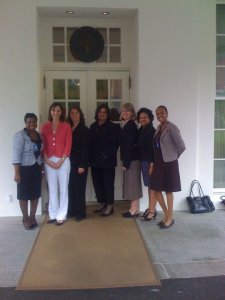
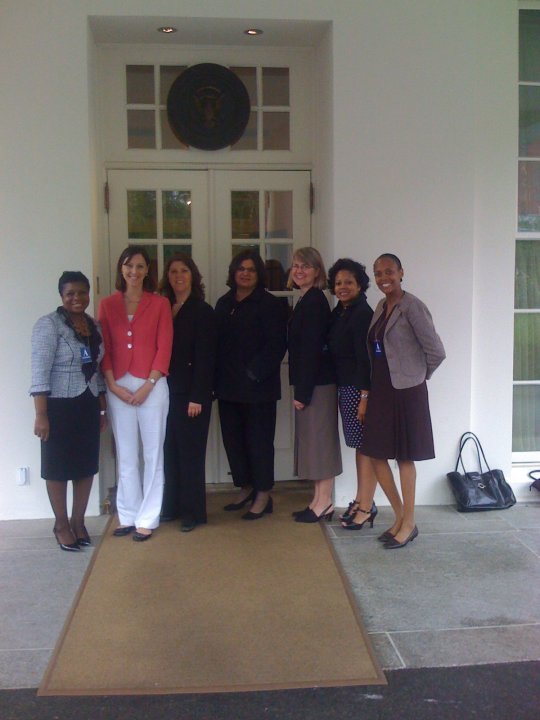
At the entrance to the West Wing: Ruby, Jennifer, Shara, me, Ami, Shante, and Shaune. Shelley is not pictured since she took this photo.
Toxic Shock

I was confused by this concept of a Milk Lunch. Since I despise milk, I thought it might be best to skip it altogether. Milk Lunch was on the schedule every weekday at ten minutes after ten in the morning. This was the part of the day at my high school, the Ethel Walker School for girls, where we were served a mid morning snack of milk and cookies. I skipped the milk. And the cookies felt a bit infantile too. Really? Milk and cookies? Weren’t we supposed to be young ladies by now? Who gets milk and cookies in high school? Kindergarten, maybe, but I felt we were a little old for a mid morning snack of milk and cookies.

The Ethel Walker School for Girls.

Milk Lunch was also an opportunity to check our mail, if we were boarding students, and buy any items from the school bookstore. In addition to books and school supplies, the bookstore also carried personal care products like shampoo, toothpaste, soap, and feminine hygiene products. We’d ask for what we wanted and sign for it.

“I need a box of tampax,” I said pretty much on a monthly basis, signing for my purchase on my account which would be billed to my parents. The household bills were usually paid by my father’s secretary so I rarely heard anything about my monthly bookstore activity.

When I went home the following weekend, my mother was holding my bookstore bill, waving it at me. She did not look happy.

“You’ve been purchasing tampax at school,” she said with disapproval. My mother forbid us to wear tampons. “It’s not natural,” she instructed. “Use a sanitary napkin.”

It was bad enough menstruating, and the sanitary “napkin” was, well, a sanitary “napkin.” I didn’t like it.

“Either you stop purchasing the tampons or I’ll call the school and tell them you are forbidden to buy them,” she said. The thought of having my mother call the school to forbid me from buying tampons at the school store was too humiliating.

“You don’t need to call the school,” I said. “I’ll stop buying them.” Which I did, sort of. I stopped buying tampax from my account, but I was able to arrange a trade with a friend. “If you put my tampax on your account,” I offered, “I’ll buy your shampoo or anything else you need.” The purchases secured, we went back to Milk Lunch.

“Can I get you another cookie?” I asked my friend.

I had to hide my monthly purchase of tampax from my mother.

I Can’t Eat That

I’m not a fan of the egg. I especially don’t like boiled eggs or fried eggs. If I’m going to eat an egg, the yolk and the whites have to be mixed together as in a scrambled egg. Or an omelet or fritatta is even better because it is more likely to have other things to mask the actual egg. The worst is a soft boiled egg, a poached egg or a fried egg over easy with the yolk all runny.

Given that my father was in the poultry breeding business, this was not a popular position in my family. We always had eggs. Often the eggs had double yolks, a great source of family pride since they came from my father’s chicken farms. In addition to grossing me out, the double-yolked eggs were also confusing to me, especially when it came to baking. If a recipe called for three eggs, how many was I supposed to put in if each egg had two yolks? One and a half? Or three? And how do you halve a raw egg anyway? I’m surprised I didn’t lose interest in baking at an early age.

As a child I was made to eat a concoction of eggs and milk. The egg would be dropped in a pot of boiling water for thirty seconds and then cracked open into a glass of milk and mixed together. “Nashta,” which means breakfast in English, one or another servant would say to me, following my mother’s instructions. I didn’t understand why I was being tortured like this. None of my other siblings was made to drink this horrific concoction.

As I grew up, I stayed away from anything to do with eggs and dairy which for some reason began to equal all white foods. Milk and mayonnaise were, and still are, the worst in my opinion. I can hardly watch someone eat a sandwich if it has mayonnaise creeping out the sides. Sometimes my friends will order fries and ask for a side of mayonnaise. This causes me anxiety since the thought of having to watch people willingly dip things in mayonnaise and then consume it is too much for me so I might say, “You’re going to dip your fries in mayonnaise? Why not try the ketchup? I hear it’s very good here.” And they might respond, “Oh no, it’s aioli,” as if I don’t know that aioli is just a fancy word for mayonnaise.

French fries served with mayonnaise is a problem in my world.

Milk is also in my “avoid white foods” category. I can’t drink it. I’ll take milk or cream in my coffee, but by the time it makes it into my coffee it turns a creamy chocolate brown, so that works for me. I like yogurt, but not plain (read: white) yogurt. If it’s berry flavored, preferably strawberry, I’ll eat it. I sometimes put coriander chutney in plain yogurt which causes it to turn green and then I am fine to eat it, usually with a samosa.

I like ice cream, but not vanilla. Chocolate is my favorite, but I’ll eat just about any kind as long as it is not white. I also don’t like whipped cream, unless it has been whipped with something to cause it to turn slightly off white, like chocolate or a little espresso. Malai, the clotted cream that rises to the top of milk, is in it’s on special category of disgusting as are all things related to it like Russ Malai. And no Kulfi or Lassi for me, please.

Rice is the exception. I’ll eat basmati rice, or jasmine rice and since it’s usually served with a masala of some kind or dal, it doesn’t stay white long anyway.

When I tell people about this strange behavior of mine related to white foods, they ask, “So you don’t like mashed potatoes?” And I say, “Oh, mashed potatoes are fine. Potatoes are off white, not white.” This causes them to look at me quizzically.

When Jenny and I first got together, she made one of her specialties, deviled eggs, which just about did me in. I looked at the platter of eggs, the hard boiled whites with a mixture of yolk and mayonnaise in the middle, and decided I had to tell her the truth. “I can’t eat that.”

I can't eat deviled eggs.

Polly Wants More Than a Cracker

I was having a glass of wine with a couple of friends who also work in philanthropy. We ordered a bottle of Montrachet and an assortment of cheeses, crusty bread and crackers. “Our foundation makes grants and partners with organizations for the long-term,” one of my friends was saying as she sipped her wine. She said some foundations she knows prioritize emerging organizations, “So they might make a grant to an organization one year to seed their work, and they may or may not make a grant to the same organization the next year.”

Our other friend and I raised our eyebrows in mild disapproval as we paired some Mt. Tam Cheese with a piece of bread. “I like to take a long-term approach,” our other friend said.

“I know,” I chimed in. “You and I are so not into polyamory. We like making long-term commitments.” I happen to know she is married with two kids and I’m pretty sure she and her husband are monogamous.

Lately I’ve noticed more and more of my friends are talking about how they are in polyamorous relationships or they want to be in a polyamorous relationship. My ex-girlfriend recently told me that she has another girlfriend and her partner has a boyfriend. “We’re polyamorous,” she said. And another friend recently told me she didn’t want to be tied down to one person. “I’m polyamorous,” she too told me.

Seems to be a bit of a trend, I observed over wine and cheese with my foundation friends. “Not that there’s anything wrong with that,” I said. “It’s just not my thing.”

“My job and home life are busy enough,” my married foundation friend said. “How could I handle more than one relationship?”

“I know,” I agreed. “You just get to know one organization and then you want to begin funding an entirely new one? That seems so fickle.”

“Some foundations might fund one thing for one or two years,” we observed. “And then they go into strategic planning and change their priorities and begin funding in a completely different area.”

“That’s so polyamorous,” we decided.

It reminded me of a workshop at an LGBT conference many years ago. I’m pretty sure it was titled, “Polly Wants More Than a Cracker.” I’m beginning to think the polyamorous community and the philanthropy community have more in common than they realize.

“Can we get some more crackers?” we asked the waiter. We were out of bread, and there was still some cheese left.

Polly Wants More Than a Cracker

Fast Food

The driveway was full of school children. “What’s going on?” I asked Puchi.

“Ami’s been feeding school children everyday,” Puchi replied. I had recently arrived in Islamabad, in October of 1986.

My mother had noticed some local children passing by our house everyday on their way home from school. They looked malnourished, emaciated with runny noses and open sores on their tiny bodies. They were in elementary school and ranged in age from about five to nine years old.

Ami had the cook make a big pot of dal or masala and a stack of naans from the tandoori oven. He would put a scoop of dal or masala on the naan and offered it to the children. The first day one or two kids hesitantly took the food. And the next day a few more, and a few more after that until the driveway was full of forty or fifty children everyday. Within a couple of weeks they started looking healthier. The open sores went away and they put on a bit of weight looking bright-eyed and cheerful. “See how little it takes to give someone a chance in the world?” my mother would say.

Ami planned the menu so they would get all the basic food groups in a week. Naan or roti everyday, with a scoop of dal for protein, or vegetable masala another day, and meat the next day or maybe rice pudding with milk and fruit. “This way they get protein and carbohydrates,” Ami explained. “And we don’t need to use plates since we put the food right on the roti.” Eventually as the menus became more varied she purchased metal plates and cups.

The cook would put a scoop of food on top of the naan for the kids.

The kids were shy. At first they trickled in. Ami asked one of the household staff to stand at the gate to invite them for lunch but that wasn’t really working so she went out there herself and invited them to eat. Initially many brought their fathers so they could ask permission which helped. And then Ami asked Puchi to stand at the gate to invite the new kids. She had Puchi sit with the kids while they ate. “I don’t want them thinking we’re treating them like poor kids,” she said. “They should feel like they’re eating with a member of the family.”

“One boy used to stand outside the gate, too hesitant to come in when the servants invited him,” Puchi remembers. Ami asked Puchi to invite him in, and maybe because she was part of the family, he eventually came in. His father came to thank us later in the week. And some of the other parents would stand at the gate in a bit of shock that this was a daily event, moved by my mother’s generosity.

Ami knew that just feeding the kids wouldn’t solve the problem, so she formed a committee, deciding that working through the government-run schools would be the best way to help families living in poverty. The World Food Bank was giving nutritious food to Afghan children, and my mother thought they should expand the program for Pakistani school children as well. This never happened, but it was a good idea.

She worked with the village mothers as well, trying to get them involved in advocating for the schools to feed kids. “This will increase family income as well,” my mother explained, “because then families will spend less money on food.”

Ami had only one rule. The kids had to eat at the house. “No take aways,” she said. “I want to be sure that they eat the food.”

Zero Balance

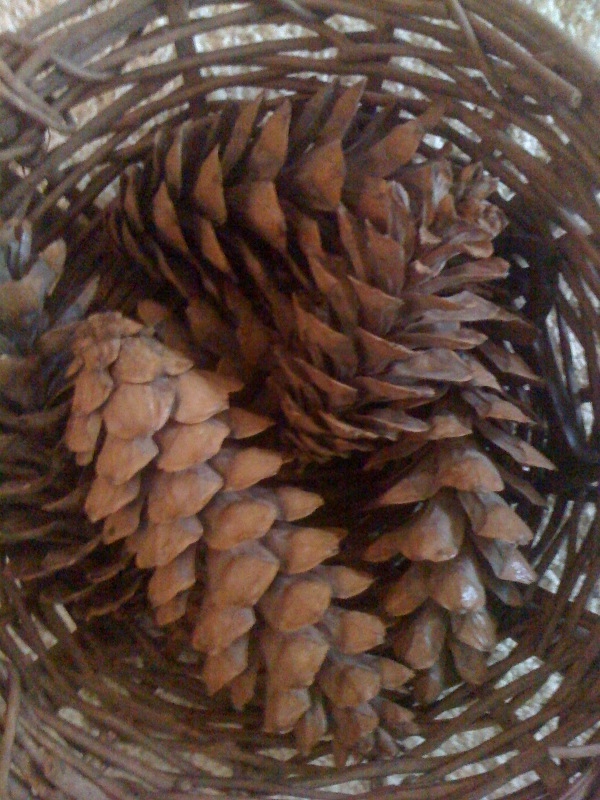
I was shellacking pine cones. “What in the world are you doing?” my mother asked me, looking a bit bewildered. She was sick again with the cancer. I was visiting her in Pakistan and we were staying at Mimo’s house.

“I’m shellacking pine cones from Nathiagali,” I responded. “It’s probably the only piece of Nathiagali I’ll ever get to keep.”

I had picked up the pine cones the previous weekend when Puchi, her boys, Akber and Abbas, and I went up to the Nathiagali house for a few days.

“What are you doing?” I asked the boys as they played in the garden.

“We’re collecting pine cones,” they said in unison.

“Well that sounds like a good idea,” I said. “I’m going to collect some pine cones too.”

Because of the debt that my father left behind when he died, Baba convinced Ami to put the Nathiagali house in his wife’s name when she was in the last stages of her cancer diagnosis,  after the final payment on the house was made.

“I have the power of attorney on the house,” my mother told me. “I’ll make sure it reverts back to all you kids.” She died before that happened and since then Baba has insisted that the house belongs to his wife.

The Nathiagali house, named Miranjani House because it looks onto Miranjani Mountain in the foothills of the Himalayas, was my favorite house. An old, rustic place that my parents purchased in the 1960s from a man named Sheikh Iqbal. He was a tender old man who indulged me when I was a young girl with laddu’s, my favorite sweet. The final payment on the house was made in the early 1990s, after my father’s death.

After Aba died, the rest of us asked for financial statements for the real estate holdings and the companies. In September of 1993 Baba sent me, and I presume the others, financial statements for 1993.

The curious thing about these financial statements is that the revenue coming in and the expenses going out balance out exactly. In the income and expenditure statement for 1993 Rs. 2,823,584 is listed as revenue. And exactly Rs. 2,823,584 is listed in expenses. I’m not a trained financial analyst, though I have run a small business and I do oversee the programmatic budget for the Women’s Foundation of California so I know a thing or two about financial statements.

You don’t have to be a financial analyst to figure out that revenue coming in does not exactly match expenses going out. Anyone who has a bank account can tell you that. Or if you’ve managed a household budget you can probably attest to the fact that you don’t spend exactly what you bring home to the penny or paisa. There’s usually money left over, or you might overspend in any given month. But things don’t balance out exactly. This was my first indication that Baba was cooking the books.