Take a Letter

Ami must have told Aba that I didn’t think he had a job (See Hold the Phone, posted on January 27, 2010). Shortly after our conversation, Puchi and I became Aba’s personal secretaries, and we became painfully aware of the details of the poultry breeding business. The daily fluctuations in the price per chick, for instance, or the production levels for each of the hatcheries.

Aba had an office set up in the basement with two desks and a typewriter. Why the basement when there were 23 rooms in the main house, I have yet to figure out. Maybe because he did not really spend much time in the office, his secretarial staff did. He would say, “Take dictation, I have a letter I need typed.” And I’d have to be sure to type it on a carbon copy and then file the copy.

The secretarial task I dreaded most was being asked to “get such and such person on the phone.” I was basically a shy kid, so the typing I could handle since it was a solitary task, but calling someone on the phone was nerve-racking. For one thing, my nickname in the family is Foo. So when I would place a phone call, I’d have to identify myself. “Hello, may I speak to such and such person?”

“Who’s calling?”

“This is Foo, calling for my father.” The response would almost always be, “Who?”

“Foo.”

“Sue? Sue who?” And it would go on and on like this.

Often he’d hand me a piece of paper with his poor penmanship, which I struggled to read, and would say, “Send this message over the Telex machine.” We got Telex machines for instant communication between Connecticut and Pakistan in the late seventies. In the Stoner house the Telex machine was in the TV room, and in the Islamabad house it was under the staircase on the first floor. My father was always using the latest technology. The Telex is a communications system consisting of teletypewriters connected to a telephonic network to send and receive signals.
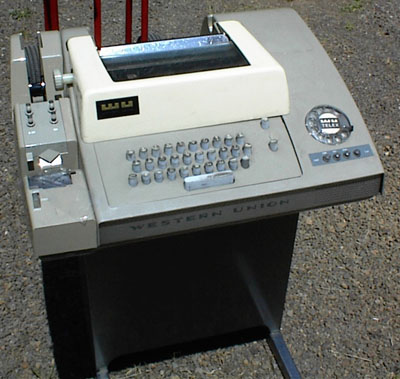
I don’t have a picture of our Telex machine, but I found a similar one on the internet.

A major advantage of the Telex is that the receipt of the message by the recipient could be confirmed with a high degree of certainty by the “answerback.” At the beginning of the message, we would transmit a WRU (Who aRe yoU) code, and the recipient machine would automatically initiate a response which was usually encoded in a rotating drum with pegs, much like a music box. The WRU code would also be sent at the end of the message, so a correct response would confirm that the connection had remained unbroken during the message transmission. This gave Telex a major advantage over less verifiable forms of communications such as telephone and fax. In order to send a Telex, we would have to prepare the message off-line, using a yellow paper tape. All common Telex machines incorporated a 5-hole paper-tape punch and reader. Once the paper tape had been prepared, the message could be transmitted quickly. Telex billing was always by connected duration, so minimizing the connected time saved us money. But, it was also possible to connect in “real time,” where I could type something standing at the Telex machine in Connecticut and the person standing in front of the Telex machine in the Islamabad house would immediately see my message. Now we call this instant messaging.

This early secretarial training has served me well. I have good phone etiquette and initiating phone conversations became so much easier when I started using my given name, Surina, instead of Foo. This early training also taught me to be more assertive, self-confident, and outgoing. Now, I have no problem calling people on the phone. And my typing skills have improved a little, too. I type faster now, but still with two fingers like I did back then. I never did learn the QWERTY way.
I’ll Have a Bloody Mary

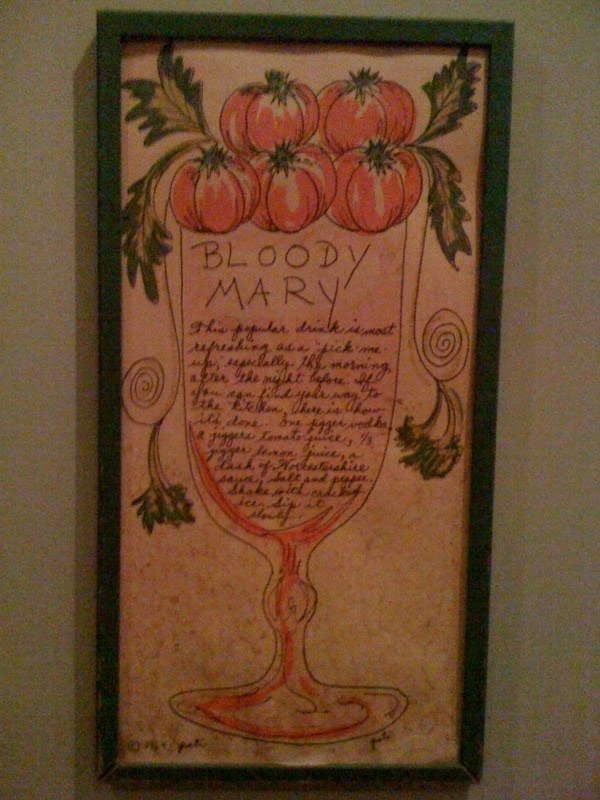
I have a watercolor of a Bloody Mary that used to hang in the bar of the Stoner house. It’s one of many items that Louis and Clara Stoner left behind when they vacated the house. A box of old family photos, a safe with hundreds of canceled checks. A cedar closet full of mink fur coats. An oil portrait of the Stoner’s granddaughter and her yellow Labrador Retriever posing on the front lawn.  My parents requested in the bond for deed that the oil painting remain with the house, but the other things the Stoner’s just left behind. They did ask for the mink fur coats, which I gather they left behind accidentally, but they didn’t seem to care about the other stuff. The Bloody Mary watercolor now hangs in our kitchen in Long Beach.

In the glass is a recipe for a Bloody Mary:

This popular drink is most refreshing as a “pick me up,” especially the morning after the night before. If you can find your way to the kitchen, here is how it’s done. One jigger vodka, 2 jiggers tomato juice, 1/3 jigger lemon juice, a dash of Worcestershire sauce, salt and pepper. Shake with cracked ice. Sip it slowly…

It’s signed by “pati” in 1964.

I prefer my Bloody Mary with a little horseradish, a few dashes of hot sauce, a celery stalk and some olives. The best Bloody Mary I ever had was at El Rio in San Francisco. They top it off with a little Guinness. Yum.

Don’t Become a Feminist

My mother was diagnosed with breast cancer when she was 46. It was the beginning of 1982 and I was in my first year of high school at the Ethel Walker School, an all-girls boarding school in Simsbury, Connecticut.

They found the cancer sort of by accident when she went to the hospital to have her gallbladder removed. Mimo was the one who told me. I think they were trying to keep the news from me. Maybe thinking I was too young.

It was a regular night around the Stoner house. I was home for the weekend from school. Dinner was being prepared and I was watching Mash reruns in the television room. Mimo came in and told me to set the table. Not an unusual request since this was one of my regular responsibilities. But something about her bossy attitude really rubbed me the wrong way and I said, “No.”

“What do you mean, no?” she said. “Go set the table.”

“I’m watching TV.”

“Ami has cancer. Go set the table.”

I was really taken aback by this news, but I didn’t want to admit that I didn’t know so I said, “I know that.” And then I went and set the table for dinner.

My mother was prone to the dramatic, and that night there was drama. She began to talk about how she was going to die and that my father would get remarried and we kids better watch out about the new wife and make sure she didn’t take everything. It was bad. My father sat there stoically while Ami accused him of remarrying some woman who did not exist.

For the first few weeks she continued with the “I’m dying and I can’t get up” kind of talk. We all tried to be understanding. After all, she did have cancer.

We also begged her to stop smoking and she almost agreed, but then her doctor said, “As much as I want you to stop smoking too, this probably isn’t the best time to do it.” He said her body was already under so much stress that quitting smoking would be too major of a change and would be too much for her to handle. Wow, really? Do they still tell cancer patients not to quit smoking?

She went through chemotherapy and radiation and responded quite well. Puchi was with her most of this time since I think the rest of us were away at college, or in my case boarding school. And my father, probably tired of being accused of getting remarried, decided he better go to Pakistan and look after the chickens.

Eventually she changed her attitude and decided, “This cancer is not going to get me, not yet anyway. I’ll beat it.” And things started looking up. She ended her treatment six months early, and to celebrate, she took my sisters and me to Barbados.

She was in remission for many years. When the cancer came back, she was in her late fifties and living in Pakistan again. I think it was around 1994 and I was about 27. We had sold the Stoner Drive house in 1989 and I was living with some friends in the West End of Hartford on Fern Street. My mother and I had recently reconciled after two years of not talking to each other. She had “disowned” me because I came out as a lesbian. She had a really hard time with the lesbian stuff, but that’s another, much longer, story.

We were speaking on the phone, one of our regular calls. I asked her if she needed anything from the US. Ami had recently had a mastectomy which she refused to do the first time around. “Well,” she said. “I’m having a hard time finding a prosthetic bra here, so if you could send one of those that would be good. And a wig. I’m losing my hair.”

Trying to make her feel hopeful, I responded.  “I’ll send the wig, but I think you would look much more glamorous in one of those head wraps Elizabeth Taylor wears. I’ll send both. And the prosthetic bra, well, those are easy to find here. You know there are a lot of breast cancer awareness efforts and the government is putting more resources into breast cancer research so I’m sure it will be easy enough to find a prosthetic bra.”

And her response? “I know you’re a lesbian, but don’t become a feminist on me now.” First of all, the fact that she thought I might not already be a feminist was a bit of a surprise, but even more astonishing was  the fact that she, a woman with cancer, and only one breast, was frowning upon the “feminist” position that more money for breast cancer research is a good thing. Wow.

 
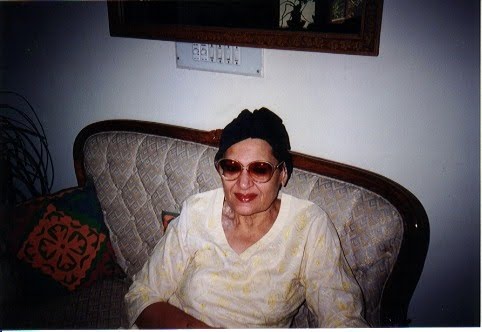
Ami, wearing the head wrap I got for her. 

Lucky Number Six

My father did not want six children. I think he would have been happy with two. But my mother kept producing healthy babies (even though she smoked through all her pregnancies). Who knows what their birth control situation was, but I don’t think they used any. My mother used to say she would have made a good Catholic woman.

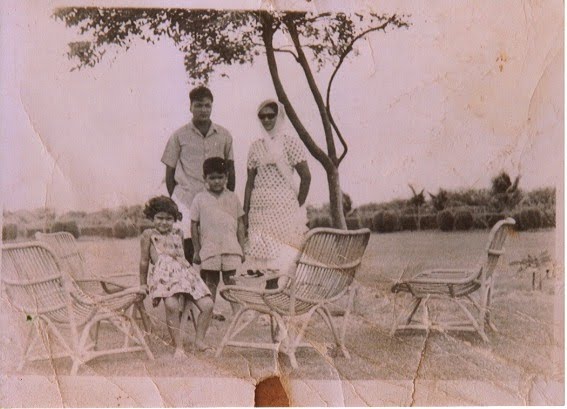
Here’s a picture of my parents, early in their marriage, with their first two children, Baba and Muna. I think the photo was taken in the early 1960s at the Dumlotti farm, outside of Karachi. You can sort of see from the landscape that it is flat and desert like.

When my mother went into labor with me in December of 1967, the doctors thought only one of us would survive, so they asked my father which one of us he wanted to save. And my father replied, without hesitation, “My wife.”

It always made me happy to hear this story recounted. I mean, I’m glad we both made it, and I’m glad to be alive, but I think my father had the right priorities, he wanted to save his wife.

After I was born (a healthy ten pound baby, despite the difficult labor) my father got a vasectomy. There were no pregnancies after me, although I used to ask my mother why she didn’t get pregnant again. I wanted a younger sister or brother to boss around too.

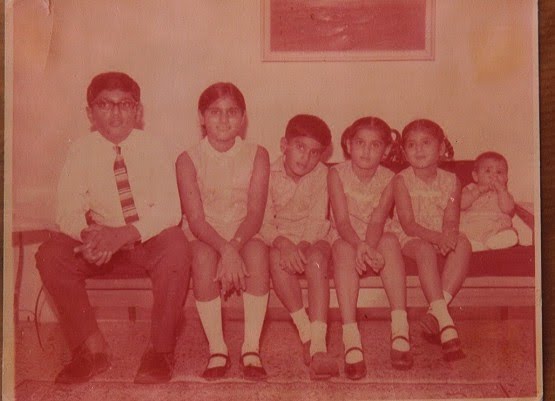
Here we all are. Baba starting us off on the left, about twelve years old, I think, and me at the other end, maybe about six months old. 

From the left: Baba, Muna, Tito, Mimo, Puchi, and me.

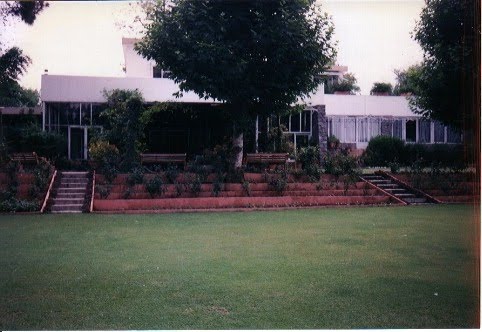
This picture was taken at the Abbottabad house, called Rocky Ridge, pictured here from the back. The gardens were always perfectly manicured.

As I got older, I really appreciated being part of a big family, even though everyone bossed me around. Mostly, I had many observations about my siblings. One of which I shared with my mother in my early twenties when things began to unravel.

“It’s good you didn’t stop with the first two,” I said. By now, Baba’s true colors were pretty much out in the open for anyone to see. The manipulation, the deception, the rage, the greed. And Muna was acting out in inappropriate ways.

 
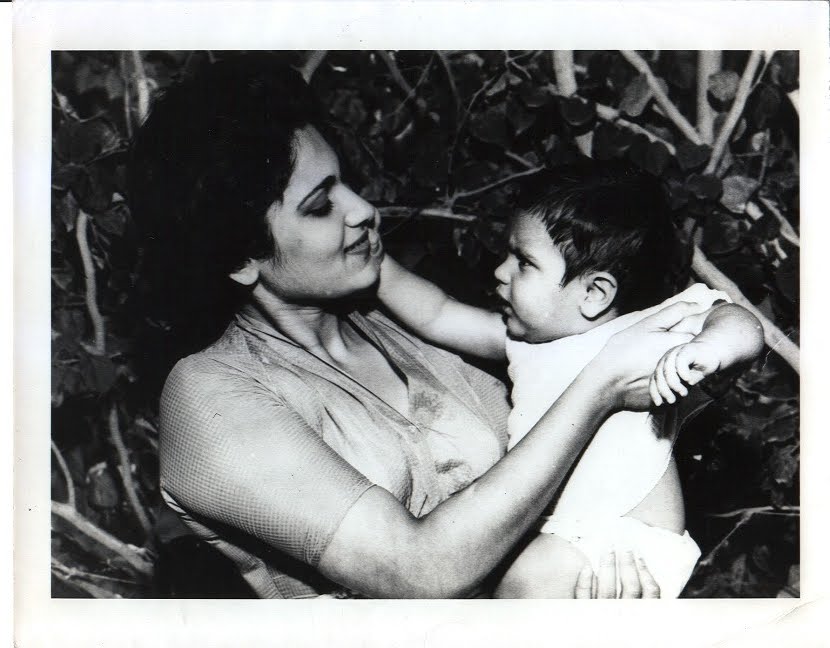
My mother with her first born son, Samad, known as Baba.

Baba and my mother shared a close relationship. They were twenty years apart in age so she relied on him as more than a son in some ways. A confidante and friend. When he suggested that she put the Nathiagali house in his wife’s name for financial reasons, and financial reasons only, she agreed. She trusted him, and he used that trust to build his personal wealth.

My father had passed away by now and left behind some debt. Baba insisted that putting the Nathiagali house in his wife’s name would protect it from the banks which were looking to be repaid for the various business loans my father had taken in order to expand his poultry breeding company.

The Nathiagali house was a place of great joy and happy memories for us all. And my mother always maintained that it would be put back in all our names. My brother betrayed her wishes and her trust. He stole the house from us. He stole the property, but more importantly for me, he stole the experience of the house and the chances of  enjoying time there.

I found this photo of Baba on a cousin’s Facebook page. It’s Baba’s Facebook profile picture. Seems appropriate somehow, given his behavior, to be pictured aiming a rifle.


And Muna, well she began to act strange in the early 1980s. Mainly acting inappropriately to provoke my mother. She started coming down to afternoon tea, a daily ritual, in tattered clothes. We were expected to be dressed well, not in the finest of garments, but neatly. And we were expected to pour tea and offer cakes and cookies to whichever guests had stopped by that day. Muna, to my mother’s horror would slump down on the sofa, in a passive aggressive defiance.

Once at a dinner party that Muna asked my mother to arrange so that she could meet an eligible suitor and his family, she shocked everyone when she said,  “marriage is a form of prostitution.”  It was embarrassing.

That is not to say each of us did not bring pain into the family. We did. But in many ways, the younger lot embodied my parents values in a way that my older siblings did not, and still do not. Which is why I think it was fortunate for my parents that my mother did not stop at two, otherwise they would not have experienced the joy that the rest of us brought to the family.

Muna cannot really be blamed for her behavior since she is bipolar, and has never really been given the proper medical care. But Baba has much to answer for and much to reconcile. I have to wonder, and I know I am not alone, will he ever do the right thing? Or will he take his wrongdoings to his grave?

No-Fly Watch List: Part 2

The first time I flew by myself I was eight years old. My mother put me on a PIA flight from Karachi to JFK. By myself. It was like immersion for young travelers. But it paid off. Years later, here I am, the efficient well-seasoned traveler. By the way, PIA stands for Pakistan International Airlines, but in my family we called it, Perhaps I’ll Arrive.

I’m not sure why my mother could not accompany me back to the US. She and I had taken a trip back to Pakistan when we were finally able to travel back. I guess it must have been 1975 or so. I think we arrived on Christmas Day and by now I had begun my process of Americanization.  I remember saying to my mother when we got off the plane in the warm Karachi winter, “This is my first green Christmas.”

I was fondly remembering these early travel experiences as my shuttle pulled up to the Sacramento airport this evening. Feeling sorry for those younger than me who are on the No-Fly Watch List. They probably don’t remember the days when you didn’t have the option to print a boarding pass at home, or go to a self check-in kiosk. Back in the day, we had paper tickets and always had to stand in line at the counter to get a boarding pass. So I thought, well, I’ve done this before. What’s the big deal?

I gave myself plenty of time to check-in at the counter and  be patted down by security. The nice JetBlue staff tried to make me feel better. “It’s not you who’s on the No-Fly Watch List. It’s your name.”

I thought this was sweet, but how did they know it was not me? And if they knew it was not me, why was I on the list?

“How do you know it’s not me?” I asked. As soon as these words came out of my mouth, I thought, well that’s a stupid thing to ask, now they will think it is me who is supposed to be on the list.

JetBlue flight 265 to Long Beach is ready for boarding. I better gather my things and prepare to be patted down again before I board the flight.

Color Me White

I am a white woman from Connecticut. I used to say this half jokingly to friends as I got older. I mean I did grow up in an affluent neighborhood in Connecticut. Most of my friends were white. My family was the only non-white family on our street. I went to an all-girls boarding school in Simsbury where most of the students were white. My mother insisted we were Caucasian because, as she said, we were descended from the Mongol Empire, but, really, I think it was a sign of her own racism.

I was very comfortable around white people, so much so that I sort of thought of myself as white(ish). With a head start in the tan department, often a source of envy for my truly white friends.

Needless to say, I have a complicated relationship to race, and I’m the first one to admit it. And today it got more complicated.

I went to the Long Beach airport this morning to take a flight I have taken hundreds of times from Long Beach to Oakland, on JetBlue, my favorite airline. I fly so often for work that I’ve got it down to a science. I pack lightly, never checking a bag since I’m often rushing into the office in San Francisco after I land.

I carefully put all my liquids in a zip lock baggie instead of the stylish toiletry bag I purchased some years ago. I print my boarding pass at home, both for efficiency at the airport, and because it gives me more points on my TrueBlue account. Jenny drops me to the tiny airport in Long Beach, smaller than some bus stations I have been to, which means it is also easy to navigate. It’s like a Fisher Price airport–the gates are actually trailers and you have to walk onto the tarmac to board the plane.

Anyway, I was not able to print my boarding pass from home which I chalked up to the fact that JetBlue was upgrading its system. So when I got to the airport, I went to the self check-in kiosk and still was not able to get a boarding pass. So I went to the ticket counter, where the nice JetBlue lady said, “Has this ever happened to you before?”

I replied nonchalantly, “Well, I have had some trouble printing my boarding pass at home in the last two weeks, but I think it’s because you guys have been upgrading your system.”

“Sometimes my TrueBlue login doesn’t work,” I continued, “But then I just enter my confirmation number, or the kiosk always works.”

At this point I saw her filling out a form so I peered over the counter and saw the words “No-Fly Watch List.” A list I knew to be maintained by the Federal Bureau of Investigation’s Terrorist Screening Center.

“Am I on the No-Fly Watch List?” I asked, astonished.

She confirmed that I was, and also that I would now have to go through extra screening every time I fly. No more printing boarding passes at home. No checking in at the kiosk. And given that I am flying every week this month to say nothing about March, April, or the rest of the year, I was a little concerned about how this might effect the efficiencies I had achieved in being such a  frequent and well-seasoned traveler. “You’ll have to contact the Transportation Authority Administration and ask them about how to get off the list.”

She said I was probably on the list because I shared the name of  a suspicious person. I bet there are many Khans on there. And it probably doesn’t help that I was born in Pakistan.

After I showed the ticket agent my identification, and she filled out the No-Fly Watch List paperwork, she gave me my boarding pass and I was able to pass through security to the gate. And then I was pulled aside for extra screening after I presented my boarding pass at the gate. A nice TSA lady frisked me as people walked by me to board the plane. Fortunately, I’m a patient person, and I realize the TSA staff,  who are probably very underpaid, are just doing their jobs.

I didn’t blame the TSA or JetBlue staff about the fact that the No-Fly Watch List has raised civil liberties concerns, due in part to the potential for ethnic, religious, economic, political, and racial profiling and discrimination. It has also raised concerns about privacy and government secrecy. I wanted to take a measured approach (maybe partly to do with  my white woman from Connecticut identity), instead of getting hysterical about the fact that I was probably being racially profiled.

So, when I got to the office in San Francisco, I did a bit of research. I learned that I have to file a report with TRIP (the Traveler Redress Inquiry Program) which is a program of the Department of Homeland Security. This takes 30-45 days to process, so it won’t be of much help to me for my travels in February.

I also learned that I am in good company. The late Senator Ted Kennedy was once mistakenly on the list. And, according to an article last month in the New York Times,  so is an eight-year old Cub Scout from New Jersey by the name of Mikey Hicks. My friend Jim Gallagher also once told me he is on the list, though I’m not sure if he was ever able to remove himself. So even if I was a white woman from Connecticut, it’s conceivable that I could still have this problem, though it’s probably more likely to do with the fact that my last name is Khan.

Is it too late to change my name? I wondered,  thinking about whether I should have followed in my sisters’ foot steps and changed my name, too, when I got (gay) married. Oh, it probably wouldn’t matter anyway. After all, Mikey Hicks has been on the No-Fly Watch List for the last six years, since he was two-years old. Hope it doesn’t take me that long to get off the list.