Puchi was telling me a story about our family history. “Our great grandmother was a war bride,” she said casually.
“That sounds so barbaric,” I said. “What’s a war bride?”
“That’s when they kill all the men and take the women.” That does sound barbaric.
Puchi learned about our great grandmother in her second grade history class. She came home one day from the Burnhall School in Abbottabad and told my mother about a disturbing history lesson from earlier in the day. The teacher told them a story about Sardar Samad Khan from the Afridi tribe. He was the General for Kashmir under Maharaja Ranjit Singh, the first Maharaja of the Sikh empire from 1801 when he was crowned at the age of twenty-one until his death in 1839. The Maharaja had captured many principalities including some of the northern areas of regions that are now part of Pakistan.
Ten years after the death of Maharajah Ranjit Singh in 1839, the British appointed Maharaja Gulab Singh. The principalities in the northern areas were not paying attention to the new Maharaja, so General Sardar Samad Khan hosted a lunch in Gilgit, a mountainous region in the foothills of the Karakorum mountain range. The General invited the twelve heads of state who were giving the Maharaja trouble, to the lunch in Gilgit. Eleven of them showed up. The twelfth head of state, who did not attend, was from an area called Yasin, a high mountain valley in the Karakorum mountains.
After lunch, Sardar Samad Khan took each one of the Kings out for a walk around the grounds to discuss affairs of state. And after they left the compound he had each of their heads chopped off. He then went to Yasin to find the King of the principality who had not shown up for the lunch. After arriving in Yasin, Sardar Samad Khan and his army killed all the men and Sardar Samad Khan took the King’s wife as his seventh war bride. I’m not sure I would call her a “bride.” This seems like the definition of forced “marriage” to me.
Ami, hearing Puchi tell this story said, “Oh, yes, that story.” And she took out a photo and said, “This is the man you learned about in your history lesson. He’s your great grandfather.”
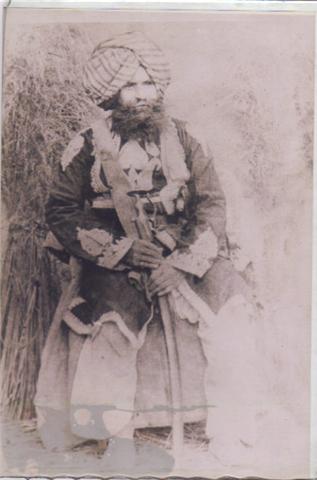
Our great grandfathers’ seventh war bride from Yasin, was our great grandmother. Ami used to say that there was a connection between our family and the Wali (or King) of Swat, a Valley in the Northwest Frontier Province of Pakistan. Apparently there were two sisters from the royal family of Swat. One was married to the King of Yasin and the other to the King of Chitral, another mountainous valley in the Karakorum mountain range. So it could be that our great grandmother was also descended from the royal family of Swat. This is all getting really confusing, or should I say Khanfusing? My head is spinning with all this family history.
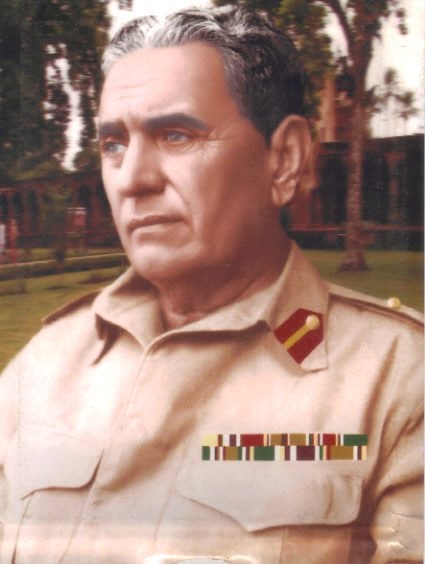
My mother heard these and other family stories from our grandfather, her father-in-law, Brigadier Rematullah Khan, my father’s father. There’s another story about our grandfather being held as a Prisoner of War in Srinagar, Kashmir for a year, but that’s another story that I’ll need Puchi to tell me in greater detail.
 Leaving Pakistan
Dear General Samad khan served under Maharaja Ranbir Singh , son of Maharaja Gulab Singh who bought the state from Raja Ranjit Singh of Punjab 750000 Nana Shahi Tikka. 2. Brigadier Aslam khan conquered the areas you mention for pakistan after partition. The story of the killing of all the Sardars and taking the bride from the royal family of Yasin happened during Ranbir Singh’s reign only.
Well written Surina!! Puchi is a great source for family history!
Well written Surina!! Puchi is a great source for family history! I wonder if they took the vanquished as slaves in those times?
I recall my mother telling me that her father in law (Brig Rehmatullah Khan) told her that there was so much love and affection shown to him as a child by his father’s wives that he did not know who was his real mother till much later.
Dear Cousin Surina, thank you for sharing our dear ancestors’ stories. However the initial linkage with Yasin is not correct. If you would like to add the actual facts which hv been verified by relatives still living in Yasin I can help u with this.