This blog is bringing Puchi and me closer together. She calls me all the time now, and she’s finally active on Facebook, too. She also often comments on my blog postings. Sometimes, for her own good, I reject her comments. I don’t think she understands that this is a public space. Like when I posted the Family Feud blog about when we almost got in a fight, she posted one word in the blog comments section: “Ugh.” I thought she was mad at me again, so I emailed her with the subject line, “Ugh?” and asked, “Did I piss you off again? I promise I am not trying to, just having a little fun. Did you not think Family Feud was funny? I’ll lay off you on the blog if it is upsetting. Remember Rodge and Podge.”
She emailed right back and said that the “Ugh” was for putting her foot in her mouth. She was referring to her snippy comment on my Facebook page about Repeat After Me, a blog I wrote about her son Akber’s first words. And then she emailed me again. “And the Ugh is also for stupidly thinking the comments I posted were like an instant message chat rather than a world wide post….being new to facebook and all.” She was also anxious about the Patsy and Eddy stories that I was getting ready to write about her and Mimo’s partying youth. In a third email, she wrote, “The Ugh is also for the trepidation of the Patsy and Eddy stories.” I decided to reject the “Ugh” comment because it lacked these nuances. Since she wasn’t mad at me, I didn’t want other readers to get the wrong idea.
Now she calls me practically every day. She calls on Skype, on my cell phone, on the home phone. Early in the morning, late at night. She lives in the Philippines so we’re never in the same time zone. She’ll be polishing off a bottle of wine just as I’m having my first cup of coffee, or vice versa.
Anyway, I’m glad she called early yesterday morning because I had a lot of questions about the Maharani Baroda who came to live with us in Connecticut in the early 1980s. It wasn’t unusual for us to have guests that stayed with us for several months, or even a few years at a time. My mother liked having a lot of people around. So if you weren’t getting along with your parents, you could come live with us. Or if you were getting divorced from your abusive husband, you could bring your small children and you’d get a suite of rooms for as long as you needed. The Maharani Baroda lived with us for the better part of a year.
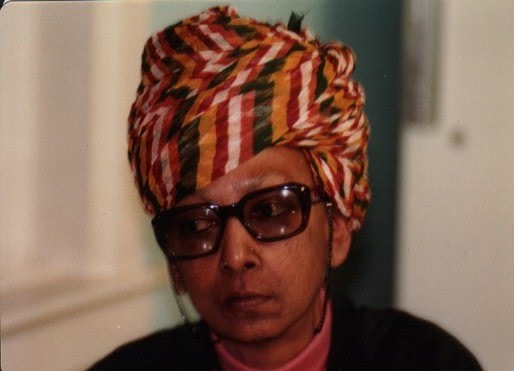
“How did the Maharani Baroda come to live with us?” I asked Puchi when she called yesterday.
Puchi told me that after we got our US citizenship in 1979, it became easier to get visas to travel to India. Both my parents’ families left their homes for the new nation of Pakistan during Partition in 1947. My father’s family moved from Jammu, Kashmir to Abbottabad, and my mother’s family moved from Bombay to Karachi.
My parents had fond memories of growing up in India and were happy when they were finally able to visit again. They went back with some regularity in the 80s.
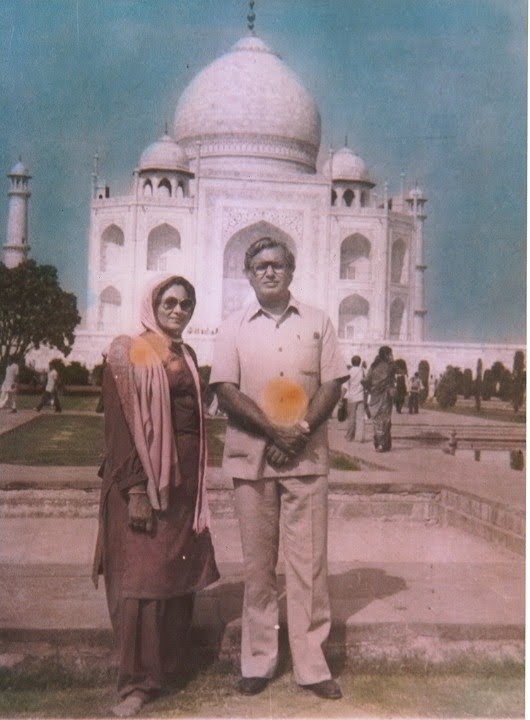
On one of these trips, my father looked up some of his old childhood school friends. When he was a young boy, he went to boarding school in Kashmir with some of the members of the royal family of Baroda. One of his friends grew up to be the Maharaja of Baroda, a city in the state of Gujarat. On the eve of independence in 1947, India contained more than 600 princely states, each with its own ruler. All of these princely states, joined the new nation of India after independence in 1947.
My father’s friend, the Maharaja of Baroda, married the only daughter of the Maharaja and Maharani of Jodhpur, a city in Rajastan. Their wedding took place at the Royal Palace in Jodhpur. Apparently, as the Maharani Baroda told the story to Puchi, on her wedding night she brought a menagerie of animals, numbering something like 32, to their wedding suite. The Maharaja was appalled by this wedding night behavior. That was the only night they spent together in their 39 years of marriage.
In her youth, the Maharani was a bit of a tomboy. She showed us a photo that she had taken, dressed as an army guard, when she was in her teens. Maybe she was a cross-dresser, who knew? I thought she looked a bit butch when she stayed with us in Connecticut.
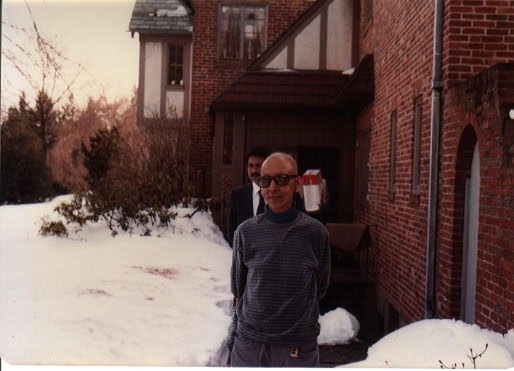
When my parents got back to Connecticut, my mother, who was also diagnosed with cancer, went to Boston to find the Maharani. She found her living in a studio apartment. My mother, horrified by these living conditions, invited her to come stay with us, but the Maharani was too proud to leave her modest apartment. I think she actually liked the apartment, not much caring for the pomp and circumstance that had accompanied her everywhere in her life as a Maharani.
My mother insisted. “I have cancer too,” she said, “and my children don’t know how to deal with it, so having you stay with us will be a big help to my children.”
And that’s how the Maharani of Baroda came to live with us. When she arrived at the Stoner house, we didn’t know how to address her, after all, she was a Maharani. “Should we call you Maharani Baroda?” we asked.
“You can call me Aunty Susan,” she said. Susan? Her name could not possibly be Susan. So we said, “Your name can’t be Susan.” She told us that when she was little, she had an English Nanny who used to call her Susan. “So you see, my name is Susan.” Still, it seemed strange to call her Aunty Susan, so I just called her “Aunty.” And Puchi came to call her “Aunty Khamagani.”
“Why did you call her Aunty Khamagani?” I asked Puchi.
Khamagani is a term in Rajastani that means welcome, or best wishes. Whenever the Maharani was introduced to anyone, or greeted anyone, she would say “Khamagani.” Puchi loved how this word sounded and she came to affectionately call the Maharani of Baroda, “Aunty Khamagani.”
I hope Puchi calls again tomorrow because I have some more questions. I can’t remember when Aunty Khamagani died.
 Leaving Pakistan