Pass the Talking Stick

I was texting Jenny, “Having found my purpose, I am now going to work on my vision.” Since I travel so much for work, I try to keep her informed about the kinds of things I am up to.

“Umm, What?” She texted back.

Jenny is in a different line of work than me.  She is a humanities professor, so when I say things like, “I really need to see measurable outcomes,” she looks at me quizzically.

Last year we had a dinner party and I noticed all our friends were interrupting each other so I told them about the Talking Stick.

“The what?” everyone responded almost in unison. I explained the concept of the Talking Stick, which has been used for centuries by Native American Tribes as a means of just and impartial hearing.

“You are all interrupting each other. In my line of work, we are very intentional about giving everyone the space to talk, so sometimes, we pass around a Talking Stick, which can come in just about any form. When you are holding the Talking Stick, you are the one speaking and the others have to listen actively to what you are saying. Let’s try it!” I said passing around a fork to symbolize the Talking Stick.

They humored me. Though I think they rather liked the concept of the Talking Stick, because now I notice sometimes at parties, when someone is dominating the conversation, another person will say, “We need the Talking Stick.”

 
The talking stick might look something like this.

Last week I was at a Rockwood Leadership Institute training called the Art of Leadership. I applied last fall for it and was excited when I was accepted.

We learned quite a lot in the Institute. Active listening. Staying centered on our purpose,  thinking carefully about our outcomes and process. This is called a POP analysis: Purpose, Outcomes, Process.

One of the nights we had a free night so some of us went out for cocktails. Around the third or fourth cocktail, we  started talking about how outcomes-focused philanthropy can be. So we made a friendly addition to the POP analysis. We came up with the PUP Analysis: Purpose Unleashing Power. What we liked about PUP is that it it can be a PUPPY that grows into a DAWG. If an idea or concept is in its infancy or if it is geared towards young people it can be a PUPPY: Process Unleashing Progressive Power for Youth. When it grows into a DAWG it is Doing a World of Good.

The other thing I learned is that it is really important to pay attention to how you say things, because it’s easy to misinterpret what gets said. For instance, at the training, my friend Todd said, “We should look for some far out liars.” And I said, “Why would we want to look for liars?” What he meant to say was, “Far outliers.”

Later, Todd was getting a little unnerved by all the negative comments people were making about the anus. He thinks when people say things like, “that’s so anal retentive,” it’s derogatory because he believes retaining things in one’s anus can be a source of pleasure.

He asked me if I would join his Ass Lander committee. And I said, “Why would I want to join an Ass Lander committee?” I have nothing against people landing on each others asses, but I am on enough committees and I wasn’t sure I wanted to join this one. “No, not the Ass Lander Committee, the Ass Slander Committee,” explained Todd.

“Oh, well in that case,” I said, “I’m in.” I wanted to be supportive of him and his efforts to reclaim the ass as a source of pleasure.

I told Jenny about the Ass Slander Committee when I got home, and she’s considering joining too. I love it when our activist and academic worlds come closer together.
No-Fly Watch List: Part 6

I think the Department of Homeland Security is reading my blog. Checking-in at the ticket counter on my way home from San Francisco this week was much faster. I didn’t even try printing my boarding pass in advance this time. What’s the point, really? I know I’m on the No-Fly Watch List so why bother?

The nice woman at the ticket counter checked me in. She didn’t fill out the No-Fly Watch List clearance form and handed me back my license. So I said, “No, No-Fly Watch List this time?”

And she said, “Oh yes, you’re on it.”

“But I didn’t see you filling out the form,” I responded.

“I’m doing it right now,” she said as she continued typing on the computer. Wow, that was fast, it was only last week that I suggested that it would be much more efficient, cost-effective, and environmentally friendly if they coordinated the No-Fly Watch List Clearance form information in a centralized database at the Department of Homeland Security. Were they reading my blog? And acting on my suggestions? Maybe I have a future consulting for the Department of Homeland Security, I thought to myself.

But no, the ticket agent was just being efficient. “Oh, I still have to fill out the form,” she informed me. “But I’ll just use the information on the computer and do it later so I don’t have to keep you waiting. So thoughtful.

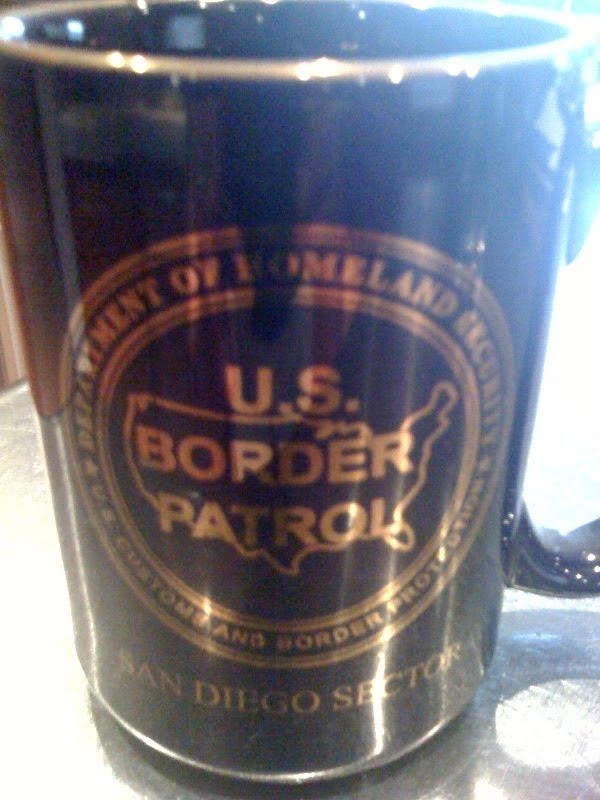
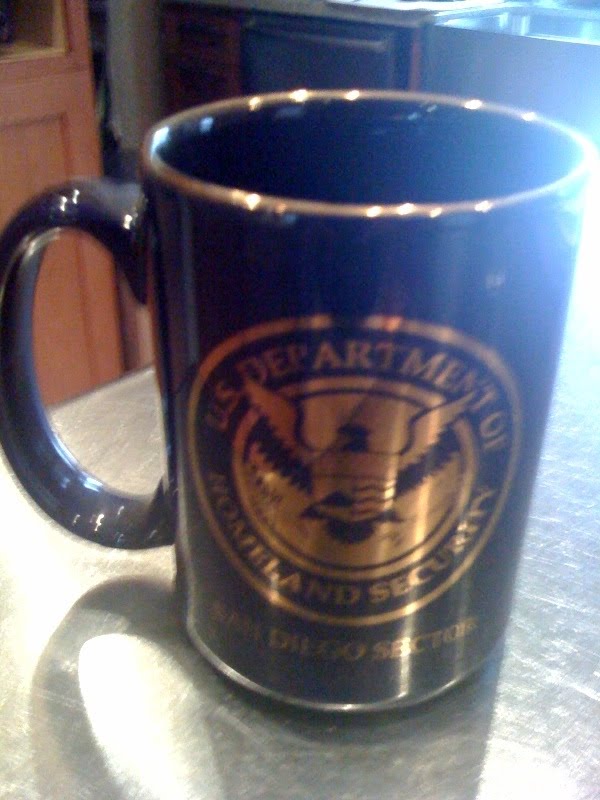
I’ve interacted with the Department of Homeland Security before. I even have a special Department of Homeland Security mug, given to me by a US Border Patrol agent.


A few years ago I organized a tour of the California Mexico border for the staff and board of the Women’s Foundation of California, where I am employed.  We decided to coordinate the tour through the US Border Patrol to get the full inside scoop. My liaison at the Border Patrol was a woman named Wendi, a Senior Patrol Agent. Wendi was very friendly and guided us  along the double fence that separates Mexico from California. She gave us an overview of how the Border Patrol is protecting our security by keeping out the vulnerable people who come to the US seeking work, cleaning our houses, caring for our children, and working the farms so we all have fresh produce whenever we want.

I didn’t fault Wendi for the flaws in US immigration policy. She was just doing her job. Wendi became interested in working for the US Border Patrol because her father, a Mexican, used to help people who would get injured trying to cross the border. He did this work from Mexico, where Wendi grew up. She herself is an immigrant too, which made it harder for me to understand why she wanted to keep other immigrants out. She told me that her father was not happy when she decided to pursue a career with the US Border Patrol.

About a week after I returned home, I got a package in the mail from Wendi. She sent me a thank you note for taking interest in her work, and enclosed a Department of Homeland Security mug, which I feature prominently in my office.

Curry in a Hurry

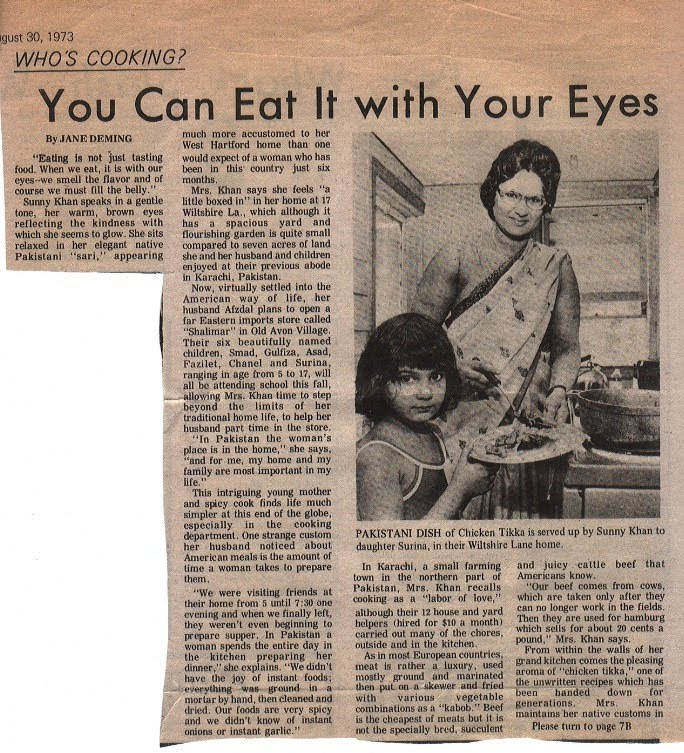
I was playing outside under the sprinklers on a hot day in the summer of 1973 when my mother asked me to come inside and pose for a photo. A West Hartford News reporter was interviewing her, most likely for being a recent “exotic” immigrant to West Hartford. The reporter writes of my mother, “she sits relaxed in her native, elegant Pakistani ‘sari,’ appearing much more accustomed to her West Hartford home than one would expect of a woman who has been in the country just six months.”

It’s hard to read the text of this article, but in it, my mother holds all things instant in high regard. “This intriguing young mother and spicy cook finds life much simpler at this end of the globe, especially in the cooking department.”

“In Pakistan, a woman’s place is in the home,” my mother was telling the news reporter. I heard her talking about how in Pakistan a woman would spend all day in the kitchen preparing the dinner. Grinding spices by hand in a mortar and pestle, cleaning and chopping vegetables. This may be objectively true for many women in Pakistan, but I was fairly certain, even at the tender age of five, that my mother had not spent days in the kitchen preparing our food, either in Pakistan or Connecticut. She had household help to prepare our meals.

She didn’t even know how to cook when she and my father were first married. I think he taught her the first few dishes she ever made. Though she always took an interest in food, and eventually became quite a good cook, she was even better at delegating the meal preparation to the household cooks or to us, her children.

When we moved to Connecticut, she discovered the “joy of instant foods.” Instant garlic, and frozen chopped onions replaced the fresh garlic and onions in masalas and curries. And a little too often for my liking, we were served food out of a can or a box.

“I’m hungry,” I would say.

“Make yourself a Cup-a-Soup!” My mother would respond with a little too much enthusiasm, handing me a box of the dried soup mix that we would pour hot water over. I would look with amazement as dried pieces of chicken and vegetables turned into tender chunks before my eyes, in less than a minute. This was cooking? Chef Boyardee, Hamburger Helper, and Shake ‘N Bake became frequent meals too.

“One strange custom her husband noticed about American meals,” notes the article about my father, “is the amount of time a woman takes to prepare them.”

My mother elaborates, “We were visiting friends at their home from 5 until 7:30 one evening, and when we finally left, they weren’t even beginning to prepare supper.”

I don’t think my parents had discovered take-out and delivery yet.

No-Fly Watch List: Part 5

When I tried to print my boarding pass from home for this week’s episode of the No-Fly Watch List, I got the familiar red X notifying me that I needed to see a ticket agent at the full-service counter at the airport.

I got to the airport and was pleasantly surprised to find that I was not the only person in line on the No-Fly Watch List. I overheard the man ahead of me talking to the ticket agent. “It’s ridiculous,” he said sounding really irritable. “My name is Steven Smith, there’s no reason for me to be on the list. Smith is a common name.”

I knew exactly how he felt. Khan is a very common name too. Just because our names our common, does not mean we should be on the No-Fly Watch List.

Steven looked like a nice enough guy. Like he could be from the Midwest. Pink complexion, a bit of a paunch, slightly balding, gold-rimmed eyeglasses. But he had a bad attitude. He was huffing and puffing, clearly not happy about his status on the No-Fly Watch List. I could relate. Good-natured as I’m trying to be about this whole thing, let’s face it. It’s a drag to be on the No-Fly Watch List. But my philosophy is, if you have to be on the No-Fly Watch List, you might as well try and have a good attitude.

I felt like giving Steven a tip or two. “Steven,” I wanted to say to him, “it doesn’t help to get upset with the ticket agent. They didn’t put you on the list, and they can’t take you off it.” I was starting to feel sorry for the ticket agent. The poor guy had to deal with Steven’s misguided anger as well as the rest of us who were getting impatient in the line since Steven was taking so long to get checked in. The ticket agent was just doing his job, filling out the No-Fly Watch List Clearance form with his blue ball point Bic pen as fast as he could. But, I know from experience, it can take a good five minutes to fill out this form, and then you have to get one of your colleagues to witness it and sign off and that can take another minute or two. Jenny calls this “Dilbert’s Guide to National Security.”

I could sense the ticket agent’s increasing anxiety as he kept looking up at the line growing longer and longer. The people in line behind me were getting agitated.

For instance, the guy behind me started sighing audibly. “My flight leaves at 11am!” he shouted at no one. “Am I going to make it?” I know he was trying to cut in front of me. When I got up to the counter I led with, “I’m on the No-Fly Watch List too.” I thought this might expedite things. But by now the ticket agent was flustered. He filled out my paperwork as fast as he could and gave me my boarding pass and told me to go to Gate 3. “Thank you,” I said, “but can I have my license back?” He forgot he still had it. Good thing I was paying attention.

I’m beginning to think they should add an additional line at the airport. In addition to the bag drop line, and the full-service counter line, they should add a No-Fly Watch List line. This way, those of us on the list wont slow other passengers down.

The line at security was long too. Even though the Long Beach airport is tiny, it’s become a popular airport. The man in front of me in the security line was basically efficient. He emptied all his pockets, took his shoes and coat off, but he forgot to take off his belt. So he beeped going through the scanner, backed-up, and removed his belt. Then he forgot to collect his belt once he got through the scanner to the other side. The best part about this little mishap was the announcement that followed over the loudspeakers. “Attention passengers. If you do not have a belt, please return to the security area.” This made me giggle.

I thought it was fairly obvious that the man on the loudspeaker meant to say, “if you left your belt behind, please return to the security area.” So I was surprised when an older woman standing nearby looked all confused, “I don’t have a belt,” she said. “Do I need to go back to the security area? My flight is boarding.”

Before I was on the No-Fly Watch list I didn’t pay attention to all these airport details. Now traveling is comical. I wanted to take a picture to remember this experience, so I took this photo as I was boarding the plane. Plus, I needed a visual for this blog.

 
Flight 1438 to San Francisco.

It occurred to me that I probably should not be taking pictures of the plane given my designation on the No-Fly Watch List. It’s possible that I breached some kind of security protocol. But I was discreet.  I probably looked like I was just checking email on my iPhone. When I was on the plane, I got bored. So I started gazing out the window, and the clouds looked so pretty I decided to snap another photo which I posted on Facebook after we landed. I captioned the photo  “flying the friendly skies” which I thought was a display of a very positive attitude.

 Flying the friendly skies.

My friend Shauna commented on my Facebook post. “Oh, great.” she wrote. “They’re going to see this picture and think you’re taking covert shots of the engine…you are never getting off that No Fly Watch List.”

That’s the engine? I always thought those were the propellers, or is that the same thing as an engine?

War Bride

Puchi was telling me a story about our family history. “Our great grandmother was a war bride,” she said casually.

“That sounds so barbaric,” I said. “What’s a war bride?”

“That’s when they kill all the men and take the women.” That does sound barbaric.

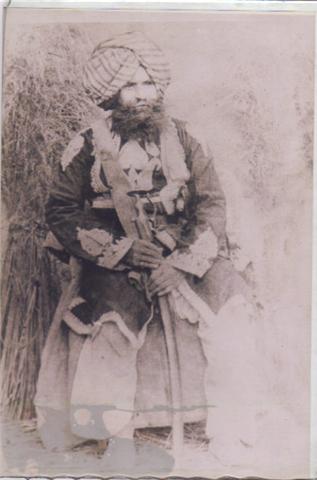
Puchi learned about our great grandmother in her second grade history class. She came home one day from the Burnhall School in Abbottabad and told my mother about a disturbing history lesson from earlier in the day. The teacher told them a story about Sardar Samad Khan from the Afridi tribe. He was the General for Kashmir under Maharaja Ranjit Singh, the first Maharaja of the Sikh empire from 1801 when he was crowned at the age of twenty-one until his death in 1839. The Maharaja had captured many principalities including some of the northern areas of regions that are now part of  Pakistan.

Ten years after the death of Maharajah Ranjit Singh in 1839, the British appointed Maharaja Gulab Singh. The principalities in the northern areas were not paying attention to the new Maharaja, so General Sardar Samad Khan hosted a lunch in Gilgit, a mountainous region in the foothills of the Karakorum mountain range. The General invited the twelve heads of state who were giving the Maharaja trouble, to the lunch in Gilgit.  Eleven of them showed up. The twelfth head of state, who did not attend, was from an area called Yasin, a high mountain valley in the Karakorum mountains.

After lunch, Sardar Samad Khan took each one of the Kings out for a walk around the grounds to discuss affairs of state. And after they left the compound he had each of their heads chopped off. He then went to Yasin to find the King of the principality who had not shown up for the lunch. After arriving in Yasin, Sardar Samad Khan and his army killed all the men and Sardar Samad Khan took the King’s wife as his seventh war bride. I’m not sure I would call her a “bride.” This seems like the definition of forced “marriage” to me.

Ami, hearing Puchi tell this story said, “Oh, yes, that story.” And she took out a photo and said, “This is the man you learned about in your history lesson. He’s your great grandfather.”

 
Sardar Samad Khan, our great grandfather pictured with his sword.

Our great grandfathers’ seventh war bride from Yasin, was our great grandmother. Ami used to say that there was a connection between our family and the Wali (or King) of Swat, a Valley in the Northwest Frontier Province of Pakistan. Apparently there were two sisters from the royal family of Swat. One was married to the King of Yasin and the other to the King of Chitral, another mountainous valley in the Karakorum mountain range. So it could be that our great grandmother was also descended from the royal family of Swat. This is all getting really confusing, or should I say Khanfusing? My head is spinning with all this family history.  

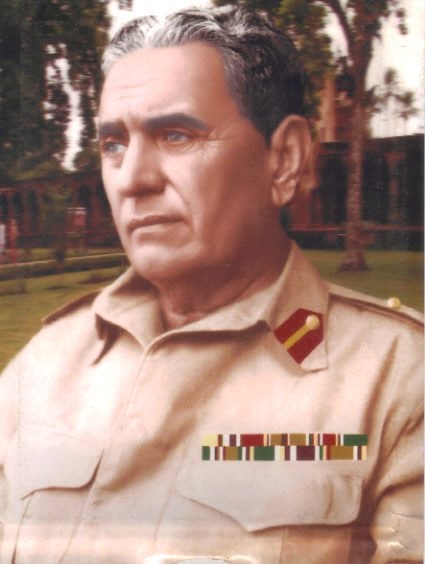
My mother heard these and other family stories from our grandfather, her father-in-law,  Brigadier Rematullah Khan, my father’s father. There’s another story about our grandfather being held as a Prisoner of War in Srinagar, Kashmir for a year, but that’s another story that I’ll need Puchi to tell me in greater detail.

 
Our grandfather, Brigadier Rematullah Khan pictured in his Indian Army uniform, under Colonial rule. This photo was probably taken in the early 1940s. It’s a black and white photo which has been colored in by hand.
For as long as I can remember, we used to say that our uncle, one of my father’s older brothers, Brigadier Aslam Khan, liberated the northern areas of Pakistan. I used to state this fact as if I knew what it meant. But as I got older I relaized I really had no idea what it meant. What does it mean to liberate the northern areas, and how did he actually go about doing this?
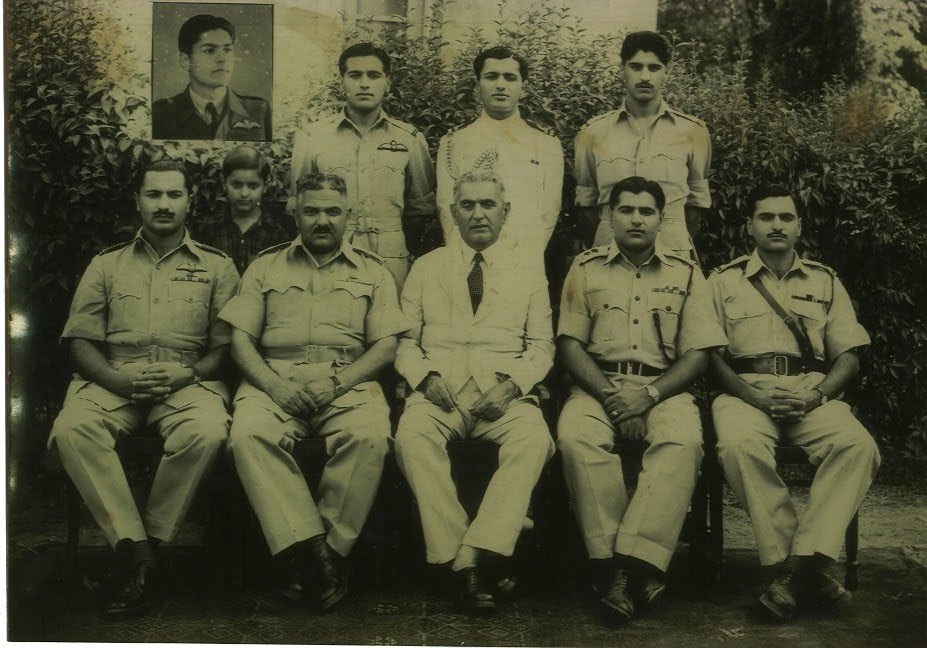
And now I’m beginning to piece it together. Because our great grandfather was the General for Kashmir under Maharaja Ranjit Singh, his family settled there. My father and his siblings were all born in Kashmir and they knew the rugged terrain of the northern areas well. Before partition, as Puchi told me, our uncle, Aslam Khan, covered up all the paths to Gilgit, Hunza, Yasin, and Chitral, so that the Indians would not be able to traverse them and claim the territories for India, and that’s how they became part of Pakistan in the Partition. There’s also a story about how Aslam Khan fought the Indians off in Baramulla and other regions in Kashmir, but I don’t know the details of that story.

 
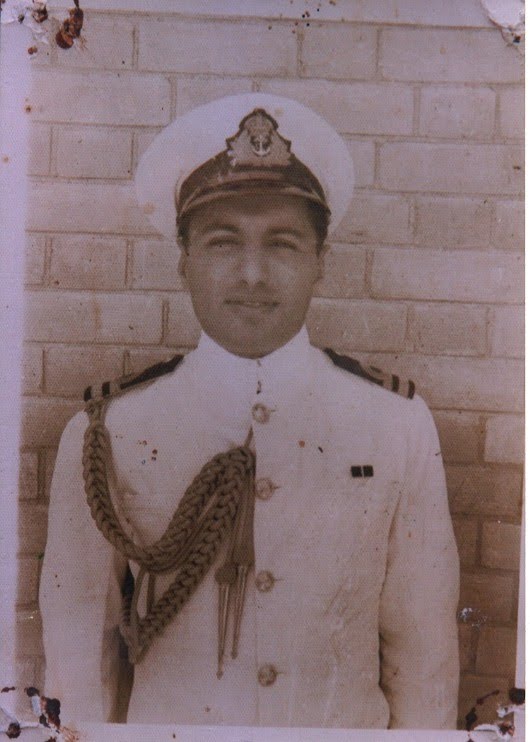
Two generations of military men. Our grandfather, is seated in the middle and Brigadier Aslam Khan is seated next to him on the right. My father is standing directly behind his father in the naval uniform.  

Over time, most of the family dropped the name Afridi, but Puchi says that if you look up old school records for my father, his name was listed as Mohammed Afzal Khan Afridi. Ami used to say that the Afridis were one of the lost tribes of Israel. Puchi says some of the Afridis in Lucknow are being DNA tested to determine whether this is in fact true. So depending on how that turns out, we could also be part Jewish. Maybe that’s why there’s such a similarity between the spellings of Khan, the Muslim name, and Kahn, the Jewish name?

 
Our father as a young naval officer, the third generation of military men in his family.

Puchi Calling

This blog is bringing  Puchi and me closer together. She calls me all the time now, and she’s finally active on Facebook, too. She also often comments on my blog postings. Sometimes, for her own good, I reject her comments. I don’t think she understands that this is a public space. Like when I posted the Family Feud blog about when we almost got in a fight, she posted one word in the blog comments section: “Ugh.” I thought she was mad at me again, so I emailed her with the subject line, “Ugh?” and asked, “Did I piss you off again? I promise I am not trying to, just having a little fun. Did you not think Family Feud was funny? I’ll lay off you on the blog if it is upsetting. Remember Rodge and Podge.”

She emailed right back and said that the “Ugh” was for putting her foot in her mouth. She was referring to her snippy comment on my Facebook page about Repeat After Me, a blog I wrote about her son Akber’s first words. And then she emailed me again. “And the Ugh is also for stupidly thinking the comments I posted were like an instant message chat rather than a world wide post….being new to facebook and all.” She was also anxious about the Patsy and Eddy stories that I was getting ready to write about her and Mimo’s partying youth. In a third email, she wrote, “The Ugh is also for the trepidation of the Patsy and Eddy stories.” I decided to reject the “Ugh” comment because it lacked these nuances. Since she wasn’t mad at me, I didn’t want other readers to get the wrong idea.

Now she calls me practically every day. She calls on Skype, on my cell phone, on the home phone. Early in the morning, late at night. She lives in the Philippines so we’re never in the same time zone. She’ll be polishing off a bottle of wine just as I’m having my first cup of coffee, or vice versa.

Anyway, I’m glad she called early yesterday morning because I had a lot of questions about the Maharani Baroda who came to live with us in Connecticut in the early 1980s. It wasn’t unusual for us to have guests that stayed with us for several months, or even a few years at a time. My mother liked having a lot of people around. So if you weren’t getting along with your parents, you could come live with us. Or if you were getting divorced from your abusive husband, you could bring your small children and you’d get a suite of rooms for as long as you needed. The Maharani Baroda lived with us for the better part of a year.

 
The Maharani Baroda in the kitchen of the Stoner house.

“How did the Maharani Baroda come to live with us?” I asked Puchi when she called yesterday.

Puchi told me that after we got our US citizenship in 1979, it became easier to get visas to travel to India. Both my parents’ families left their homes for the new nation of Pakistan during Partition in 1947. My father’s family moved from Jammu, Kashmir to Abbottabad, and my mother’s family moved from Bombay to Karachi.

My parents had fond memories of growing up in India and were happy when they were finally able to visit again. They went back with some regularity in the 80s.

 
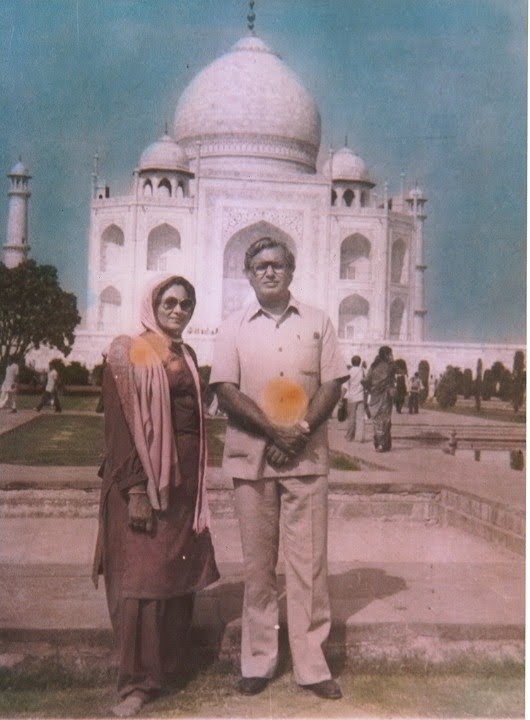
My parents at the Taj Mahal, on one of their trips back to India.

On one of these trips, my father looked up some of his old childhood school friends. When he was a young boy, he went to boarding school in Kashmir with some of the members of the royal family of Baroda. One of his friends grew up to be the Maharaja of Baroda, a city in the state of Gujarat. On the eve of independence in 1947, India contained more than 600 princely states, each with its own ruler.  All of these princely states, joined the new nation of India after independence in 1947.

My father’s friend, the Maharaja of Baroda, married the only daughter of the Maharaja and Maharani of Jodhpur, a city in Rajastan.  Their wedding took place at the Royal Palace in Jodhpur. Apparently, as the Maharani Baroda told the story to Puchi, on her wedding night she brought a menagerie of animals, numbering something like 32, to their wedding suite. The Maharaja was appalled by this wedding night behavior. That was the only night they spent together in their 39 years of marriage.

In her youth, the Maharani was a bit of a tomboy. She showed us a photo that she had taken, dressed as an army guard, when she was in her teens. Maybe she was a cross-dresser, who knew? I thought she looked a bit butch when she stayed with us in Connecticut.

 
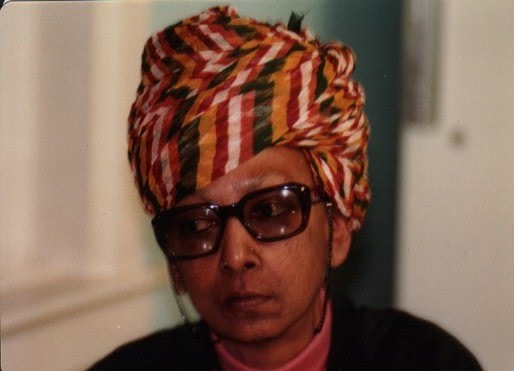
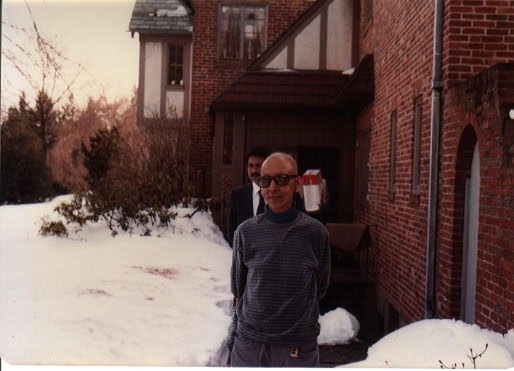
The Maharani Baroda looking butch, outside of our house in Connecticut.
 
When my parents were able to go back to India they paid a visit to the Maharaja of Baroda and inquired about the Maharani. The Maharaja’s secretary said that the Maharaja and Maharani had not been together for the past 39 years of their marriage, and that the Maharani was living in Boston, being treated for cancer.

When my parents got back to Connecticut, my mother, who was also diagnosed with cancer, went to Boston to find the Maharani. She found her living in a studio apartment. My mother, horrified by these living conditions, invited her to come stay with us, but the Maharani was too proud to leave her modest apartment. I think she actually liked the apartment, not much caring for the pomp and circumstance that had accompanied her everywhere in her life as a Maharani.

My mother insisted. “I have cancer too,” she said, “and my children don’t know how to deal with it, so having you stay with us will be a big help to my children.”

And that’s how the Maharani of Baroda came to live with us. When she arrived at the Stoner house, we didn’t know how to address her, after all, she was a Maharani. “Should we call you Maharani Baroda?” we asked.

“You can call me Aunty Susan,” she said. Susan? Her name could not possibly be Susan. So we said, “Your name can’t be Susan.” She told us that when she was little, she had an English Nanny who used to call her Susan. “So you see, my name is Susan.” Still, it seemed strange to call her Aunty Susan, so I just called her “Aunty.” And Puchi came to call her “Aunty Khamagani.”

“Why did you call her Aunty Khamagani?” I asked Puchi.

Khamagani is a term in Rajastani that means welcome, or best wishes. Whenever the Maharani was introduced to anyone, or greeted anyone, she would say “Khamagani.” Puchi loved how this word sounded and she came to affectionately call the Maharani of Baroda, “Aunty Khamagani.”

I hope Puchi calls again tomorrow because I have some more questions. I can’t remember when Aunty Khamagani died.

Stay on Schedule

My father was handing each of us an itinerary. “Be down in the hotel lobby at 0600 hours tomorrow.”

We were in Athens taking a family “vacation” on our way to Pakistan at the end of 1978. Just my parents and us girls. My brothers didn’t come with us. Whenever we took vacations involving my father, it didn’t feel much like a vacation. He would schedule every hour of our time, in military time. At 0600 hours we’d start our day in the hotel restaurant for breakfast. At 0700 hours we’d have to be in the car. At 0800 hours we’d arrive at the Acropolis and so on. It was grueling.

 
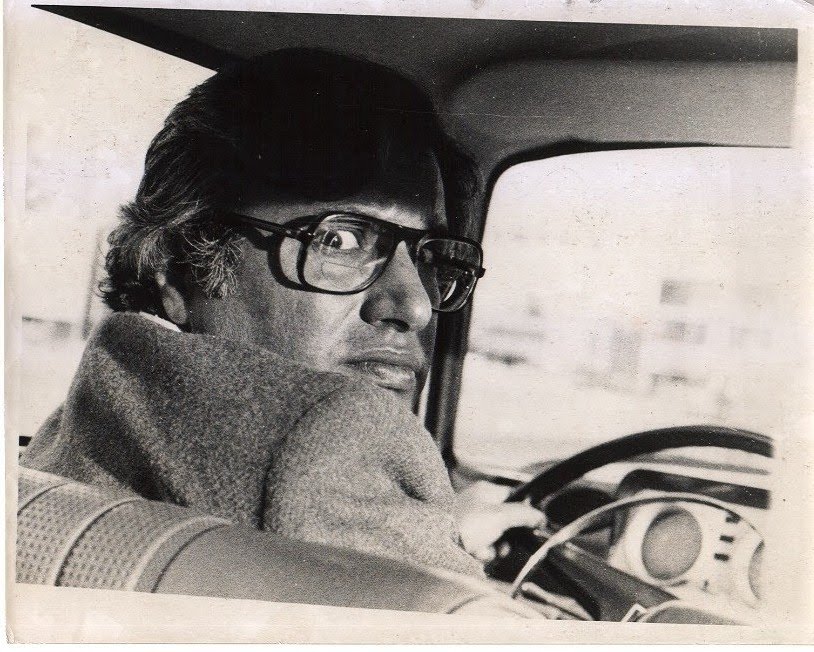
If we weren’t in the car by 0700 hours, we might get a look like this.

We saw more of Greece in a week than I thought was possible. Athens, Deplhi, Olympia, the islands. It was a blur.

 
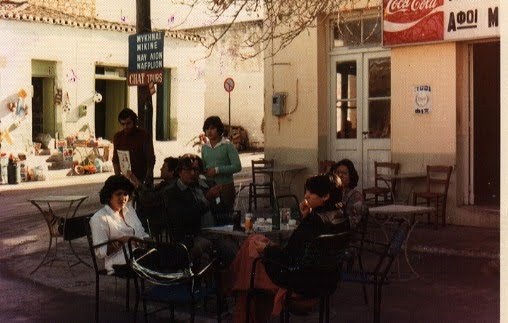
A scheduled stop for lunch at 1300 hours.

My favorite part of this trip was when we got lost in the countryside and had to go off the itinerary. We were hungry and had no idea where we were. We stumbled upon a tiny family-owned restaurant where we had the best food of our trip. Lamb chops, feta cheese, olives, yogurt and eggplant. It was so enjoyable to be spontaneous for a change.

Later the next year we went to India for the first time as a family. My parents were eager to show us their birthplaces. We went to Kashmir where my father was born and lived for the first years of his life. In the summer of 1979, Kashmir was  a peaceful, bucolic place. We stayed at the Palace Hotel in Srinagar. It was a beautiful luxury hotel overlooking Dal Lake. Not that we got to enjoy the hotel much since we were up at 0600 hours every morning to take a day trip to Jammu, or other historic sites like Shalimar Bagh or Pari Mahal. We also visited the boarding school my father attended as a boy.

 
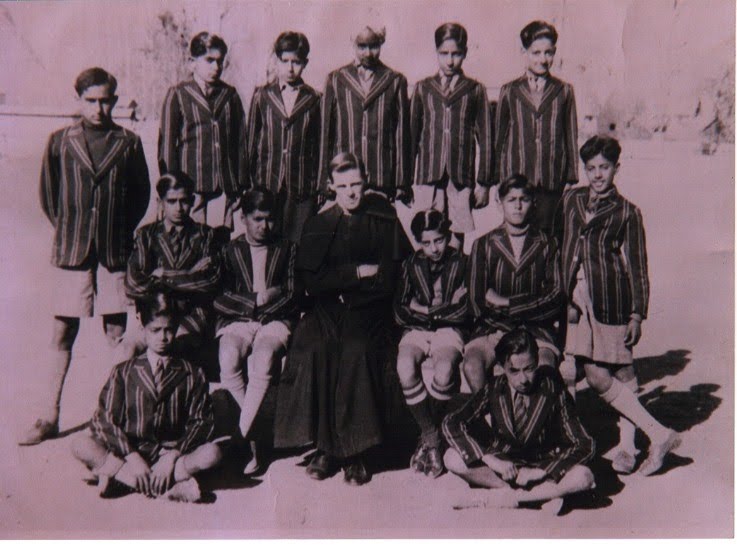
My father with his class at boarding school in Kashmir.
He’s seated just to the left of the priest.

We stayed in Kashmir for seven fully packed days and then went on to Bombay, now Mumbai, to visit my mother’s city of birth. Both my parents still had extended family who stayed in India during the time of Partition in 1947, so we had many lunches, dinners and teas to attend. In Bombay we stayed with relatives. It was August 1979 and if you know anything about Bombay in August, you know it’s Monsoon season. The rain came pouring down in sheets. It was hot and humid. Flies buzzed around everywhere. Rats floated down the rain-flooded streets.  I couldn’t wait to leave.

Our itinerary in Bombay wasn’t quite as full, but the rains made it an unpleasant visit. When our week came to an end, we all felt like we needed a vacation. So we asked my parents if we could go back to Srinagar, on one condition: no itineraries. “We just want some peace and quiet,” we declared.

We wanted to lounge around the grounds of the Palace Hotel and go for a leisurely swim in the pool. Reading books all day. Ordering fresh lime and sodas. And room service. Visiting the lake.

 
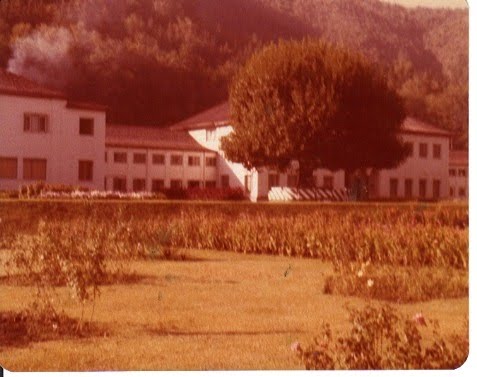
The grounds of the Palace Hotel, 1979.

My father was secretly pleased that we seemed to like Kashmir more than Bombay, and he agreed to our demands. Finally, we got a peaceful and relaxing vacation. No schedules, no planned excursions, no early mornings. Just pure relaxation. I think even my father enjoyed himself.

No-Fly Watch List: Part 4

The ticket agent seemed confused. Her eyebrows were getting increasingly furrowed as she peered closer and closer to the computer screen. She had already handed me back my license but I knew she would need it again, so I kept it handy rather than putting it back in my wallet.

“I think you’re going to need this again,” I said gently, handing her my license.

“Oh, you’ve been through this before,” she said. “No wonder you were holding on to your license, you knew I would need it back.” She looked around for one of her colleagues to help her.

“I think you need the form that’s in there,” I said, pointing to a white binder.

And out came the blue ball point pen and the No-Fly Watch List Clearance paperwork. I saw her spelling my name Kahn, so I said, “You’re going to want to correct that. It’s K-h-a-n.” I really can’t help but wonder why they fill these forms out with pen and paper. That seems so 1995. How could it possibly be more efficient than filling out a form on a computer and sending it directly to the Department of Homeland Security to store in a centralized database?

Considering my travel schedule this month, my paperwork alone must be taking up precious binder space since the forms need to stay on file for 30 days. Think of all that paper. Not only does it seem inefficient, but costly, and not very environmentally friendly. I wonder if the Department of Homeland Security has a suggestion box?

Earlier today I tried to print out my boarding pass from the San Francisco office. Judy’s assistant, Gregg, helped me since I was having trouble printing from my laptop. “I need your date of birth and middle name,” he said.

They seem to have changed their interface since Tuesday, when I traveled to San Francisco. I was able to print my boarding pass from home for that flight. Today the website seemed to know I was on the No-Fly Watch List. It displayed a lengthy message about needing additional information and made some mention of the No-Fly Watch List. It asked for my middle name which confused me. I mean, I know my middle name but my license only has my middle initial and my passport has my full middle name, Afzal.

So we entered Afzal. We entered my date of birth. And pressed “Next,” and waited anxiously. And then the familiar error message with the red X popped up. Rats.

“Let’s try again!” I said cheerfully. ‘This time we’ll just add my middle initial.” No luck. Apparently you need to add more than two letters for a middle name, it won’t accept a middle initial but it has to match your government issued identification. So what happens if your government issued identification only has a middle initial? I’ll get back to you on that. In the meantime, I’m going to start carrying my passport around in the event that it helps to use my full middle name.

“How’d you get on the No-Fly Watch List anyway?” Gregg asked. “Have you ever carried a bomb on board?” Very funny.

I knew the drill.  I left the office a little early so I’d have enough time to stand in line at the ticket counter. Once the ticket agent completed her paperwork and got her supervisor to sign off on it, she handed me my boarding pass and informed me that the flight was delayed an hour. “There’s been a Ground Delay Program in effect today,” she said. This sounded like a Program of the Department of Homeland Security so I asked, “What’s a Ground Delay Program?”

“That’s when flights are delayed in taking off and delayed in landing. It’s been happening all day,” she said with a smile. Come on, really? They call that a Program?

I got through security in a jiffy. For one thing they have these fancy Pro-Vision scanners at SFO so they don’t need to pat you down. I also try not to get in line behind men. They slow me down. They’re always carrying this and that in their pockets. Loose change, paper clips, maybe a money clip. So they have to empty all their pockets. And they usually don’t consolidate everything in one pocket. The loose change might be in the front right pocket, so that gets emptied first. Then they might remember that the money clip is in their back left pocket. Then they go through and cause the scanner to beep, so they back up and realize they have some paper clips in their front left pocket. And those have to come out and go through the x-ray machine in a special bin since the rest of their stuff is already on its way through.

Men also tend to wear belts and this takes an extra minute or two to unbuckle, slide through all the belt loops, and place in a bin. I know I shouldn’t single out men for being slow. I know plenty of butch lesbians who wear belts, but I’ve noticed that more and more of them are carrying man purses so they don’t tend to have to search through all their pockets for this, that and the other thing. More men should consider man purses.

The upside to getting to the airport early and getting through the ticket counter and security line with all my traveler time-saving tips is that I have plenty of time to write this blog and enjoy a snack. Plus Jenny just texted me from the grocery store. She needs my recipe for bolognese. She’s kind enough to cook dinner and keep the household running while I hang around airports.

The flight is delayed another hour. Seems that Ground Delay Program is really successful. Forget the snack, I see a bar. I think I’ll have a Scotch. 

 
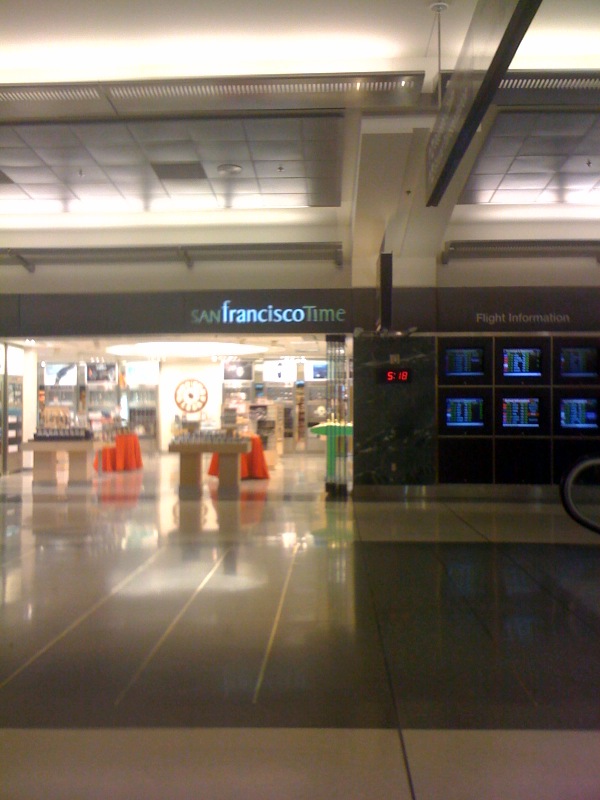
Passing the time at SFO.

PS: in case you’re interested in the Bolognese recipe, here’s what I just sent Jenny. File under Surina Khan Cook.

Bolognese

Saute 1 & 1/2 to 2 cups onions in a little olive oil with a pinch of crushed red pepper until lightly browned on medium high heat.

Add 1 lb mild Italian bulk pork sausage and 8 cloves of chopped garlic Saute until pork is browned.

Add 1 to 1 and 1/2  cups red wine. Let it boil a bit.

Add 1 cup heavy cream, 1 8 oz can tomatoes (I like fire-roasted), 1 tablespoon dried oregano, 2 bay leaves, and fresh ground black pepper.

Simmer. Get a glass of wine, go outside, sit on deck, relax. Repeat with several glasses of wine until bolognese is done (this can take up to 2 hours or more, the longer it simmers, the better it tastes), stirring occasionally.

Boil about 8 oz of pasta (I like fettuccine). Drain pasta and mix in with sauce. Let pasta and sauce co-mingle a bit.

Garnish with chopped parsley.

Serve with warm crusty bread and more wine (I suggest an Old Vine Zinfandel).

My Name is Khan

My mother named me. When she was pregnant with me, she read an article about twin princesses born in Malaysia who were named Soraya and Surina, named after stars in the sky. She liked the name Surina, and chose it for me.

 
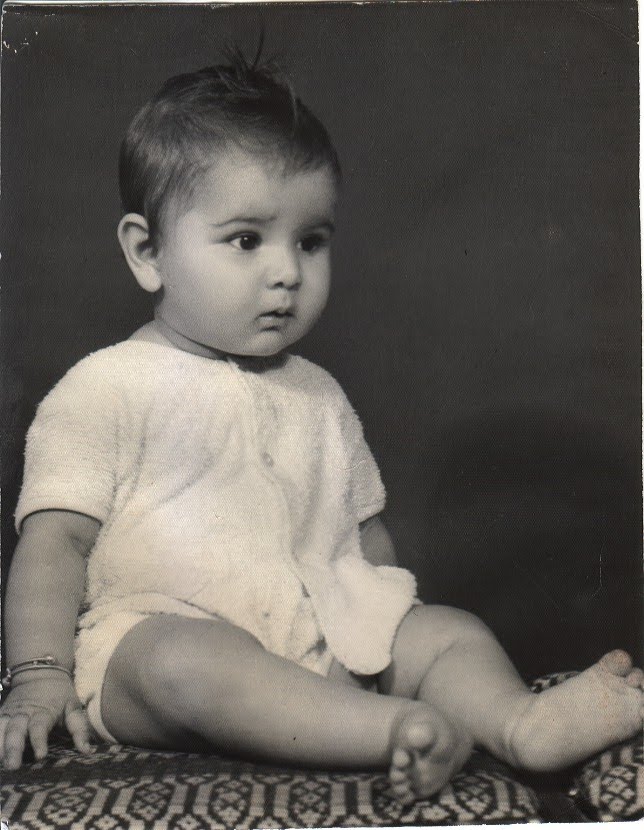
A star is born.

I had other names too. When we moved to Connecticut, my mother, a fan of the nickname, asked me, “Do you want to be called  Betsy or Cindy?” I’m not sure why she only offered me those two choices, or why I didn’t ask for additional choices. Maybe because I liked the names Betsy and Cindy. At first I had a difficult time choosing between the two until I remembered how much I liked watching The Brady Bunch, one of my favorite shows, so I chose Cindy, who was the youngest of six siblings in the Brady family. For years my mother would affectionately call me Cindy or Cindy Lou.

When I was growing up, I never knew anyone named Surina, only Serena the mischievous cousin of  Samantha on the television show Bewitched. These days, the name Surina is increasing in popularity. Made even more popular by the character Serena on Gossip Girl. And how could I forget Serena Williams the tennis star? Surina even shows up on the website Babynamer.com. According to which, my name is used in Hindi and the source of it is Sura, a Sanskrit name meaning “Goddess.” Tom Cruise and Katie Holmes shortened my name to Suri for their daughter. It’s possible that my name may become a favorite of the Scientologists next.

Serena the witch was so popular when I was younger that people were forever misspelling my name, Serena, or sometimes Sarina. I still have to spell it. “It’s Surina, spelled S-u-r-i-n-a,” I say when people ask me my name. And then I spell my last name, “Khan, spelled K-h-a-n,” which, even when I spell it, gets spelled incorrectly as Kahn. So now I say, “It’s Khan, spelled K-h- pause for emphasis a-n. I have seen my name spelled in a variety of ways: Sarina Kahn, Serena Cahn, Sorina Caan. Maybe one day my name will be so popular that the spelling will be too.

Sometimes for fun, Jenny and I think about what our names and occupations would be if we had to go into the Witness Protection Program. Jenny chose Beck (from Rebecca) Laarsen, consistent with her Swedish heritage. Beck would be a valet at a boutique hotel in Montreal. I would be the concierge at the same hotel and my name would be Betsy Singh, consistent with my South Asian heritage, but mixing up the Indian/Pakistani and the Muslim/Sikh just to make a fun political statement. I like that my initials would be BS. And then Beck would make an honorable woman out of me, and I would change my name to Betsy Singh Laarsen.

 
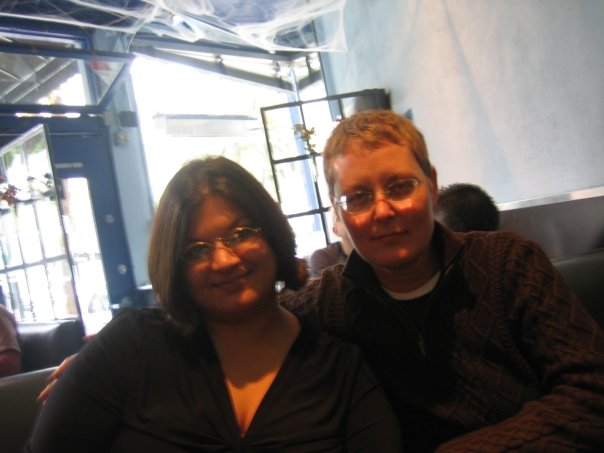
Betsy and Beck.

Put a Record On

Shortly after we moved to Connecticut, I discovered ice cream. My father loved it as much as I did. At least once a week, and often more, we would get in the car and drive to the nearby Friendly’s, an east coast restaurant chain. He would order two scoops of coffee ice cream, and I would get chocolate ice cream on a sugar cone with chocolate sprinkles. We’d often take the ice cream back to the car and eat it together in a comfortable silence.

When I got my first record player, a plastic, white and black General Electric glorified toy, my father, who was starting to gain a few pounds with the regular ice cream excursions, made me an attractive offer. “You can get one record album a week if we give up Friendly’s.”

One record album a week. Tempting. But giving up ice cream so shortly after I had discovered it was unthinkable. After a minute of careful consideration, I said, “I’ll keep the ice cream trips to Friendly’s.” I was gambling on the fact that I might get an occasional record album too. My first record was Elton John’s “Don’t Shoot Me I’m Only the Piano Player.”

And then my musical taste began to go down hill. I became infatuated with Shaun Cassidy. When we moved to the Stoner Drive house, I had my own bedroom, where I placed a life size poster of Shaun Cassidy on my wall. I would climb up on a chair every night and give him a good night kiss on the cheek. And if I was feeling randy, I would give him a peck on the lips, when no one was looking.

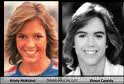
Now that I look back on this, I’m thinking these might have been the first indications of my future as a lesbian. Shaun Cassidy did look an awful lot like a lesbian in his youth. You can hardly tell him and Kristy McNichol apart in this photo.