Easter Sunday at the Smith’s

A wonderful thing is happening with this blog. An old friend of my parents, Clare Smith found me on the internet the other day. Clare is a photographer and is completing a book. She was doing some research, trying to collect information for the photos she took  when she and her husband, Burgess, traveled to Pakistan with my family in 1979.
When she emailed me the other day, she said she found this blog by searching for Arbor Acres. If I hadn’t written the Chicks is Our Business post, we may never have found each other.
Clare is now 82 years old, still living in Farmington, Connecticut, in a house that resembles the Stoner mansion. She reports that she is “still very alive and alert and healthy.” And apparently, quite skilled with the computer.
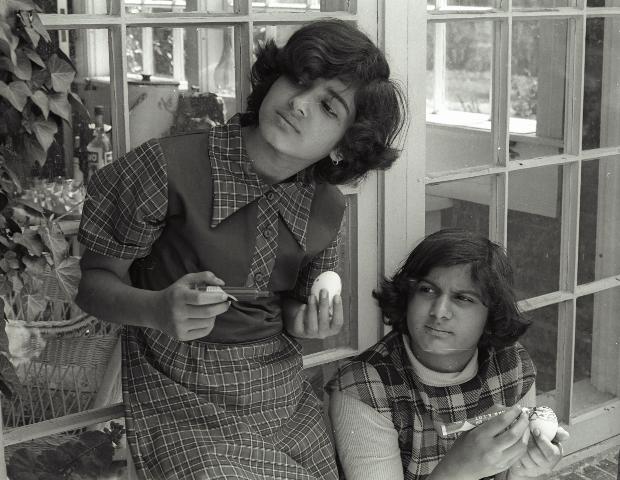
We’ve been corresponding by email for the last few days. Today, she emailed me this photo.  I’ve never seen it before. It’s a photo of my sisters, Puchi (on the left) and Mimo (on the right)  holding eggs and markers in their hands. In 1973 Clare and Burgess  invited us to their home for Easter.  I remember this day. It was my first Easter. Coloring hard boiled eggs seemed like a strange American custom to me, but it was fun.

In this photo, Puchi looks a lot like her oldest son, Akber. And Mimo looks bossy.

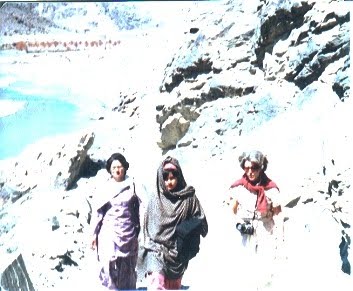
Here’s a photo of Clare that I found in my box of old photos, also taken in 1979. She is the one with the camera on the right, and my mother is on the left. Muna is draped in the chaador. I’m not sure where this photo was taken, but I think it was in the Northern areas of Pakistan on a trip they took to the Yasin Valley, a high mountain valley in the Hindu Kush mountains in the northwest region of Gilgit. Mimo, Puchi and I stayed back in Islamabad because we had to go to school.

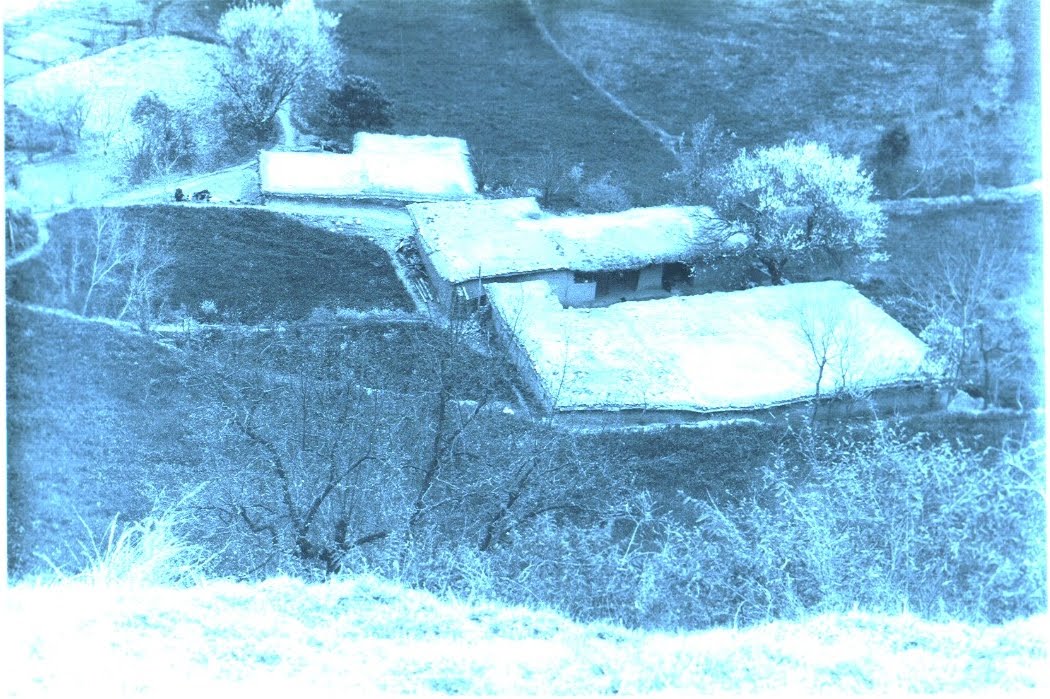
Our scanner is ten years old and made  a strange noise when Jenny scanned this photo. The colors came out a bit strange.

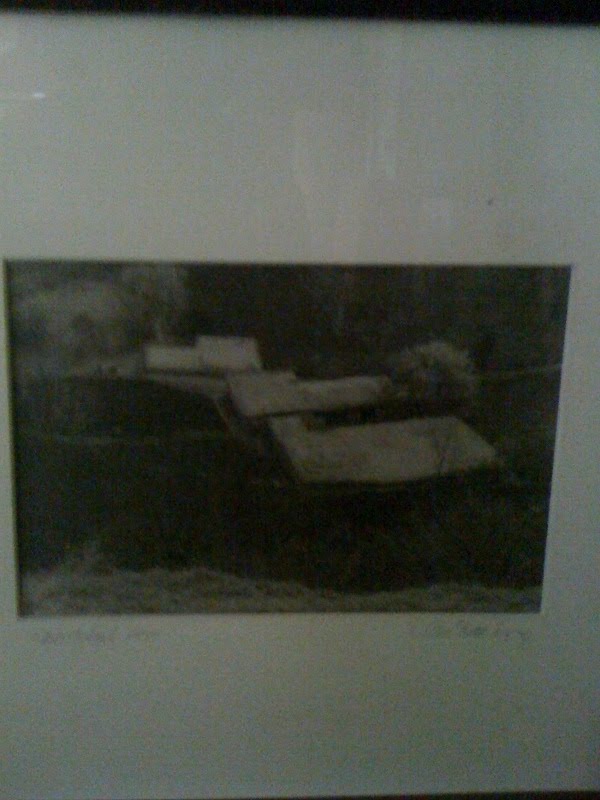
On the wall in our dining room, I have a photo that Clare took on that trip to Pakistan in 1979. She took the photo from our house in Abbottabad. The mud huts in the photo were in the valley below our house. She signed this photo and gave it to my parents and I have lovingly cared for it for many years. I had to re-frame it a few years ago because the frame started falling apart, but the photo has remained clear and beautiful. Not that you would know that from looking at the photo below. Something is wrong with our scanner.

I tried to take a photo with my iPhone, but it is not much better. You can sort of make out Clare’s signature on the bottom right.

When I emailed Clare the other day I wrote, “I am 42 years old now.” Almost as old as she would have been when I first met her.

The Passport Series

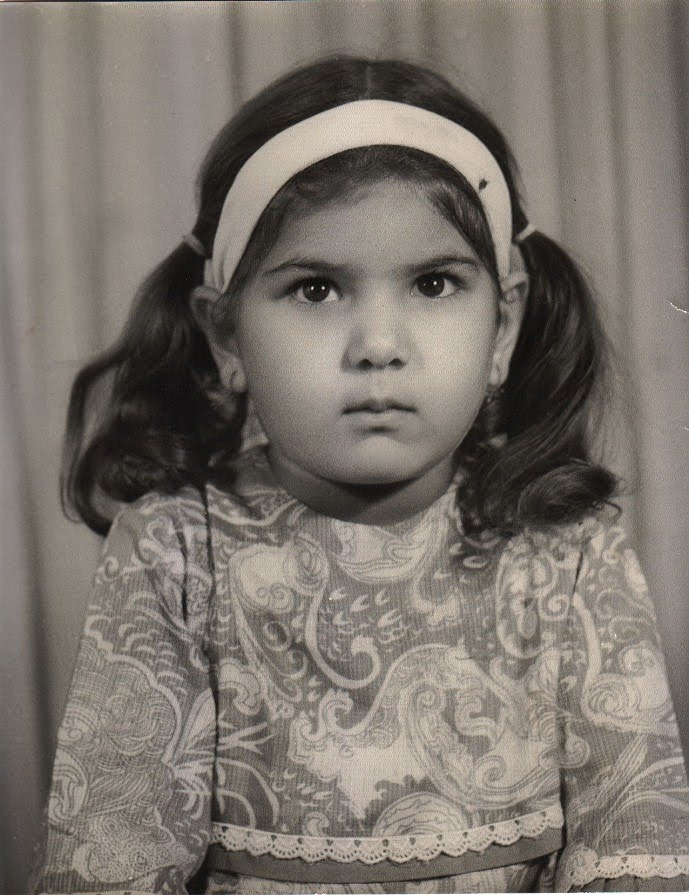
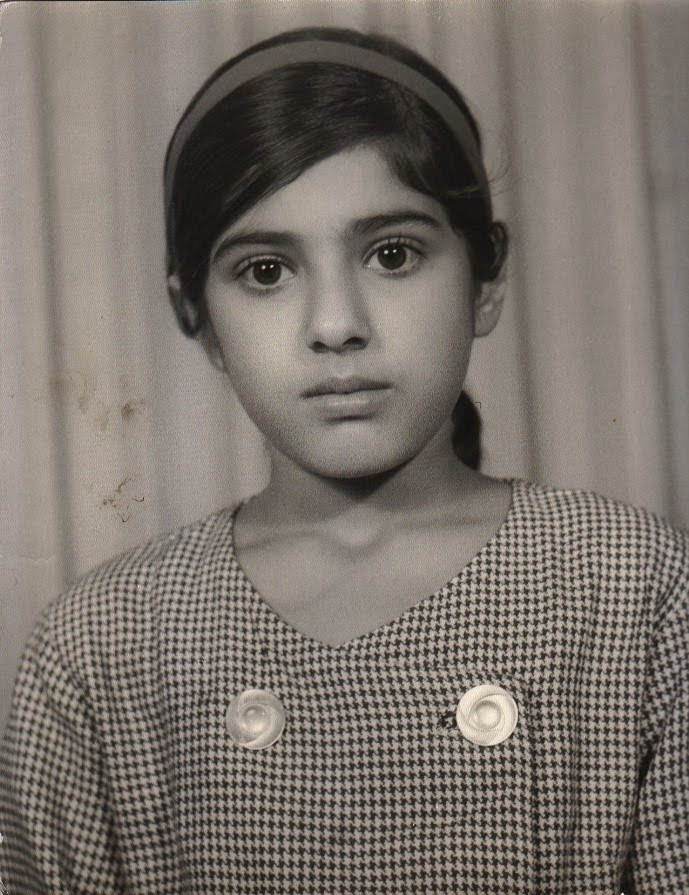
I can’t remember exactly when these passport photos were taken, but probably shortly before we left Pakistan in November 1972. Here I am, four years old. Please notice the fly sitting on my headband. Couldn’t they have taken one more photo, or did they intentionally choose the one with the fly on my head?

Surina Afzal Khan

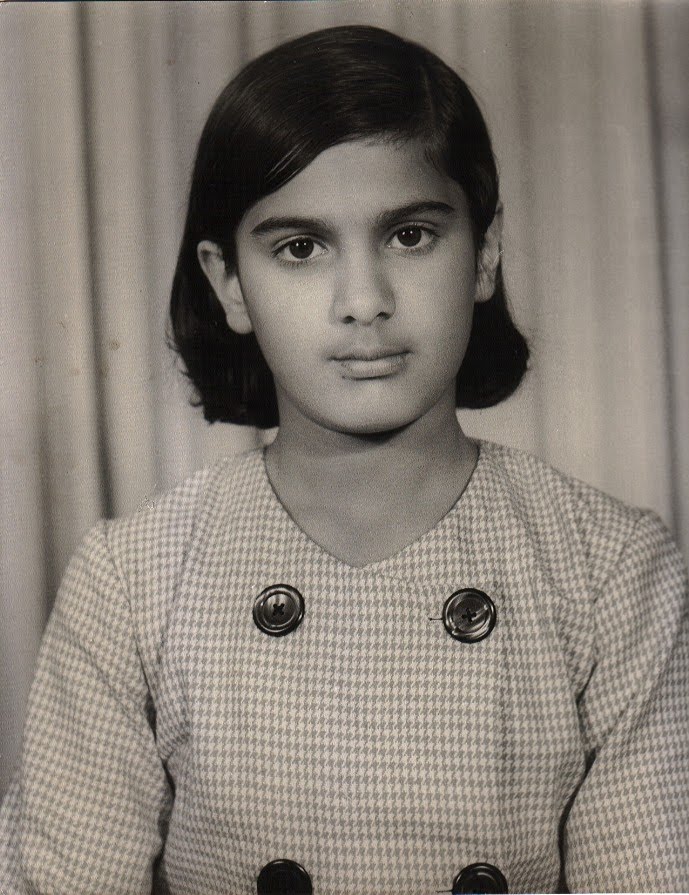
Here’s Puchi, or Chanel No. 5. She changed the spelling of her nickname from Pouchi to Puchi many years ago. I think she got her nickname when she was the youngest child and my mother affectionately called her Puchra which I think means tail since she was on the tail end of the kids. As she got older she became Pouchi, now Puchi.  She’s four years older than me, born in August 1963 so she would have been nine years old when this photo was taken. Puchi and I were named by my mother. I think the rest of my siblings were named by my grandmother, my father’s mother. I was always grateful that my mother named us since our names seemed a bit more contemporary than those chosen for my other siblings. All of us share the same middle name, Afzal, to signify that we are our father’s children, a common practice in Pakistan.

Chanel Afzal Khan

And here’s Mimo, or Fazilet. Also known as Fizz or Fizzy, or Fizzy O’Flynn. She changed the spelling of her nickname from Memo to Mimo some years back. I think Mimo came from Mimra, probably some word of affection my mother made up when Mimo was the youngest child. Mimra turned into Memo, now Mimo (pronounced Meemo). She was born in October 1961 so she would have been 11 years old when this photo was taken.

Fazilet Afzal Khan

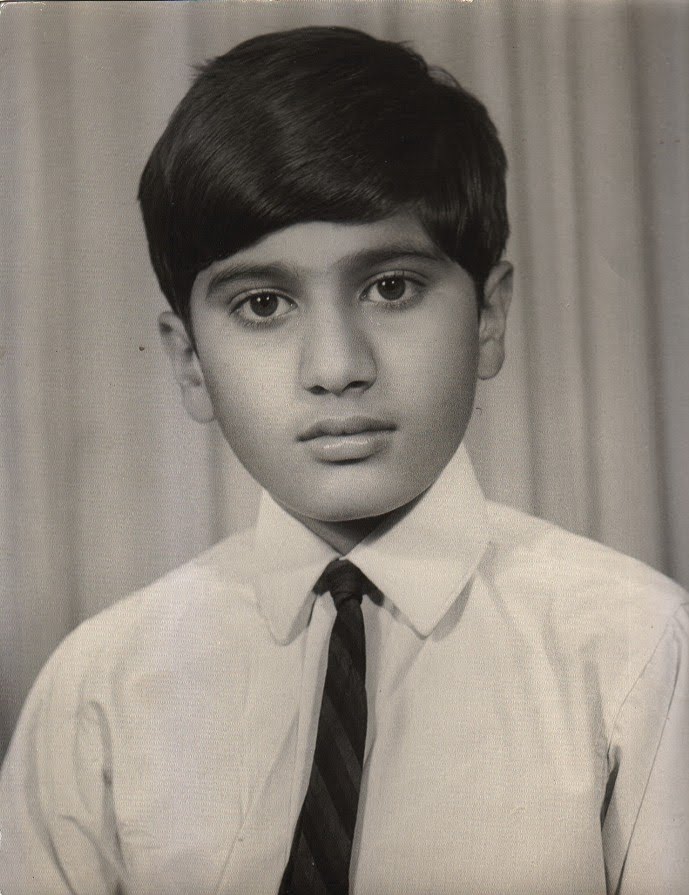
Here’s Tito. His given name is Asad and he was born in August 1960. I have no idea  how he got his nickname. Although he was a bit of a sickly child, he went on to be a great athlete and had a successful career as an officer in the US Marine Corp, carrying on the military lineage.

 Asad Afzal Khan

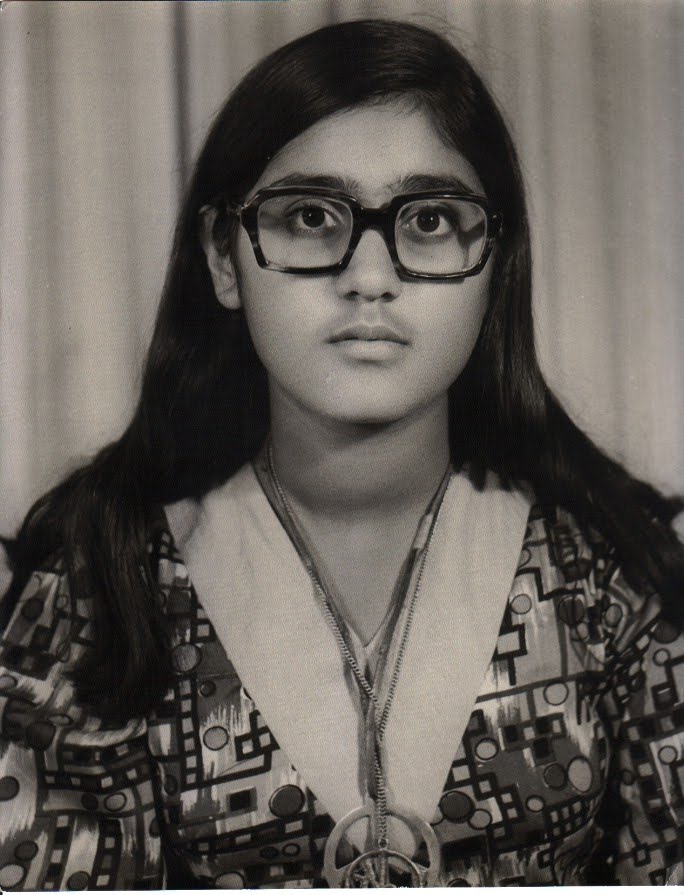
Here’s Muna. My grandmother  named her Gulfiza which may be reason enough for the nickname. She was born in November 1958. Bookish from the start. And can we say eyebrow wax? I do like her outfit and the peace sign necklace.

Gulfiza Afzal Khan

And finally, Baba. He was named Samad, and his American friends shortened it to Sam when they had a hard time pronouncing it. He is the first born child which probably explains his nickname, Baba, which is a name usually reserved for elders, not necessarily first-born eldest children, but it stuck. Baba was a  new year’s baby born on January 1, 1956. He’s the greedy one among us, refusing to divide my parents’ estate after they died. (Note to Baba: If you are reading this, shame on you). None of us siblings is close to him anymore.

Samad Afzal Khan

Hold the Phone

Shortly after we moved into the Stoner Drive house, I asked my mother why Aba (a version of “Dad” in Urdu) did not have a job.

“You think your father does not work?” my mother asked, lounging on a sofa in the Breakfast Room while motioning for me to pass her the packet of Kent cigarettes which were slightly out of her reach.

“All my friends’ fathers go to work every morning. To an office. And Aba doesn’t. I think he should get a job,” I said with disdain as I handed her the cigarettes. Too young to understand that the lifestyle to which I was becoming accustomed was thanks to my father’s work.

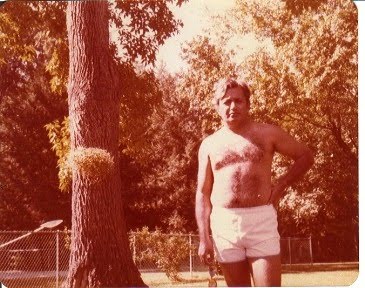
No wonder I was confused. Does this look like a working man?

My father was blacklisted from Pakistan and was unable to travel back for a few years after we moved to Connecticut. His business was still in Pakistan and he was running it from our home in Connecticut. Nowadays we call this “working remotely,” but back then we didn’t have the kinds of technologies that make working at home seamless like email, instant messaging, mobile phones, Skype, or even answering machines for that matter.

We did have fancy phones in the Stoner house, though. They were office  phones, clunky by today’s standards but state of the art for 1974. They had lots of buttons that would light up and flash when the phone would ring or if you put someone on hold.

The phones also functioned as a sort of intercom system. Let’s say you were in the kitchen and picked up the phone when it rang, and the person on the other end asked for my sister Muna. There was a good chance Muna would be lazing around somewhere with her nose in a book. Your first guess might be that she was in the Sun Room, so you’d press the button marked Sun Room and say, “Muna, you have a call on line 1” without ever having to leave the kitchen. Since you wouldn’t have to go running all around the house trying to locate people, this saved quite a bit of time.

I always thought the fancy phones looked out of place since they were very clearly office phones, but the advanced intercom technology was worth it. As was the hold button which I noticed other people did not have in their homes. I know my father liked these phones as well since he seemed to use them a lot. Often at odd hours of the day and night. I later came to understand that this was because of the time difference between Pakistan and Connecticut.

At the time, it did not occur to me that talking on the phone was work. But now, I get it. I am in phone meetings or conference calls most of the day, often when I am working from home.

Is that a call coming in? Please hold.

112 Stoner Drive

I had quite a lot of chores to do when I was growing up. When we moved from 17 Wiltshire Lane to 112 Stoner Drive, my responsibilities grew in proportion to the size of the new house, which was huge.

Prior to this I was expected to fetch things for my mother, as well as my older brothers and sisters since I was the youngest, and my family likes the hierarchy structure. These requests were usually manageable because the Wiltshire Lane House was not that big– downstairs it had a living room, dining room, small family room and kitchen and upstairs we had three bedrooms, or four if you count the large closet that I think Mimo slept in. So when someone asked me to fetch them a glass of water or empty an ashtray, or answer the phone, or set the table for dinner, I could usually fulfill the request in good time.

In 1974 my parents sold the Dumlotti farm outside of Karachi, and the sale allowed them to purchase a larger home in Connecticut for the eight of us.

I remember them saying to us kids, “We can live in a nice house, bigger than Wiltshire Lane and have more money to spend, or we can live in a really big house with a swimming pool and not have that much money to spend. Which do you prefer?”

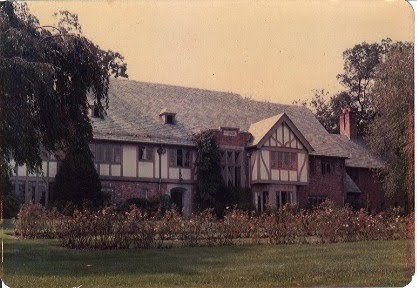
I think we said we needed to see the houses before we could advise them. So they took us to 112 Stoner Drive. We drove up a hill and pulled into a long driveway and slowly emerged a beautiful English Tudor home. It had a rose garden, a swimming pool, a “play house” which we called the Little House, a three room cabin with a small kitchen and a bathroom, that I’m sure many people would be glad to actually live in. There was a green house, and a carriage house which had eight garages and a 3-bedroom apartment. The grounds were also big, with large trees and a small stream in the back yard. We loved it. And we quickly advised my parents to purchase it, which they did.

The house had 11 bedrooms, more than one for each of us and then some. And another 12 rooms downstairs which included a kitchen and pantry, each of which are larger than some apartments I have since lived in. It had a breakfast room with hand-painted wallpaper, a formal living room and dining room, a billiard room, which we came to call the big room, because, well, it was big. The house had a sun room, a library, a television room, a laundry room and three staircases not counting the ones to the full attic and basement. It also had an elevator. I was particularly excited at the prospect of having a library which I assumed meant that we would all have to check books out, so I asked my parents if I could be the librarian.

The house was known as the Stoner mansion because the Stoner family built it. Later I came to understand the many meanings associated with the Stoner mansion. But more on that later.

112 Stoner Drive was fabulous and for many years it was a bustling place. We really enjoyed it, but the chores began to take on a life of their own.

For instance, the coffee that I had to bring my mother in bed every morning was a bit of a challenge. For one thing, she preferred it in a tea cup and saucer and it was quite a distance from the kitchen, which was on one end of the house, and my parents bedroom was on the opposite end of the house up a flight of stairs. Sometimes this trip could take up to five or more minutes. And I had to make sure not to spill the coffee from the dainty tea cup that would teeter dangerously on the saucer. I think my mother thought mugs were clunky and garrish. I worried that the coffee might get cold in the teacup by the time I got to my parents room, but my mother never complained about that.

It was also my job to water all the plants. We had many plants. My mother had a green thumb and a green house. One day I decided to count the plants and I counted more than one hundred, and that was just inside the house. So this task would take me a while. Or I’d have to empty all the trash bins in the house, one in each room and bathroom. I think that’s about thirty or so trash bins.

My sister Puchi and I also usually had to set and clear the table after dinner which we usually ate in the formal dining room. And then we’d have to load (and/or unload) the dishwashers, one in the pantry, and one in the kitchen. This early childhood training in all things entertaining has served me well. I’ve learned to be very particular (some would say fussy) about things like serving dishes and matching napkins and other things related to hosting a good party.

I still have an article from the local paper which ran a story about my family purchasing the house. “One of West Hartford’s largest houses–the 21 room Stoner Mansion at 112 Stoner Drive–rings once again with the sounds of an active family and will soon be the scene of international parties.” All true, but who do you think had to fetch drinks for the international jet set? I mean I didn’t actually start mixing cocktails until much later, but I did have to take drink orders and other such things that came with entertaining on a large scale. My mother is quoted in the paper, “This house embodies the way I like to live.” Well, if that isn’t the truth.

The Stoner Mansion, back in the day.

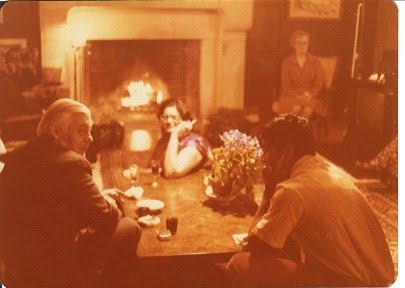
A party at Stoner. Sitting around a coffee table in front of a fire in the Big Room. My mother is seated at the end of the table in the center and my brother Tito is in the front right. The woman seated in the back right looks like a ghost of Clara Stoner. Seriously.

The younger you were in my family, the more you had to do. Once my mother asked me to pour a glass of lemonade and go outside to the driveway and wait for my brother Tito who was out for a run. Somehow, I knew to draw the line here. First of all, the image of standing out in the driveway with a glass of lemonade, waiting for my brother to return from a run, was too much for even me who was used to doing all kinds of things for people. For one thing, how did we know when he would return? Was he on a  two-mile run or an eight-mile run?  So I said simply, “No. He can get his own lemonade.” 

Here’s a picture of me (on the right) and Puchi taken in the kitchen of the Stoner house. The expression on my face pretty much sums it up. 
The Homosexual Agenda: 2010

Just think of me as a lazy blogger today. I’m re-posting something that Neal, my other brother-not-in-law, posted on my Facebook page recently.

Earlier this month I posted a report published by Political Research Associates about anti-gay activity in Uganda. Something about  a “Seminar on Exposing the Homosexuals’ Agenda.”

Both Terry brothers, Dane (the hippie) and Neal (the gay) had something to say about this. Dane’s post said, “All the homosexual people I’ve ever known do seem to have the same agenda…I believe it’s called ‘Live And Let Live’…I like it so much I’ve made it my own.”

Neal responded to Dane with his own version of the Homosexual Agenda. They sure are funny those Terry brothers. 

Today’s Homosexual Agenda:
6:00am Pilotis (note to Neal: use dictionary.com when unsure of spelling. It’s Pilates, doll)

7:00am Protein Shake

7:30am Walk French bulldogs, Oliver and Tullulah

8:00am Check Facebook and Gay.com… 

9:00am Hair appointment

10:00am Bloomingdales: check for new Prada sneakers; admire LV bags

12:00pm Brunch with girlfriends at Neiman Marcus Rotunda (warm goat cheese spinach salad, balsamic vinaigrette, 2002 Montrachet)

2:00pm Assume control of government; recruit all straight youths to gay lifestyle; destroy all heterosexual marriages; bulldoze all houses of worship

2:30pm Disco Nap

3:00pm Facial at Day Spa

4:00pm Gym: ab workout

5:00pm Grey Goose appletinis at Splash

6:00pm Sex in the City rerun

7:00pm Dinner (Pan seared Chilean Sea Bass with shitake, coriander and lime-pepper, 2007 Gamba Maratto)

8:00pm Theater: “Billy Elliot, the Musical”

10:00pm  Nightcap at “The Web”

11:00pm Bed

Here’s Neal, looking pretty gay.

Conference Khanfessions

I’m just back from Connecting California 2010. The conference was fabulous and inspiring and moving. This despite the fact that it took place during the worst storm California has seen in a while. Flights were canceled, roads were closed because of mudslides. One plane carrying participants was diverted to Las Vegas from LA and another was hit by lightening. Our keynote was evacuated from her home in an area of LA that was experiencing mudslides so she did not make it. But most everyone else pressed on and managed to get to Santa Cruz.

The conference was full of all kinds of good sessions, and the participants were tweeting about this that and the other thing the whole two days. Even Judy, my techno-shy boss, tweeted a few times.  Judy only recently started watching television so this new tweeting thing of hers is kind of  a big deal.

Beth Kanter, the social media guru led a workshop on what else?  Social media. She let us know that #CalConnect, our twitter label or whatever you call it, was in the top five tweet slidedeck. I have no idea what this means but doesn’t it sound great?

When the conference ended on Friday, we went right into a board meeting. Really? A board meeting? After a big conference? Yep, that was my idea.

Anyway, so the board meeting went well too, but by then my brain cells were a bit diminished. At one point when Judy was going over the financials, I was checking my Facebook page. Beth Kanter says this is the way of the future, you have to keep up with social media, like practically all the time. Some people Facebook and twitter at the same time. So I thought, you know, nothing wrong with checking in on Facebook. You never know, someone might have posted a status update about the conference. And then wouldn’t I have looked good saying, “Hey look, so and so says the Women’s Foundation of California puts on the best conference.”

Then Judy said something like, “is that right, Surina, $200,000?” I really had no idea what she was talking about so I said, “I really don’t know, but I think so.” I mean, after all it was in the financial statements. I’m sure whatever she was referring to was accurate.

But I guess she was on to me because then she said, “Are you Facebooking over there?” Busted. This took me by surprise so I sheepishly said, “Umm, no.”

What I wish I had said was, “No, I’m live blogging the board meeting.”

Leaving Pakistan

We left Pakistan under the cover of darkness in November 1972. Zulfikar Ali Bhutto was in power and according to the family lore, and as it’s documented in my father’s obituary,  my parents had learned of a plot by Bhutto to arrest and torture my father.

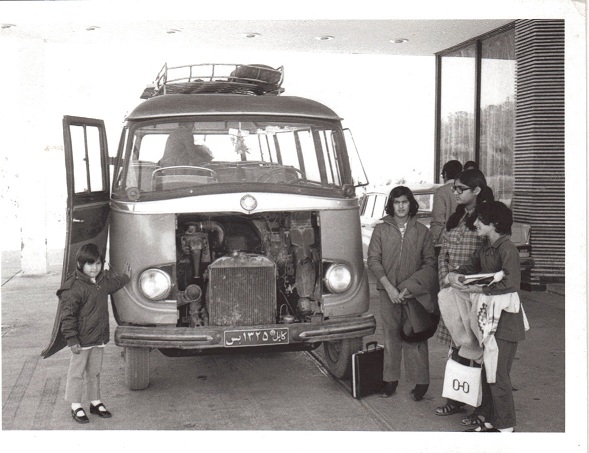
So on relatively short notice, passports were arranged,visas were obtained, and with just a few belongings, we all piled into our mustard orange-colored Volkswagen van and drove over the border to Afghanistan. We spent about five days there, in Kabul, and then carried on to Iran.

I think this is the van we drove across the border.

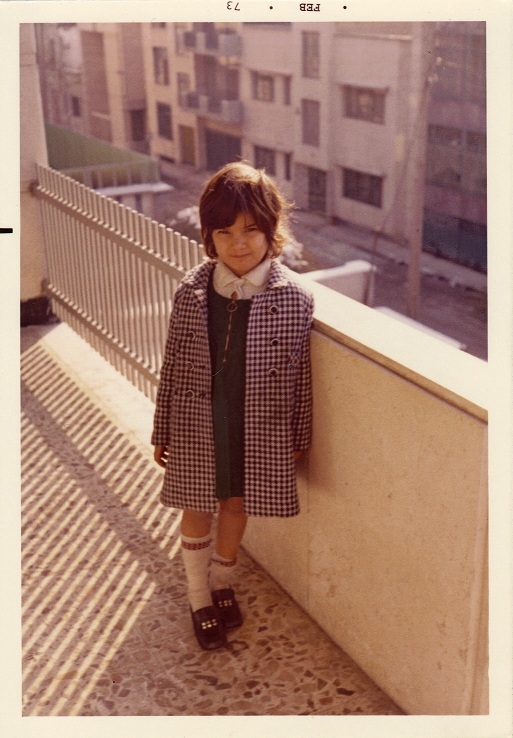
I had my fifth birthday in Tehran. It seems strange to say now, but  in 1972, Tehran was my first exposure to what I came to associate with the West. It was the first time I saw an escalator. The first time I experienced toy stores abundant with a variety of things with which to play, and the first time I experienced square slices of  cheese that were made to fit perfectly on sliced bread, also a novelty.

I think this photo of me was taken on my fifth birthday in Tehran. December, 1972.

From Tehran, we flew to Madrid, where my parents left us with their friends, Mehru Aunty and Rahim Uncle, while they carried on to the US to search for a house for us. Rahim Uncle was the Pakistani Ambassador to Spain and they were busy with their diplomatic duties and their own two children and yet generous and kind enough to look after the six of us. By now we ranged in age from five to seventeen.

In Madrid I had strawberry yogurt for the first time and the dreaded liverwurst sandwiches that were packed for us to take to the park every day. I also learned to tie my shoes.

In early 1973, after a short stay in London, we arrived in West Hartford, Connecticut where we moved into a small house on 17 Wiltshire Lane.

In an interview with the local paper published in August 1973, my mother said that she felt “a little boxed in,” referring to the Wiltshire Lane house. Understandable.  The chicken business had done well and my parents had left behind several residences in Pakistan.

There was Dumlotti, the seven acre farm (where the dairy farm was located) near Karachi. And Rocky Ridge, a beautiful stone house in Mansehra in the North West Frontier Province which had become our main residence in the late 1960s. And Miranjani House, a rustic mountain retreat in Nathiagali which is a hill station in the foothills of the Himalayas, and our apartment at the Sindh Club, a sort of residential country club in the middle of Karachi which I adored.

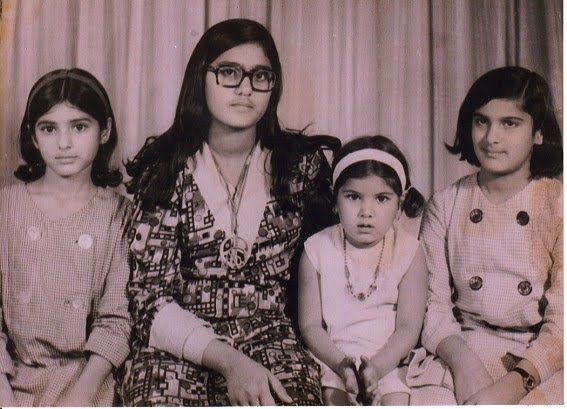
Us four sisters. Puchi, Muna, me, and Mimo. It was taken the same day as our passport photos which I will post just as soon as Jenny scans them. Then you can have a look at my brothers as well. But for now, the sisterhood (in full on 70s garb) is where it’s all at.

My parents chose Connecticut because they had friends in the area and also because the West Hartford public schools, at the time, were among the top five systems in the country.

Ours was not the classic immigrant experience. My parents did not want to leave Pakistan. If anything, they wanted to stay and help build the new nation. I always thought we had to leave because my father’s older brother, Air Marshal (ret’d) Asghar Khan had run for Prime Minister against Bhutto. But then wouldn’t his family have been the one to flee the country?

One of my cousins once told me she thought Bhutto was targeting my father because of his association with Arbor Acres. That, because it was an American company, Bhutto thought my father was connected to the CIA, which I’m certain he wasn’t.

We stayed in the Wiltshire Lane house only about a year. And then in 1974 came 112 Stoner Drive.

Working for the (Wo)man

I am having a lot of fun with this blog. I’ve been wanting to write some of these stories for years, especially the ones about my family. I hadn’t planned on starting a blog. It was not one of my new year’s resolutions. It was not on my list of things to do, but earlier this month, somewhat on a whim, I entered my first post.

I’ve always had a love-hate relationship with writing. Kind of like going to the gym. I feel good and accomplished afterward, but I don’t much care for the actual activity while I’m doing it. Not so with this blog. I am really enjoying the act of writing and wish I could spend even more time with it everyday. But alas, I have a job. A demanding one. That keeps me really busy. And even though today is technically a holiday (happy birthday, Dr. King) I need to get back to work since the Women’s Foundation of California, where I am happily employed, is holding a big statewide conference for community leaders and donors later this week. It’s called Connecting California 2010 and I’m excited about it, if not a bit focused on the multiple details that come with hosting 200 people–but I’ve had good training in all things related to entertaining and I love a good party. Thanks to my mother (and my sisters). So the blogging will have to happen at odd hours of the morning and night, and on weekends.

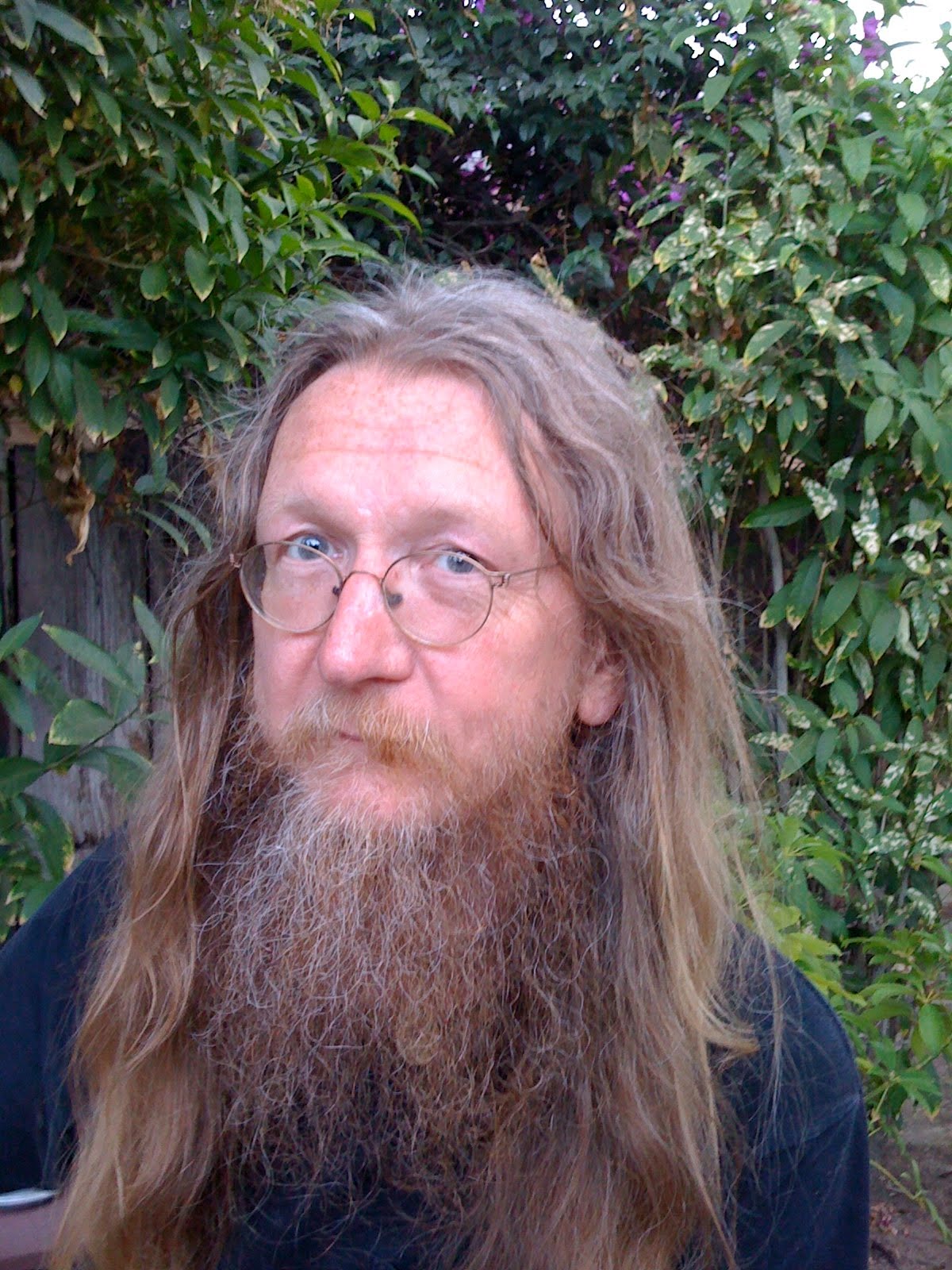
So off to work I go. Which reminds me of Jenny’s brother, Dane. My brother-not-in-law. He’s the oldest sibling of three. A really smart guy, with long hair, beard and mustache. Yes, that’s right, he’s a hippie. Dane has many talents, but he does not like working for “the man.” So I said to him, “Don’t. I work for the woman. You can too.”

Here’s Dane. He’s considering working for the (Wo)man.

Chicks is Our Business

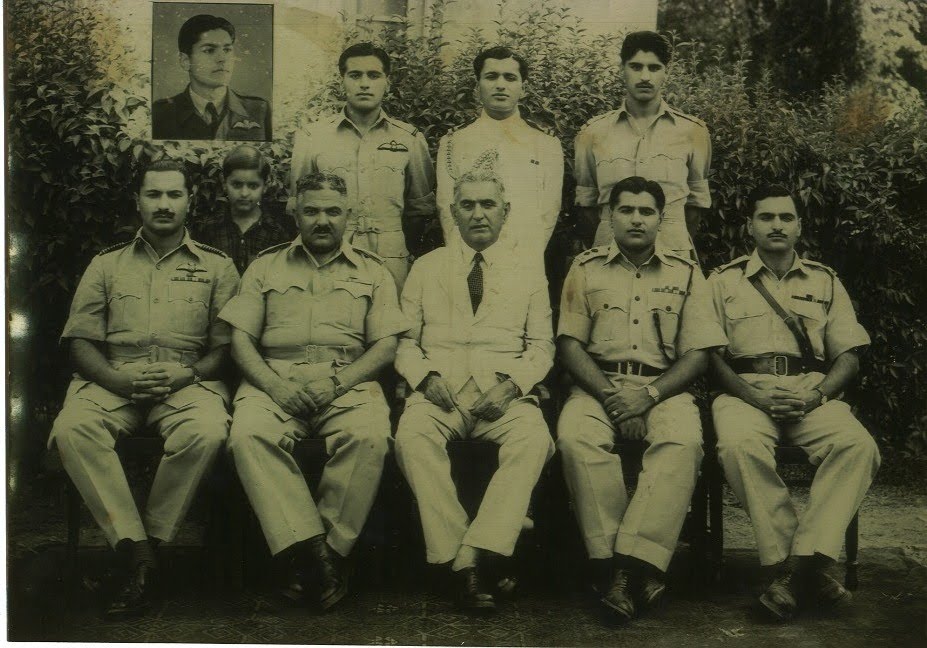
My father came from a long lineage of military men. They held distinguished titles like Air Marshall and Brigadier General. In the early 1960s, before I was born, my father retired from the Pakistani Navy and went into the chicken business. After that he was still known as Commander Afzal Khan or Commander Saab.

My father with his brothers and my grandfather. 
My grandfather is seated in the middle, the only one of the grown men not dressed in military attire and my father is standing directly behind him. The super-imposed photo on the upper left is another brother, Asif, who died in a plane crash while serving in the Air Force, before this photo was taken.

My parents were married in 1954. My mother, Sunnaiya, or Sunny as she was called affectionately by family and friends, was just eighteen years old, my father about nine years older. Shortly after their wedding, my father was posted to the UK. And my mother, who came from a wealthy family, had to adjust to living on a military salary. She wrote in a letter to a friend in November 1954, “Can you imagine I do all the sheets and towels by hand? I cook, clean, wash, iron, and in short am a drudge of all work and yet don’t seem to mind in the least as Afzal’s image is always in my mind and his love in my thoughts.”

The love between Sunny and Afzal was strong, but I’m sure living on a tight budget had its challenges,  especially for a woman who was used to every luxury. At one point while they were living in England, as my mother once recounted to me, she said to my father, “I wish we could have chicken for dinner just one night.” And he replied, “If you wanted chicken for dinner, you should have married someone else.”

Hearing this story growing up, I always thought it was romantic that my father chose to go into the chicken business. His business choice probably had more to do with the fact that Pakistan was a new nation, not even twenty years old, and there were many opportunities in building the agricultural infrastructure of the country, but I think it’s romantic that he chose chickens.

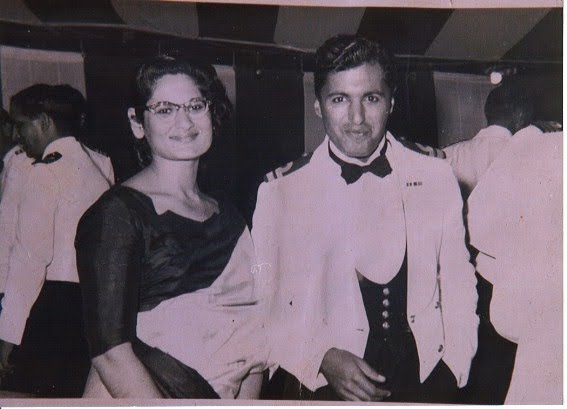
Here’s a photo of my parents as a young married couple. 
I think it was taken when they were living in the UK.

In any case, he purchased a subsidiary of Arbor Acres Inc., which was headquartered in Glastonbury, Connecticut and went on to become a very successful businessman until he became ill and passed away in the late 1980s. Now the family company is basically defunct, although  my eldest brother continues to benefit financially from my parents estate. He’s the only one among us who got anything from their estate, refusing to share it with his siblings, but that’s another story.

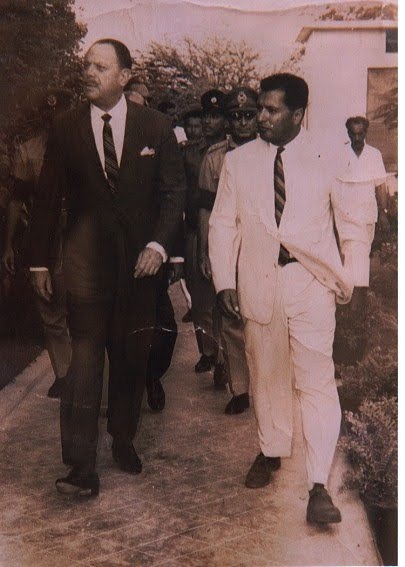
Here’s my father with Pakistani President Ayub Khan, touring the Arbor Acres farms. Ayub Khan was the first military ruler of Pakistan, from 1958-1969. 

In its heyday, the motto for Arbor Acres  was “Chicks is Our Business.” I wonder if I took this very literally on  some kind of subconsious level. For one thing  there is this issue that I am a lesbian, and now I work in women’s philanthropy. Chicks is my business too.

I Hate Milk

Drinking milk makes me gag. I’m not lactose intolerant or anything since I love cheese and all things cream-based, especially soups and sauces, but for some reason, I hate milk. Maybe because I was made to drink it as a small child?

There’s a story in my family that my mother was the first person in Pakistan to pasteurize milk. She and my father had six children, so I gather a lot of milk was required for us. I think the milk in Pakistan in the 60s may not have been that good, so my mother started a dairy farm. I’ve never actually fact-checked this. I mean, I do remember the dairy farm, I just don’t know about the first-person-to-pasteurize-milk part. But I believe it to be true. My mother was smart, assertive, and if she wanted something, she made it happen.

By the time she had me, her sixth child, she had perfected the art of parenting. Instead of doing things for me, like making breakfast, or packing a lunch for school, or helping me with my homework, or telling me to go to bed at a reasonable hour, she had me doing things for her.

For example, it was my job every morning to bring her coffee in bed.  Or I’d have to search the house for her packet of Kent cigarettes when she asked me to. And sometimes I would get the dreaded task of rubbing her feet. I also hate feet. Since I was mostly left to my own devices when I was not fetching something for my mother, no one really noticed that I had stopped drinking milk.

When I was eight years old, by now living in Connecticut, I became concerned that I was not getting enough calcium. So I would go down to the kitchen, alone, and after making my mother her cup of coffee and bringing it to her in bed, I would make myself drink a cup of milk. No one made me do this, and no one was ever in the kitchen to watch me drink it since they were usually lounging around in bed while I got myself ready for school. I would shut my eyes, hold my nose and drink it as fast as I could, trying not to gag. I think this lasted about a week. Now I just take a calcium pill and avoid milk altogether.